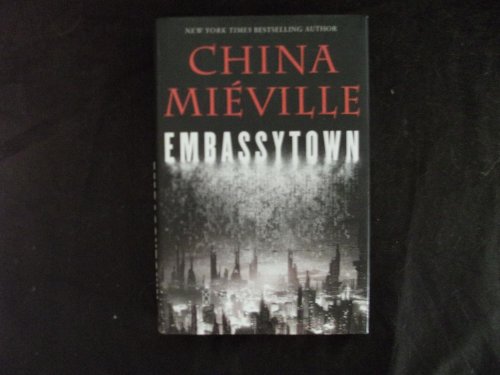
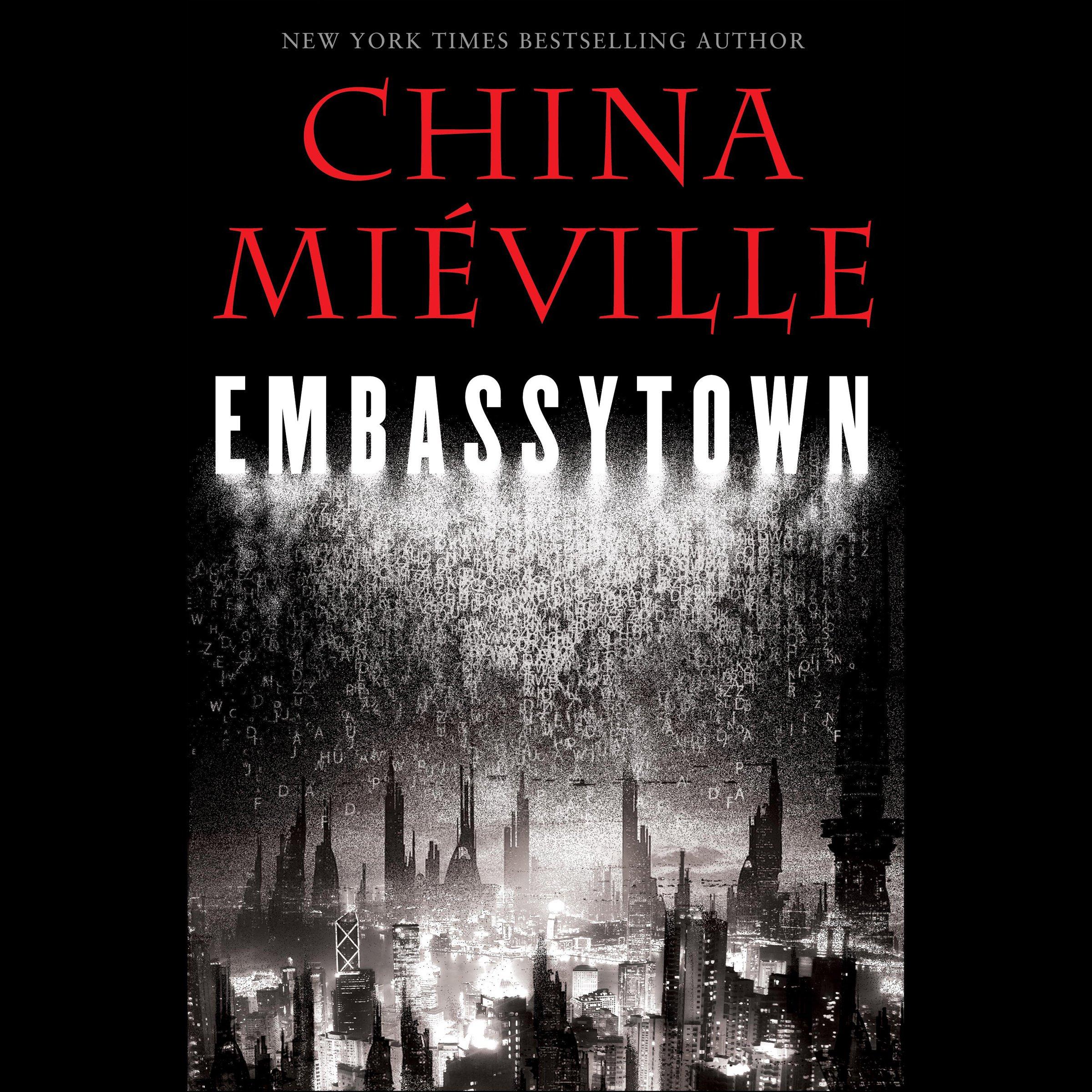
Winner of the Locus Award for Best Science Fiction Novel, China Miéville's astonishing Embassytown is an intelligent and immersive exploration of language in an alien world. Embassytown: a city of contradictions on the outskirts of the universe. Avice is an immerser, a traveller on the immer, the sea of space and time below the everyday, now returned to her birth planet. Here on Arieka, humans are not the only intelligent life, and Avice has a rare bond with the natives, the enigmatic Hosts - who cannot lie. Only a tiny cadre of unique human Ambassadors can speak Language, and connect the two communities. But an unimaginable new arrival has come to Embassytown. And when this Ambassador speaks, everything changes. Catastrophe looms. Avice knows the only hope is for her to speak directly to the alien Hosts. And that is impossible.
Add to your library to track progress and write reviews
Find Embassytown China Miéville in PDF, EPUB, ebook, audiobook, print, or library editions.

8 books in catalog
Urban world-building, boundary-crossing speculative fiction, and dark atmospheric intrigue converge in the sprawling metropolis of New Crobuzon, first introduced in the novel Perdido Street Station. China Tom Miéville established his reputation as a leading exponent of the New Weird movement by blending fantasy, science fiction, and horror while deliberately moving speculative literature away from commercial genre clichés. His fiction challenges traditional boundaries by grounding strange, surreal worlds in complex social and political realities.
Born in Norwich on 6 September 1972, Miéville grew up in Willesden, London, raised by his mother. Before attending university, he spent a year working in Egypt and Zimbabwe. He entered Clare College, Cambridge, in 1991 to study Social Anthropology before going on to earn a PhD from the London School of Economics. His academic work in law and social theory deeply informed his non-fiction, which includes a publication on Marxism and international law as well as his history October: The Story of the Russian Revolution. Alongside his writing, Miéville has been active in left-wing politics as a member of the Socialist Workers Party and ran for the House of Commons for the Socialist Alliance. He has taught creative writing as Associate Professor at Warwick University and held positions at Birkbeck, University of London, and Roosevelt University in Chicago.
Describing his work as "weird fiction" in the tradition of early twentieth-century pulp and horror writers such as H. P. Lovecraft, Miéville builds dense fictional landscapes characterized by political conflict, urban geography, and linguistic experimentation. Works such as The City & The City feature dual-reality urban environments where political borders and psychological perception shape human behavior, while Embassytown examines alien semiotics and the power of language. His inventive approach to speculative fiction has earned him the Hugo, World Fantasy, Arthur C. Clarke, and British Science Fiction awards, along with fellowships from the Royal Society of Literature and the Guggenheim Foundation.

8 books in catalog
Urban world-building, boundary-crossing speculative fiction, and dark atmospheric intrigue converge in the sprawling metropolis of New Crobuzon, first introduced in the novel Perdido Street Station. China Tom Miéville established his reputation as a leading exponent of the New Weird movement by blending fantasy, science fiction, and horror while deliberately moving speculative literature away from commercial genre clichés. His fiction challenges traditional boundaries by grounding strange, surreal worlds in complex social and political realities.
Born in Norwich on 6 September 1972, Miéville grew up in Willesden, London, raised by his mother. Before attending university, he spent a year working in Egypt and Zimbabwe. He entered Clare College, Cambridge, in 1991 to study Social Anthropology before going on to earn a PhD from the London School of Economics. His academic work in law and social theory deeply informed his non-fiction, which includes a publication on Marxism and international law as well as his history October: The Story of the Russian Revolution. Alongside his writing, Miéville has been active in left-wing politics as a member of the Socialist Workers Party and ran for the House of Commons for the Socialist Alliance. He has taught creative writing as Associate Professor at Warwick University and held positions at Birkbeck, University of London, and Roosevelt University in Chicago.
Describing his work as "weird fiction" in the tradition of early twentieth-century pulp and horror writers such as H. P. Lovecraft, Miéville builds dense fictional landscapes characterized by political conflict, urban geography, and linguistic experimentation. Works such as The City & The City feature dual-reality urban environments where political borders and psychological perception shape human behavior, while Embassytown examines alien semiotics and the power of language. His inventive approach to speculative fiction has earned him the Hugo, World Fantasy, Arthur C. Clarke, and British Science Fiction awards, along with fellowships from the Royal Society of Literature and the Guggenheim Foundation.