
§Author· 8 books
China Miéville
Also known as China Miéville, China Mieville, CHINA MIEVILLE, China Mie ville, China Miville, China Tom Miéville
Urban world-building, boundary-crossing speculative fiction, and dark atmospheric intrigue converge in the sprawling metropolis of New Crobuzon, first introduced in the novel Perdido Street Station. China Tom Miéville established his reputation as a leading exponent of the New Weird movement by blending fantasy, science fiction, and horror while deliberately moving speculative literature away from commercial genre clichés. His fiction challenges traditional boundaries by grounding strange, surreal worlds in complex social and political realities.
Career & Background
Born in Norwich on 6 September 1972, Miéville grew up in Willesden, London, raised by his mother. Before attending university, he spent a year working in Egypt and Zimbabwe. He entered Clare College, Cambridge, in 1991 to study Social Anthropology before going on to earn a PhD from the London School of Economics. His academic work in law and social theory deeply informed his non-fiction, which includes a publication on Marxism and international law as well as his history October: The Story of the Russian Revolution. Alongside his writing, Miéville has been active in left-wing politics as a member of the Socialist Workers Party and ran for the House of Commons for the Socialist Alliance. He has taught creative writing as Associate Professor at Warwick University and held positions at Birkbeck, University of London, and Roosevelt University in Chicago.
Writing Style & Themes
Describing his work as "weird fiction" in the tradition of early twentieth-century pulp and horror writers such as H. P. Lovecraft, Miéville builds dense fictional landscapes characterized by political conflict, urban geography, and linguistic experimentation. Works such as The City & The City feature dual-reality urban environments where political borders and psychological perception shape human behavior, while Embassytown examines alien semiotics and the power of language. His inventive approach to speculative fiction has earned him the Hugo, World Fantasy, Arthur C. Clarke, and British Science Fiction awards, along with fellowships from the Royal Society of Literature and the Guggenheim Foundation.
Major Works
- Perdido Street Station — Set in the vast, decaying city of New Crobuzon, this novel launched Miéville's Bas-Lag sequence by combining dark fantasy, steampunk, and urban horror.
- The Scar — This second Bas-Lag novel takes place aboard Armada, a massive floating city composed of hijacked ships, exploring themes of piracy, exile, and political ambition.
- Iron Council — The final novel in the Bas-Lag trilogy follows a rebel crew attempting to build a mobile socialist community aboard a stolen train amid industrial war.
- The City & The City — A hardboiled noir mystery set in two fictional European city-states that physically occupy the same geographic space while citizens are legally required to unsee the opposing city.
- Embassytown — A science fiction novel set on a remote planet where human diplomats rely on specially trained clones to communicate with an alien species whose language permits no lies.
§All Books

The City & The City
China Miéville, 2009
375 ratings

Perdido Street Station
China Miéville, 2000
350 ratings
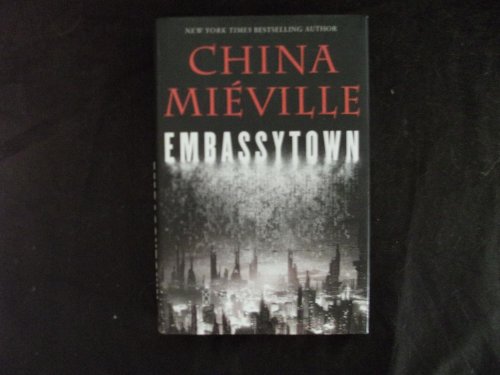
Embassytown
China Miéville, 2011
211 ratings

The Scar
China Miéville, 2002
143 ratings

Iron Council
China Miéville, 2004
82 ratings

The First Men in the Moon
Steven McLean, 1901
47 ratings

The Book of Elsewhere
Keanu Reeves, 2024
37 ratings
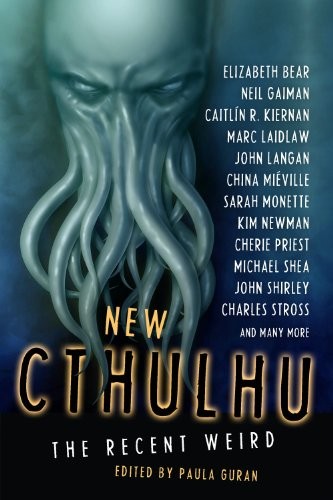
New Cthulhu: The Recent Weird
Elizabeth Bear, 2011
10 ratings
§ About China Miéville's books
- Books on SansFiction
- 8
- Published
- 1901–2024
- Average rating
- 3.9 / 5 across 1,255 ratings
- Genres
- Science Fiction, Dystopian, Fiction, Adventure
- Series
- New Crobuzon
Start here: The City & The City (2009)
When the body of a murdered woman is found in the extraordinary, decaying city of Beszel, somewhere at the edge of Europe, it looks like a routine case for Inspector Tyador Borlú of the Extreme Crime Squad. But as he probes, the evidence begins to point to conspiracies far stranger, and more deadly, than anything he could have imagined.
New Crobuzon: reading order
Common questions about China Miéville
- Who is China Miéville?
- Born in Norwich on 6 September 1972, Miéville grew up in Willesden, London, raised by his mother. Before attending university, he spent a year working in Egypt and Zimbabwe. He entered Clare College, Cambridge, in 1991 to study Social Anthropology before going on to earn a PhD from the London School of Economics.
- What is China Miéville best known for?
- China Miéville is best known for The City & The City, published in 2009 with 375 ratings and a 4.0 average. It is the most-rated of China Miéville's books on SansFiction.
- How many books has China Miéville written?
- SansFiction lists 8 books by China Miéville, published between 1901 and 2024. The most popular are The City & The City, Perdido Street Station, Embassytown, The Scar and Iron Council.
- What order should I read China Miéville's New Crobuzon books in?
- Read the New Crobuzon books in series order: 1. Perdido Street Station, 2. The Scar, 3. Iron Council.
- What genres does China Miéville write?
- China Miéville's books on SansFiction are tagged Science Fiction, Dystopian, Fiction and Adventure.
Explore: Science Fiction · Dystopian · Fiction · Adventure