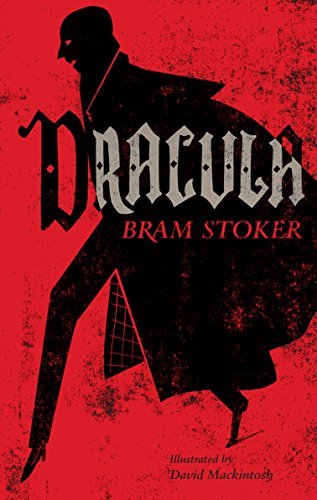
§Synopsis
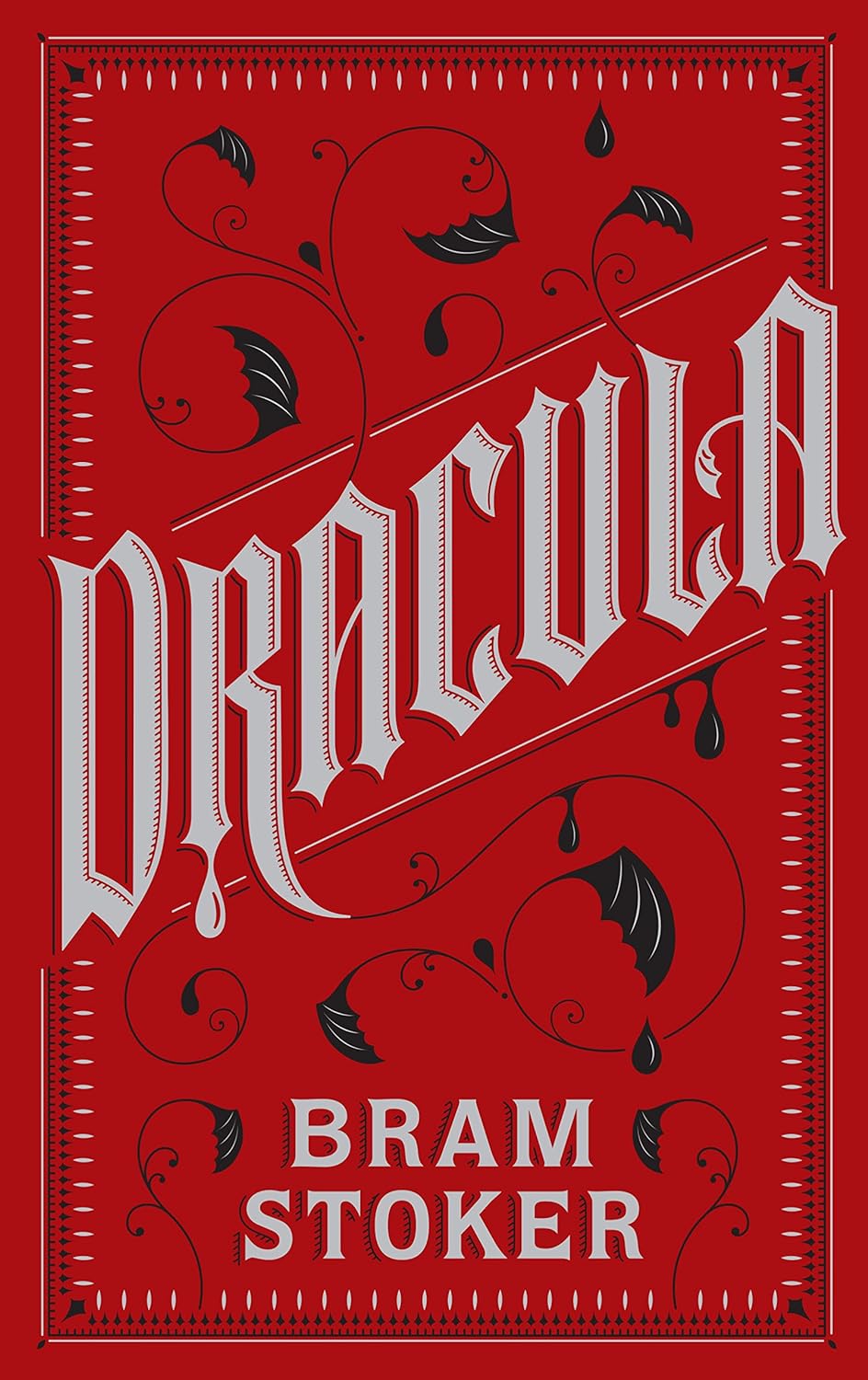
01"Little does he realize that, in doing so, he endangers all that he loves. For Dracula is one of the Un-dead—a centuries-old vampire who sleeps by day and stalks by night, feasting on the blood of his helpless victims. Once on English soil, the count sets his sights on Jonathan's circle of associates, among them his beloved wife Mina. To thwart Dracula's evil designs, Jonathan and his friends will have to accept as truth the most preposterous superstitions concerning vampires, and in the company of legendary vampire hunter Abraham Van Helsing, embark on an unholy adventure for which even their worst nightmares have not prepared them."
§Our take
Read the book before you trust the movies. Stoker's Count is a brutish figure, not the suave aristocrat Bela Lugosi made famous. The real horror lives in the form: a collage of diaries, telegrams, shorthand notes, and phonograph recordings that forces you to assemble the monster from fragments. Mina Harker does the intellectual heavy lifting, typing and compiling the evidence while the men rush around with crucifixes. The middle drags in England — Dracula vanishes for chapters — but the Transylvania opening and the closing chase remain the template. Scholars still argue over whether the novel fears foreigners, women, disease, or imperial decline; the 'reverse colonization' reading is the best known, not the only one. And the Vlad the Impaler connection is shakier than its fame: Stoker's notes show he found the name in a book on Wallachia, and scholar Elizabeth Miller argues the link to the Impaler has been greatly exaggerated.
§Themes
- Documents as evidence
- The story arrives as diaries, letters, telegrams and recordings, so the reader builds the horror from fragments.
- Science meets superstition
- Doctors, typewriters and phonographs sit beside garlic and wafers, and Van Helsing demands proof while fighting with folk remedies.
- Invasion from the East
- The Count's move to London reads as a Victorian nightmare of the imperial center breached by 'primitive' forces, a reading critics still debate.
- Purity versus appetite
- Approved love (the Harkers) is set against predatory desire, and Lucy's and Mina's fates are read as both policing women and responding to the 'New Woman.'
- The name is not the history
- Stoker's notes show he found the name in a book on Wallachia; scholar Elizabeth Miller argues the popular link to Vlad the Impaler has been greatly exaggerated.
§How it was received
Early British reviews were mixed to positive: many praised the horror, some faulted the craft, and critics split on whether a medieval monster in modern London was clever or clumsy. A modern collection of 1897–99 reviews argues that the idea of a poor reception is overstated. The book made Stoker little money in his lifetime; its stature grew through the 20th century, and academic study expanded sharply from the 1970s onward.
§Read it if
- You want the source code for every vampire story since, written in Victorian documents instead of modern prose.
- You like horror that builds through accumulating paper — diaries, telegrams, recordings — rather than direct narration.
- You appreciate a heroine who does the research, types the transcripts, and insists on joining the final hunt.
§Skip it if
- You need a charismatic, on-page villain. Dracula is absent for most of the middle and appears mostly through others' records.
- Victorian wordiness, phonetic dialect (Van Helsing's accent, Whitby sailors), and a slow middle section will try your patience.
§Before you start
- Reading experience
- Slow, atmospheric opening in Transylvania; a long, talky middle in England where Dracula disappears; then a faster closing chase — Victorian prose with heavy dialect that readability formulas understate.
- Content notes
- Sexual content: sexually forward female vampires, an unsettling scene involving Mina and Dracula; Violence: stabbing, throat-slashing, biting, blood drinking — more vivid than many Victorian novels but not graphic; Period prejudice against foreigners and Romani/Slovak characters; some scholars read antisemitic imagery in the Count's depiction; Medical procedures including blood transfusions depicted; Characters drink and smoke in passing.
§Common questions
- Is Dracula the same as the movie versions?
- No. The novel's Count is brutish and mostly offstage; the seductive aristocrat comes from Bela Lugosi's 1931 film and later adaptations.
- Did Stoker base Dracula on Vlad the Impaler?
- Scholar Elizabeth Miller argues the link is exaggerated; Stoker's notes show he took the name from a book on Wallachia after moving the setting from Styria to Transylvania.
- Is the epistolary format hard to follow?
- Some readers find the shifting diaries and document types confusing at first; others say it creates dread through slow accumulation. Common Sense Media notes young readers may struggle with the multiple viewpoints.
§If you liked this
- Carmilla by Sheridan Le Fanu — Le Fanu's earlier Gothic vampire novella with a seductive female vampire, named by reviewers and scholars as a predecessor.
- The Woman in White by Wilkie Collins — Wilkie Collins's multi-voice documentary method, which contemporary reviewers explicitly compared to Stoker's technique.
- Frankenstein by Mary Shelley — Mary Shelley's epistolary Gothic about a monster made at the edge of science, named in early reviews alongside Stoker.
- Strange Case of Dr Jekyll and Mr Hyde by Robert Louis Stevenson — Stevenson's short Victorian horror about science and hidden desire in modern London, a tighter companion piece.
Track this book
Add to your library to track progress and write reviews