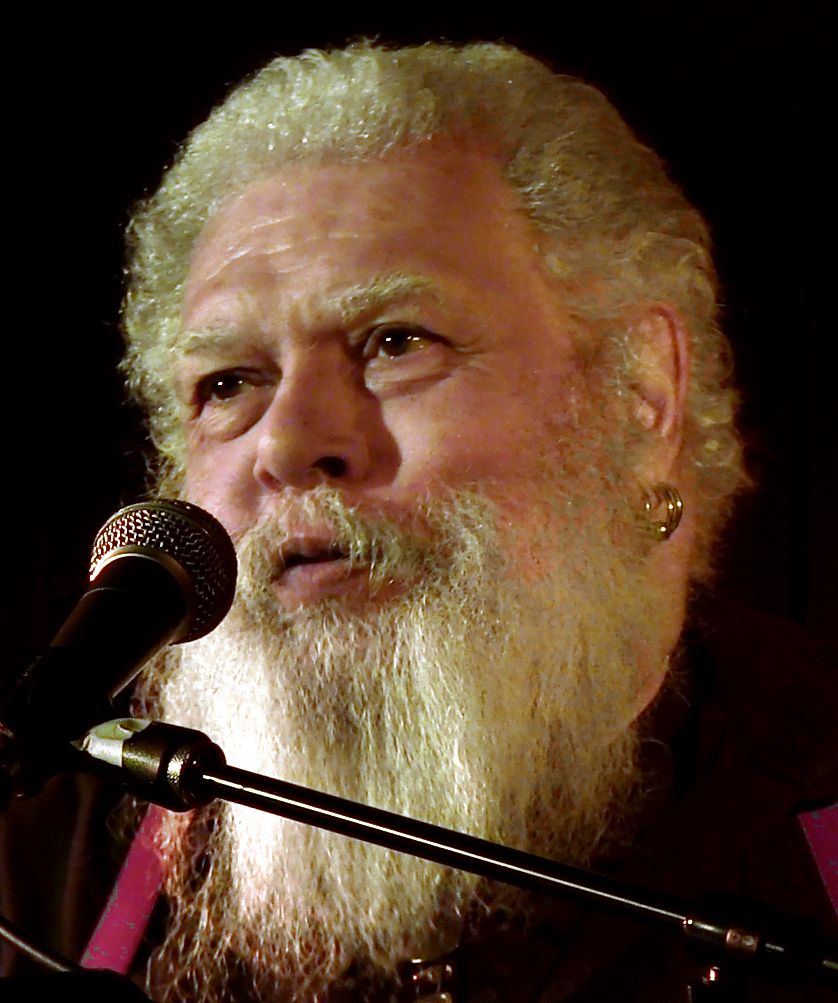
Speculative fiction gained new depth through mid-twentieth-century novels that integrated linguistics, mythology, and social critique into complex narrative structures. Samuel R. Delany established himself as a central voice in science fiction with groundbreaking novels such as Babel-17 and Dhalgren, publishing over thirty-five books across fiction, literary criticism, and autobiography.
By blending rigorous intellectual themes with inventive world-building, his award-winning work expanded the scope of speculative fiction by examining how language, culture, and communication shape human perception.
Career & Background
Born Samuel Ray Delany Jr. on April 1, 1942, in Harlem, New York City, he attended the City College of New York and published his debut novel in 1962 at the age of twenty. Early in his career, he achieved rapid acclaim within speculative fiction, earning four Nebula Awards and a Hugo Award before reaching twenty-seven. His early novels, including Babel-17 and The Einstein Intersection, demonstrated an ambitious engagement with structural linguistics, semiotics, and classical mythology.
In addition to his literary output, Delany built a distinguished career in academia, serving as a professor of literature and creative writing at the University of Massachusetts and later at Temple University, where he directed the Graduate Creative Writing Program. Over five decades, his work earned major honors, including induction into the Science Fiction Hall of Fame in 2002, the Damon Knight Memorial Foundation Grand Master Award in 2013, the Nicolás Guillén Lifetime Achievement Award for Philosophical Fiction in 2015, and election to the American Academy of Arts and Sciences in 2025.
Writing Style & Themes
Delany's narrative technique frequently incorporates semiotics, structuralism, and multi-layered viewpoints to question how social institutions and language construct reality. His fiction ranges from space opera and high fantasy to dense urban portraiture and explicit erotic literature, consistently foregrounding marginalized perspectives, queer experiences, and philosophical inquiry. The Return to Nevèrÿon series, for instance, uses fantasy tropes alongside theoretical appendices and critical commentary to interrogate economic and cultural power structures.
Throughout his career, Delany has maintained a parallel reputation as an influential essayist and literary critic. His non-fiction essays and memoirs analyze science fiction as a distinct literary mode with its own reading protocols, while documenting his experiences as an African American writer navigating both social and literary margins.
Major Works
- Babel-17 — This Hugo and Nebula Award-winning novel follows a starship captain tasked with decoding an enemy military language that acts as an inescapable mental weapon, exploring the connection between language and thought.
- The Einstein Intersection — A Nebula Award-winning story that blends mythology, music, and science fiction, following alien beings who inhabit an abandoned Earth and attempt to adopt human cultural forms.
- Nova — An influential space opera detailing an interstellar quest for a rare energy source known as Illyrion, combining galactic politics with cybernetic technology and mythological motifs.
- Dhalgren — A complex and widely discussed novel set in Bellona, a devastated Midwestern city isolated from the rest of the world, where an enigmatic protagonist navigates fluidity in identity, culture, and time.