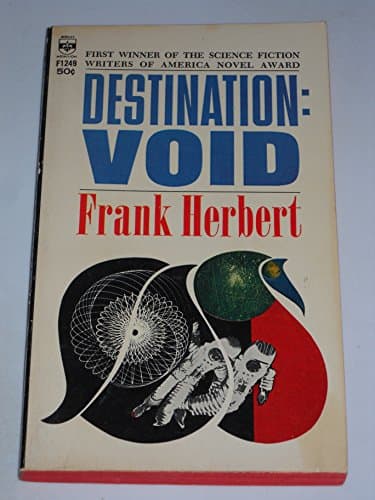
§Synopsis
01Science fiction-roman.
Science fiction-roman.
Add to your library to track progress and write reviews
Find Destination: Void Frank Herbert in PDF, EPUB, ebook, audiobook, print, or library editions.

22 books in catalog
The desert planet of Arrakis, with its giant sandworms, complex ecology, and political factions vying for control over the spice melange, remains one of the most thoroughly detailed world-building achievements in speculative fiction. American author Frank Herbert introduced this setting in his seminal 1965 novel Dune, creating an expansive universe that transformed epic science fiction by weaving together ecology, philosophy, religion, and political intrigue.
Born in Tacoma, Washington in 1920, Herbert spent his youth in the Pacific Northwest and worked on local newspapers as a teenager. He attended the University of Washington in Seattle and worked a wide variety of jobs throughout his early adult life, including time as a TV cameraman, radio commentator, oyster diver, jungle survival instructor, lay analyst, and creative writing teacher. He also worked as a reporter and later editor of a number of West Coast newspapers before becoming a full-time writer. Herbert began publishing science fiction in 1952 with his short story 'Looking for Something?' in Startling Stories. His research into the Oregon Dunes during the 1950s served as a primary catalyst for his ecological themes. He achieved widespread fame more than ten years later following the serial publication in Analog of 'Dune World' and 'The Prophet of Dune', which were amalgamated into the novel Dune in 1965.
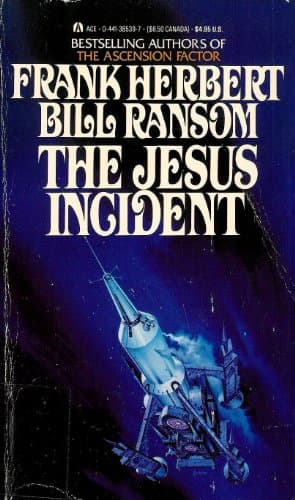
Herbert's fiction is distinguished by its intricate world-building, ecological awareness, and deep examination of human potential and institutional vulnerability. Rather than relying solely on technological advancement, his narrative focus often centers on human adaptability, psychological conditioning, religious mythmaking, and the perilous consequences of messianic leadership. He frequently explored how harsh environments shape cultures, social structures, and survival strategies, a focus prominently displayed in novels such as Destination: Void and The Jesus Incident alongside his desert sagas.
The Pandora Sequence