Combining intense psychological examination with complex ethical inquiry, the 1866 novel Crime and Punishment established a landmark approach to character interiority and crime fiction. Its author, Fyodor Dostoevsky, created a major body of Russian literature comprising novels, novellas, short stories, essays, and journalism that probed the troubled political, social, and spiritual atmosphere of nineteenth-century Russia.
His fiction engages deeply with philosophical and theological debates, examining human suffering, moral responsibility, and existential conflict through tightly constructed narrative voices and dramatic encounters.
Career & Background
Born in Moscow in 1821 to a hospital doctor and his literate wife, Fyodor Mikhailovich Dostoevsky was exposed to literature and religious texts early in life. After attending boarding school, he entered the St. Petersburg Academy of Military Engineering, graduating in 1843. He quickly resigned his military post to pursue writing full time, publishing his first novel Poor Folk in 1846. His career encompassed short stories, novellas, journalistic essays, and editorial journals alongside his larger fictional works.
Dostoevsky's literary reputation expanded dramatically across the late nineteenth century as he published major novels, including Demons in 1872 and The Brothers Karamazov in 1880. Critical interest in his literary structures continued long after his death, notably highlighted when literary theorist Mikhail Mikhailovich Bakhtin published Problems of Dostoyevsky's Works in 1929, analyzing the writer's multi-voiced narrative techniques and dialogic form.
Writing Style & Themes
Dostoevsky's fiction combines religious mysticism with rigorous psychological insight, examining how individuals navigate extreme moral dilemmas, guilt, and spiritual isolation. Critics frequently identify his novella Notes from the Underground as an early foundational text of existentialist literature due to its unvarnished portrait of human irrationality and free will. Across his narrative output, characters represent contrasting philosophical viewpoints on God, atheism, social reform, and human freedom.
Through shorter fiction like White Nights as well as expansive multi-character novels, Dostoevsky built scenes around dramatic ideological confrontations. His works balance personal autobiography and acute observation of social upheaval, placing conflicted protagonists inside chaotic environments where spiritual redemption and psychological collapse remain constantly intertwined.
Major Works
- Crime and Punishment — Published in 1866, this novel focuses on the psychological turmoil and moral consequences experienced by a young former student who commits murder in St. Petersburg.
- The Idiot — Serialized starting in 1869, this novel examines the struggles of a deeply compassionate and innocent prince attempting to navigate corrupt high society.
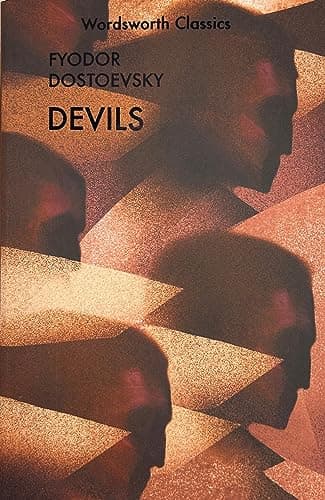
- Demons — Published in 1872, this politically charged novel explores radical ideologies, fanaticism, and social unrest in a provincial Russian town.
- The Brothers Karamazov — Published in 1880, Dostoevsky's final novel presents a family drama that explores faith, doubt, free will, and morality through the distinct worldviews of three brothers.
- Notes from the Underground — This influential novella presents the interior monologue of an isolated narrator, serving as an early milestone in existentialist literature.
- White Nights — A short story depicting a lonely narrator's fleeting emotional connection with a young woman over four nights in St. Petersburg.