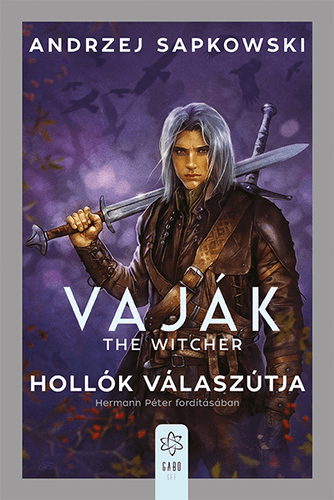
Before he was the White Wolf or the Butcher of Blaviken, Geralt of Rivia was simply a fresh graduate of Kaer Morhen, stepping into a world that neither understands nor welcomes his kind. And when an act of naïve heroism goes gravely wrong, Geralt is only saved from the noose by Preston Holt, a grizzled witcher with a buried past and an agenda of his own.
Under Holt’s guiding hand, Geralt begins to learn what it truly means to walk the Path – to protect a world that fears him, and to survive in it on his own terms. But as the line between right and wrong begins to blur, Geralt must decide to become the monster everyone expects, or something else entirely. This is the story of how legends are made – and what they cost
-- Provided by publisher.
Before he was the White Wolf or the Butcher of Blaviken, Geralt of Rivia was simply a fresh graduate of Kaer Morhen, stepping into a world that neither understands nor welcomes his kind. And when an act of naïve heroism goes gravely wrong, Geralt is only saved from the noose by Preston Holt, a grizzled witcher with a buried past and an agenda of his own.
Under Holt’s guiding hand, Geralt begins to learn what it truly means to walk the Path – to protect a world that fears him, and to survive in it on his own terms. But as the line between right and wrong begins to blur, Geralt must decide to become the monster everyone expects, or something else entirely. This is the story of how legends are made – and what they cost
-- Provided by publisher.
Add to your library to track progress and write reviews
Add to your library to track progress and write reviews
Find Hollók válaszútja Andrzej Sapkowski in PDF, EPUB, ebook, audiobook, print, or library editions.
Find Hollók válaszútja Andrzej Sapkowski in PDF, EPUB, ebook, audiobook, print, or library editions.
The Witcher (Publication order)
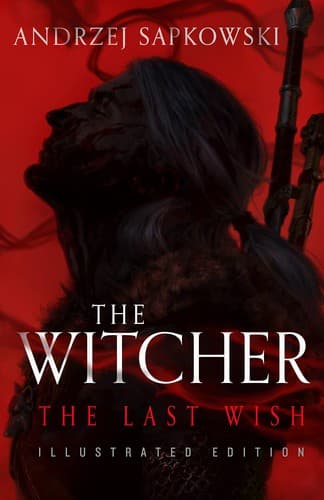
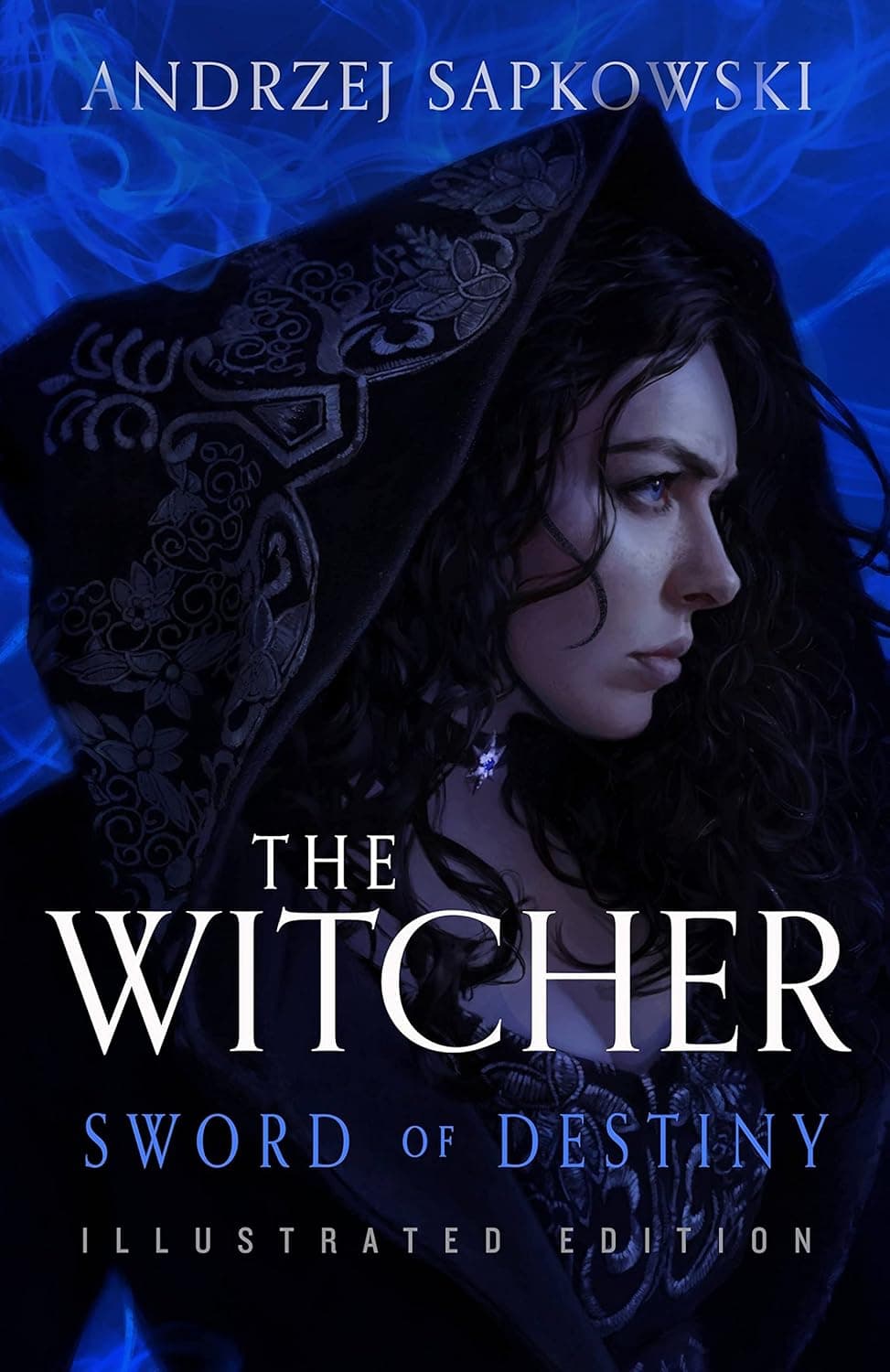
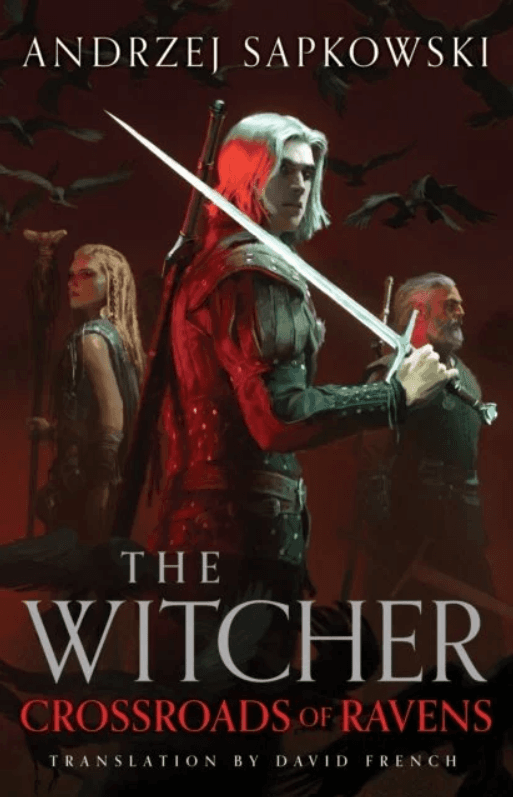
The Witcher (Publication order)

3 books in catalog
The saga of Geralt of Rivia introduced a dark, folklore-infused reinterpretation of traditional fantasy that re-engineered classic fairy tales through gritty realism and moral ambiguity. Andrzej Sapkowski created this world in the 1980s, establishing a franchise that expanded from Polish magazine stories into an international phenomenon translated into 37 languages across books, video games, comics, and television.
As the second most-translated Polish science fiction and fantasy writer after Stanisław Lem, his fiction blends swordplay with sardonic social satire and philosophical debate. His narrative universe revolves around the profession of the witcher—a mutated mercenary trained to hunt monsters in a realm plagued by political corruption and prejudice.
Born on 21 June 1948 in Łódź, Poland, Sapkowski studied economics at the University of Łódź and spent years working in foreign trade as a travelling salesman dealing in furs. An avid reader of foreign speculative fiction who frequently sought out imported books during business trips, he decided to enter a short story competition sponsored by the magazine Fantastyka in 1985. His submitted short story titled Wiedźmin appeared in print in 1986, drawing immediate attention and introducing Geralt of Rivia to Polish fantasy readers.
Following the enthusiastic response to his initial short fiction, Sapkowski transitioned into full-time writing, expanding his short stories into standalone collections and subsequent full-length novels. His work achieved monumental popularity throughout Poland in the 1990s before gaining widespread global translation. His contribution to culture earned him honors such as the Silver Medal for Merit to Culture - Gloria Artis in 2012 and honorary citizenship of his home city of Łódź in 2008.
Sapkowski's narrative style is distinguished by sharp dialogue, subversion of classic fairy tale tropes, and a cynical perspective on epic fantasy conventions. Rather than presenting a clear conflict between absolute good and absolute evil, his stories explore complex moral gray areas, political intrigue, prejudice, and human flaws. Geralt's code of neutrality constantly collides with the chaotic demands of a world where human monsters often prove far more dangerous than supernatural beasts.
Linguistically, his prose blends modern colloquial expressions, archaic phrasing, and Latin terminology to craft a distinctive world. Irony and humor serve as central tools to dissect social structures, bureaucratized power, and destiny, offering a pragmatic counterweight to high fantasy prophecies.
3 books in catalog
The saga of Geralt of Rivia introduced a dark, folklore-infused reinterpretation of traditional fantasy that re-engineered classic fairy tales through gritty realism and moral ambiguity. Andrzej Sapkowski created this world in the 1980s, establishing a franchise that expanded from Polish magazine stories into an international phenomenon translated into 37 languages across books, video games, comics, and television.
As the second most-translated Polish science fiction and fantasy writer after Stanisław Lem, his fiction blends swordplay with sardonic social satire and philosophical debate. His narrative universe revolves around the profession of the witcher—a mutated mercenary trained to hunt monsters in a realm plagued by political corruption and prejudice.
Born on 21 June 1948 in Łódź, Poland, Sapkowski studied economics at the University of Łódź and spent years working in foreign trade as a travelling salesman dealing in furs. An avid reader of foreign speculative fiction who frequently sought out imported books during business trips, he decided to enter a short story competition sponsored by the magazine Fantastyka in 1985. His submitted short story titled Wiedźmin appeared in print in 1986, drawing immediate attention and introducing Geralt of Rivia to Polish fantasy readers.
Following the enthusiastic response to his initial short fiction, Sapkowski transitioned into full-time writing, expanding his short stories into standalone collections and subsequent full-length novels. His work achieved monumental popularity throughout Poland in the 1990s before gaining widespread global translation. His contribution to culture earned him honors such as the Silver Medal for Merit to Culture - Gloria Artis in 2012 and honorary citizenship of his home city of Łódź in 2008.
Sapkowski's narrative style is distinguished by sharp dialogue, subversion of classic fairy tale tropes, and a cynical perspective on epic fantasy conventions. Rather than presenting a clear conflict between absolute good and absolute evil, his stories explore complex moral gray areas, political intrigue, prejudice, and human flaws. Geralt's code of neutrality constantly collides with the chaotic demands of a world where human monsters often prove far more dangerous than supernatural beasts.
Linguistically, his prose blends modern colloquial expressions, archaic phrasing, and Latin terminology to craft a distinctive world. Irony and humor serve as central tools to dissect social structures, bureaucratized power, and destiny, offering a pragmatic counterweight to high fantasy prophecies.