SSansFiction
The libraryCollectionsJournalStatsFor authors
Sign inJoin now
Sansfiction,

A digital library for books. Made by readers, for readers.

v 2.0 · 2026
The library
  • Discover
  • Collections
  • Book tracker
  • Journal
  • Stats
For authors
  • SF Links
  • Analytics
  • How it works
  • FAQ
Elsewhere
  • X / @sansfiction
  • Privacy
  • Terms
  • Contact
© 2026 SansFiction · Digital · GlobalA quiet room for your reading life.
The libraryCollectionsJournalStatsFor authors
Sign inJoin now →
Navigation
Library
Bookshelf
Journal
Discover
Collections
Tierlists
Stats
Profile
Author Page
Link Builder
Account
Sign in
S
G
BooksclassicsSet Free Journal
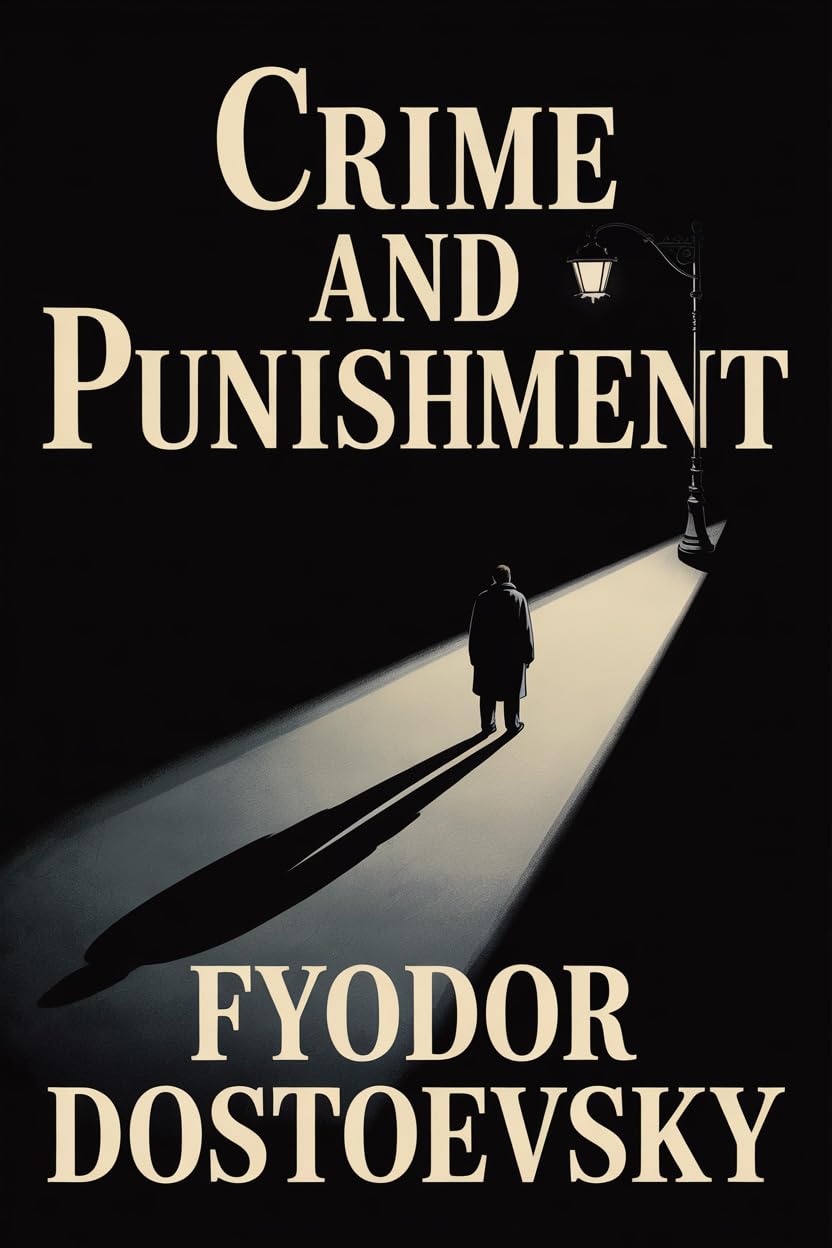
Cover of Set Free Journal by Fyodor Dostoevsky

Set Free Journal,

by Fyodor Dostoevsky, Richard Pevear, Larissa Volokhonsky

Ask AI
Rating4.2/ 5
Ratings1,355
Pages602
Reading Hours13h
Published2020
LanguageEnglish

§Synopsis

01

Raskolnikov, a destitute and desperate former student, wanders through the slums of St Petersburg and commits a random murder without remorse or regret. He imagines himself to be a great man, a Napoleon: acting for a higher purpose beyond conventional moral law. But as he embarks on a dangerous game of cat-and-mouse with Porfiry, a suspicious detective, Raskolnikov is pursued by the growing voice of his conscience and finds the noose of his own guilt tightening around his neck. Only Sonya, a downtrodden prostitute, can offer the chance of redemption. As the ensuing investigation and trial reveal the true identity of the murderer, Dostoyevsky's dark masterpiece evokes a world where the lines between innocence and corruption, good and evil, blur and everyone's faith in humanity is tested.

§Our take

The murder isn't the mystery. Dostoevsky gets the crime out of the way early and spends the rest of the book inside the mind of a man arguing with himself, which is where the grip is. Raskolnikov's crime is written as a symptom of fashionable ideas, nihilism and utilitarian arithmetic dressed up as greatness, so the novel reads as an argument with an entire intellectual moment, not just one man's breakdown. St Petersburg matters too: Donald Fanger read the city's squalor and crowding as a psychological landscape mirroring the protagonist. And the book still splits its readers along a live fault line. Pisarev saw Raskolnikov as made by poverty and environment; Solovyov saw a drama about sin. The Symbolists and Berdyaev read it as an attack on human self-deification. Both readings hold. Pick yours, then argue about the epilogue like everyone else.

§Themes

The great man excuse
Raskolnikov's justification for murder is presented as a symptom of nihilist and utilitarian ideas, not just private illness.
The city as a mind
St Petersburg's squalor and crowding mirror the protagonist's mental state.
Voices at war
The narration stays inside Raskolnikov's head, and Bakhtin read it as dialogical, with competing voices fighting for him.
Poverty everywhere
Marmeladov's drinking, Sonya's forced prostitution and Katerina Ivanovna's household widen the story far beyond one crime.

§How it was received

It was the literary sensation of 1866 in Russia, by Nikolay Strakhov's account, and the first two parts reportedly won the magazine hundreds of new subscribers. The twentieth century kept the argument going: the Bloomsbury writers, Freud, and existentialists like Sartre and Camus all trace lines to it, while Soviet critics preferred socio-economic readings, with Bakhtin a notable exception.

§Read it if

  • You want a psychological crime novel where the interest is the killer's mind, not the whodunit
  • You like fiction that argues with big ideas, and don't mind long conversations as the battlefield
  • You enjoy classics that critics are still actively fighting over

§Skip it if

  • You need brisk plotting. The pace swings between tight psychological scenes and long philosophical talk.
  • You want a clean, uncontested ending. Some critics find the epilogue superfluous.

§Before you start

Reading experience
Long, around 527 pages depending on edition, in six parts plus an epilogue, originally read in monthly instalments, which suits reading in chunks.
Content notes
Murder and violence; Forced prostitution; Alcoholism; Extreme poverty; Domestic abuse.

§Common questions

Which translation of Crime and Punishment should I read?
There's no settled answer. Garnett's 1914 version is free on Project Gutenberg but criticised by Nabokov, Brodsky and others as flattening Dostoevsky's voices. Pevear and Volokhonsky are praised by Wood and Bloom for fidelity and attacked by Malcolm, Morson and McWhorter as too literal. McDuff, Ready, Katz and Cockrell versions also exist.
Is the epilogue necessary?
Critics disagree. Some find it superfluous; Steven Cassedy argues it completes a Christian resurrection story that tragedy alone wouldn't. It's one of the book's live arguments.
Is Crime and Punishment part of a series?
No. It's standalone, though thematically it's close to Notes from Underground.

§If you liked this

  • Notes from Underground by Fyodor Dostoevsky — The direct ancestor. Crime and Punishment continues its critique of rationalism and utilitarian thinking.
  • The Brothers Karamazov by Fyodor Dostoevsky — The natural next step in Dostoevsky, and the book that won Pevear and Volokhonsky their translation prize.
Sources
  • Wikipedia
  • Wikipedia
  • Wikipedia
  • Wikipedia (author article)
  • Project Gutenberg
  • LitCharts
  • Goodreads

Track this book

Add to your library to track progress and write reviews

§Genres
classics1crime1fiction1french fiction1general1literary criticism1literature1
§Content Warnings
§Moods
challenging1emotional1hopeful1informative1inspiring1mysterious1reflective1
§Tags
#alcohol consumption1#diverse characters1#loveable characters1#male author1

§About the Author

Fyodor Dostoevsky
Fyodor Dostoevsky

7 books in catalog

Combining intense psychological examination with complex ethical inquiry, the 1866 novel Crime and Punishment established a landmark approach to character interiority and crime fiction. Its author, Fyodor Dostoevsky, created a major body of Russian literature comprising novels, novellas, short stories, essays, and journalism that probed the troubled political, social, and spiritual atmosphere of nineteenth-century Russia.

His fiction engages deeply with philosophical and theological debates, examining human suffering, moral responsibility, and existential conflict through tightly constructed narrative voices and dramatic encounters.

Career & Background

Born in Moscow in 1821 to a hospital doctor and his literate wife, Fyodor Mikhailovich Dostoevsky was exposed to literature and religious texts early in life. After attending boarding school, he entered the St. Petersburg Academy of Military Engineering, graduating in 1843. He quickly resigned his military post to pursue writing full time, publishing his first novel Poor Folk in 1846. His career encompassed short stories, novellas, journalistic essays, and editorial journals alongside his larger fictional works.

Dostoevsky's literary reputation expanded dramatically across the late nineteenth century as he published major novels, including Demons in 1872 and The Brothers Karamazov in 1880. Critical interest in his literary structures continued long after his death, notably highlighted when literary theorist Mikhail Mikhailovich Bakhtin published Problems of Dostoyevsky's Works in 1929, analyzing the writer's multi-voiced narrative techniques and dialogic form.

Writing Style & Themes

Dostoevsky's fiction combines religious mysticism with rigorous psychological insight, examining how individuals navigate extreme moral dilemmas, guilt, and spiritual isolation. Critics frequently identify his novella Notes from the Underground as an early foundational text of existentialist literature due to its unvarnished portrait of human irrationality and free will. Across his narrative output, characters represent contrasting philosophical viewpoints on God, atheism, social reform, and human freedom.

Through shorter fiction like White Nights as well as expansive multi-character novels, Dostoevsky built scenes around dramatic ideological confrontations. His works balance personal autobiography and acute observation of social upheaval, placing conflicted protagonists inside chaotic environments where spiritual redemption and psychological collapse remain constantly intertwined.

Major Works

  • Crime and Punishment — Published in 1866, this novel focuses on the psychological turmoil and moral consequences experienced by a young former student who commits murder in St. Petersburg.
  • The Idiot — Serialized starting in 1869, this novel examines the struggles of a deeply compassionate and innocent prince attempting to navigate corrupt high society.
  • Demons — Published in 1872, this politically charged novel explores radical ideologies, fanaticism, and social unrest in a provincial Russian town.
  • The Brothers Karamazov — Published in 1880, Dostoevsky's final novel presents a family drama that explores faith, doubt, free will, and morality through the distinct worldviews of three brothers.
  • Notes from the Underground — This influential novella presents the interior monologue of an isolated narrator, serving as an early milestone in existentialist literature.
  • White Nights — A short story depicting a lonely narrator's fleeting emotional connection with a young woman over four nights in St. Petersburg.

§Other Editions

Showing 2 of 594 editions
Cover of Crime and Punishment

Crime and Punishment

engKindle
Grapevine2025B0FVHPLXYY
Amazon
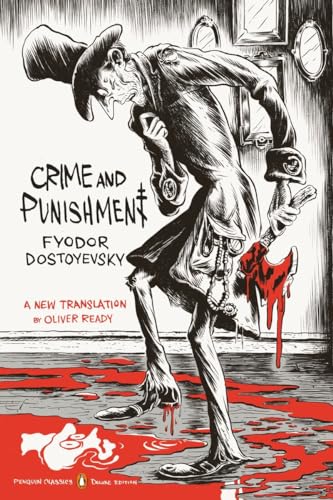
Cover of Crime and Punishment

Crime and Punishment

engPaperback
Penguin20159780143107637
§Genres
classics1crime1fiction1french fiction1general1literary criticism1literature1
§Content Warnings
§Moods
challenging1emotional1hopeful1informative1inspiring1mysterious1reflective1
§Tags
#alcohol consumption1#diverse characters1#loveable characters1#male author1

Metadata

ISBN-139781777033101
ISBN-101777033101
ASINB0FVHPLXYY

Editions and availability

Find Set Free Journal Fyodor Dostoevsky in PDF, EPUB, ebook, audiobook, print, or library editions.

View on Amazon
Bookshop.orgGoogle Play BooksBarnes & NobleOpen Library

Featured In Lists

Book cover from this collectionBook cover from this collectionBook cover from this collectionBook cover from this collection
Book cover from this collection

100 Must Read Classics

99 books
Book cover from this collectionBook cover from this collectionBook cover from this collectionBook cover from this collection
Book cover from this collection

Gilmore Girls Reading List 🍂

407 books
Book cover from this collectionBook cover from this collectionBook cover from this collectionBook cover from this collection
Book cover from this collection

List 1001 Books Boxall

1000 books
Book cover from this collectionBook cover from this collectionBook cover from this collectionBook cover from this collection
Book cover from this collection

CLUB DE CULTO

52 books
Book cover from this collectionBook cover from this collectionBook cover from this collectionBook cover from this collection
Book cover from this collection

100 Greatest Books

98 books
Book cover from this collectionBook cover from this collectionBook cover from this collectionBook cover from this collection
Book cover from this collection

200-ish Books to Read Before You Die

36 books