SSansFiction
The libraryCollectionsJournalStatsFor authors
Sign inJoin now
Sansfiction,

A digital library for books. Made by readers, for readers.

v 2.0 · 2026
The library
  • Discover
  • Collections
  • Book tracker
  • Journal
  • Stats
For authors
  • SF Links
  • Analytics
  • How it works
  • FAQ
Elsewhere
  • X / @sansfiction
  • Privacy
  • Terms
  • Contact
© 2026 SansFiction · Digital · GlobalA quiet room for your reading life.
The libraryCollectionsJournalStatsFor authors
Sign inJoin now →
Navigation
Library
Bookshelf
Journal
Discover
Collections
Tierlists
Stats
Profile
Author Page
Link Builder
Account
Sign in
S
G
Booksalien contactChildhood's End
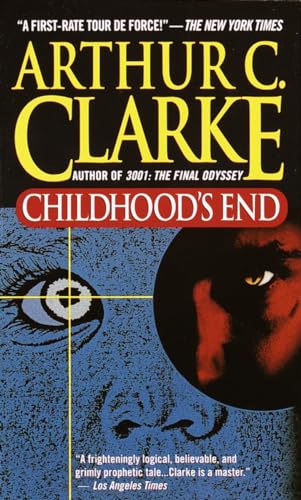
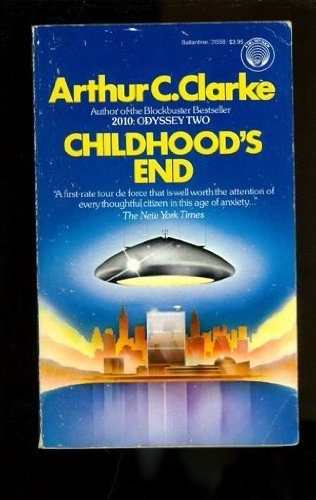
Cover of Childhood's End by Arthur C. Clarke

Childhood's End,

by Arthur C. Clarke

Ask AI
Rating4.0/ 5
Ratings623
Pages212
Reading Hours4h
Published1953
LanguageEnglish

§Synopsis

01

The Overlords appeared suddenly over every city—intellectually, technologically, and militarily superior to humankind. Benevolent, they made few demands: unify earth, eliminate poverty, and end war. With little rebellion, humankind agreed, and a golden age began. But at what cost? With the advent of peace, man ceases to strive for creative greatness, and a malaise settles over the human race. To those who resist, it becomes evident that the Overlords have an agenda of their own. As civilization approaches the crossroads, will the Overlords spell the end for humankind . . . or the beginning?

§Our take

The real subject here is what comes after the war ends: a utopia that quietly drains away the striving that once defined the species. Clarke builds it across roughly two centuries, with humanity rather than any single character as the protagonist, and the final chapters turn that premise into one of the genre's most discussed endings. The prose is plain and the people are thin, but the ideas still provoke, and Clarke's authorized biographer notes that many readers and critics consider it his best novel.

§Themes

Utopia with a cost
The Overlords end war and want, and the book then asks what humans strive for once struggle is gone.
Benevolent colonialism
Greely reads the Overlords like a colonial administration and humanity's demoralization as akin to colonized peoples.
Transformation
The book treats change on a species scale; Hank Greely's reading argues it fits a cultural phase change better than biology.
Religion as question
The Overlords' appearance and the Overmind carry religious imagery, and Clarke's own skepticism leaves the tone ambiguous.
Humanity as protagonist
About 250 pages cover two centuries, each section introducing new characters who represent their era's attitudes.

§How it was received

Early reception was largely admiring: per Wikipedia, Basil Davenport in the New York Times set Clarke alongside Stapledon and Wells, while Anthony Boucher and J. Francis McComas found the mix of grand history and small episodes awkward. The first printing of 210,000 copies reportedly sold out within two months. Later, Brian Aldiss and David Wingrove called the core idea banal but effective, and it was a finalist for the 1954 Retro Hugo for Best Novel.

§Read it if

  • You want big‑idea science fiction that probes what humanity does when struggle ends.
  • You can accept thin, stereotyped characters in exchange for a story that spans centuries of ideas.
  • You want the 1953 novel that later inspired Pink Floyd, Bowie and Genesis songs and a 2015 Syfy miniseries.

§Skip it if

  • You need well-drawn characters; here people mostly serve as mouthpieces for ideas.
  • You want steady forward momentum; the episodic, century-spanning structure keeps resetting the cast.

§Before you start

Reading experience
Short and fast-moving at roughly 250 pages, spanning two centuries with a shifting cast.
Content notes
Emotionally heavy final section involving loss and suicide; little graphic content; Period gender attitudes that modern readers may find reflexively sexist: women tied to reproduction, men as thinkers and doers; Dated technology: computers as calculators, paper and film everywhere.

§Common questions

Is Childhood's End part of a series?
No, it's a standalone, though thematically linked to Clarke's Space Odyssey stories.
Has it been adapted for screen or audio?
Yes, a 2015 Syfy miniseries and a BBC Radio 4 dramatization; film attempts were never produced.
Does the opening differ between editions?
Yes. Clarke revised the opening in 1990, moving the space race from the Moon to Mars; some editions keep the original opening and some carry both.

§If you liked this

  • 2001: A Space Odyssey by Arthur C. Clarke — Both explore humanity transformed by alien intelligence, with 2001 continuing the evolutionary thread Childhood's End begins.
  • Last and First Men by Olaf Stapledon — Davenport's early review positioned Clarke alongside Stapledon, and both write species‑scale future histories.
  • More Than Human by Theodore Sturgeon — A fellow 1953 Retro Hugo finalist that also imagines humanity growing into something new.
  • Fahrenheit 451 by Ray Bradbury — Another 1953 novel about a society pacified by comfort and entertainment, making it a thematic counterpoint.
  • Blood Music by Greg Bear — A later novel dealing with sudden collective transformation.
Sources
  • Wikipedia
  • The Hugo Awards (official site)
  • Stanford Law School (Hank Greely, BioSci Fi blog)
  • Worlds Without End (Scott Lazerus review)
  • Wikipedia
  • Wikipedia
  • Wikipedia

Track this book

Add to your library to track progress and write reviews

§Genres
alien contact3aliens1dystopian1fiction1general1hard science fiction1history1
§Moods
gray2adventurous1challenging1dark1emotional1hopeful1mysterious1
§Tags
#evolution2#audible1#diverse characters1#loveable characters1#not diverse characters1#plot driven1#posthuman1

§About the Author

Arthur C. Clarke
Arthur C. Clarke

9 books in catalog

Pioneering hard science fiction and foreseeing real-world satellite communications defined the expansive body of work associated with 2001: A Space Odyssey. Arthur C. Clarke established himself as a British science fiction writer, science writer, futurist, inventor, undersea explorer, and television series host whose speculative stories grounded visionary technological concepts in rigorous scientific principles.

Career & Background

Born in Minehead, Somerset, England, in 1917, Sir Arthur Charles Clarke CBE FRAS grew up with a passion for astronomy and speculatively minded science. Lacking the financial resources for immediate university study, he joined the British Interplanetary Society in 1934 as a teenager and served in the Royal Air Force from 1941 to 1946 as a radar instructor and technician during World War II. In 1945, he published his landmark technical proposal detailing how geostationary orbits could host a global satellite communication system. Following the war, he earned a degree in physics and mathematics from King's College London between 1946 and 1948, served as assistant editor for Physics Abstracts, and held the position of chairman of the British Interplanetary Society from 1946 to 1947 and again from 1951 to 1953. Along with Robert Heinlein and Isaac Asimov, he became known as one of the 'Big Three' authors of science fiction.

In 1956, Clarke emigrated from England to Sri Lanka (formerly Ceylon) to pursue his passion for scuba diving and underwater photography. That same year in 1956, while exploring off Trincomalee, he discovered the underwater ruins of the ancient Koneswaram temple. He continued living in Sri Lanka for the rest of his life, writing dozens of non-fiction books and magazine essays on space travel that earned him UNESCO's Kalinga Prize in 1961 and the informal moniker 'Prophet of the Space Age'. In 1968, he co-wrote the screenplay for Stanley Kubrick's film 2001: A Space Odyssey, expanding his reach into world media. During the 1980s, he hosted popular television shows including Arthur C. Clarke's Mysterious World. His contributions earned him appointment as Commander of the Order of the British Empire (CBE) in 1989, a knighthood in 1998, and Sri Lanka's highest civil honour, Sri Lankabhimanya, in 2005 before his death in 2008.

Writing Style & Themes

Clarke's writing style is characterized by scientific precision, intellectual clarity, and a profound sense of cosmic wonder. His narrative approach blends technical realism with philosophical inquiry, frequently examining humanity's first encounters with advanced extraterrestrial intelligences, the mechanical challenges of lunar and planetary survival, and the long-term evolution of human consciousness. Rather than focusing on military conflicts or melodramatic space opera, his works emphasize problem-solving, scientific exploration, and optimism about technological progress. His acclaimed novels received numerous Hugo and Nebula awards, solidifying his role as an influential advocate for space exploration and scientific literacy.

Major Works

  • 2001: A Space Odyssey — Published in 1968 alongside the landmark film co-written with Stanley Kubrick, this novel explores human evolution, artificial intelligence, and deep-space exploration following the discovery of a mysterious alien monolith.
  • Childhood's End — Published in 1953, this novel depicts the peaceful arrival of alien Overlords who transform Earth society, guiding humanity toward an unexpected evolutionary destiny.
  • Rendezvous with Rama — First published in 1973, this Hugo and Nebula award-winning novel details a scientific expedition sent to inspect a massive, cylindrical alien starship passing through the Solar System.
  • The City and the Stars — A far-future narrative set in Diaspar, a technologically closed city on Earth millions of years in the future, where a unique citizen seeks to discover what lies beyond its walls.
  • A Fall of Moondust — A hard science fiction novel following a tense rescue operation when a lunar tourist cruiser becomes buried beneath a sea of fine dust on the Moon.
  • The Fountains of Paradise — An influential novel centering on the engineering and political challenges of constructing a space elevator anchored to a mountain peak.

§Other Editions

Showing 2 of 83 editions
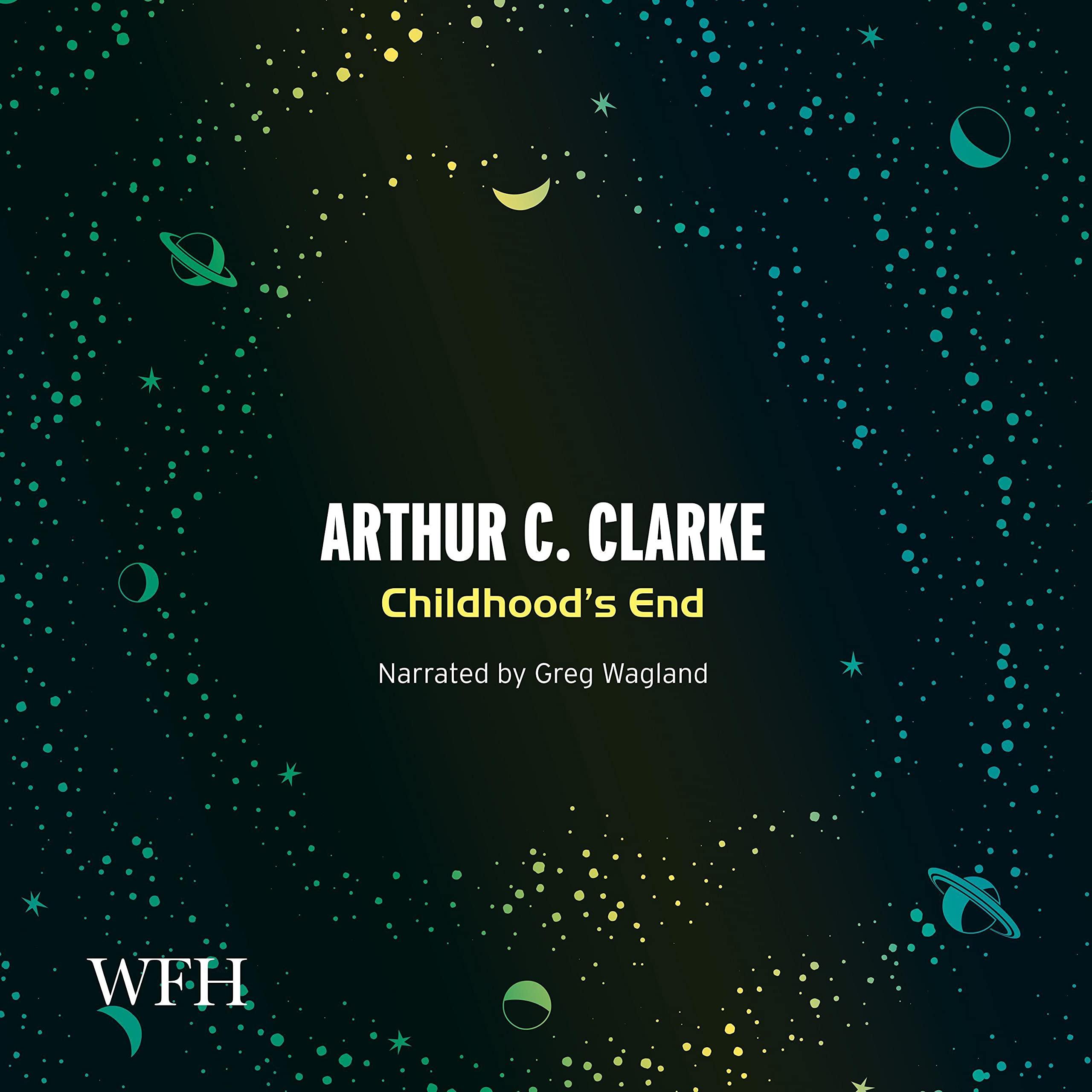
Cover of Childhood's End

Childhood's End

engAudible.comUnabridged Audiobook
W. F. Howes Ltd20169781510024786
Amazon
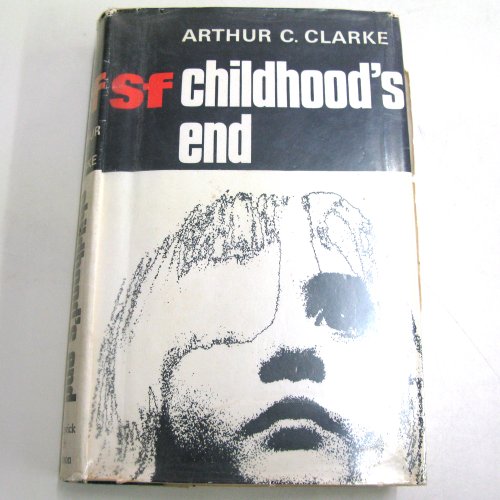
Cover of Childhood's end.

Childhood's end.

engHardcover
Sidgwick & Jackson19539780283980107
§Genres
alien contact3aliens1dystopian1fiction1general1hard science fiction1history1
§Moods
gray2adventurous1challenging1dark1emotional1hopeful1mysterious1
§Tags
#evolution2#audible1#diverse characters1#loveable characters1#not diverse characters1#plot driven1#posthuman1

Metadata

ISBN-139780345315588
ISBN-100345315588
ASINB01CQ07S2O

Editions and availability

Find Childhood's End Arthur C. Clarke in PDF, EPUB, ebook, audiobook, print, or library editions.

View on Amazon
Bookshop.orgGoogle Play BooksBarnes & NobleOpen Library

Featured In Lists

Book cover from this collectionBook cover from this collectionBook cover from this collectionBook cover from this collection
Book cover from this collection

NPRs Top 100 Science-Fiction and Fantasy Books of All Time

100 books
Book cover from this collectionBook cover from this collectionBook cover from this collectionBook cover from this collection
Book cover from this collection

AI Fiction 1951-1989: Mainframes, Androids & Cybernetic Minds

25 books•@sansfictionbot
Book cover from this collectionBook cover from this collectionBook cover from this collectionBook cover from this collection
Book cover from this collection

NPR Top 100 Science Fiction Fantasy

68 books
Book cover from this collectionBook cover from this collectionBook cover from this collectionBook cover from this collection
Book cover from this collection

The Esquire 75 Best Sci-Fi Books of All Time

74 books