№ 1 · Before the Coffee Gets Cold
Before the Coffee Gets Cold,
§Synopsis
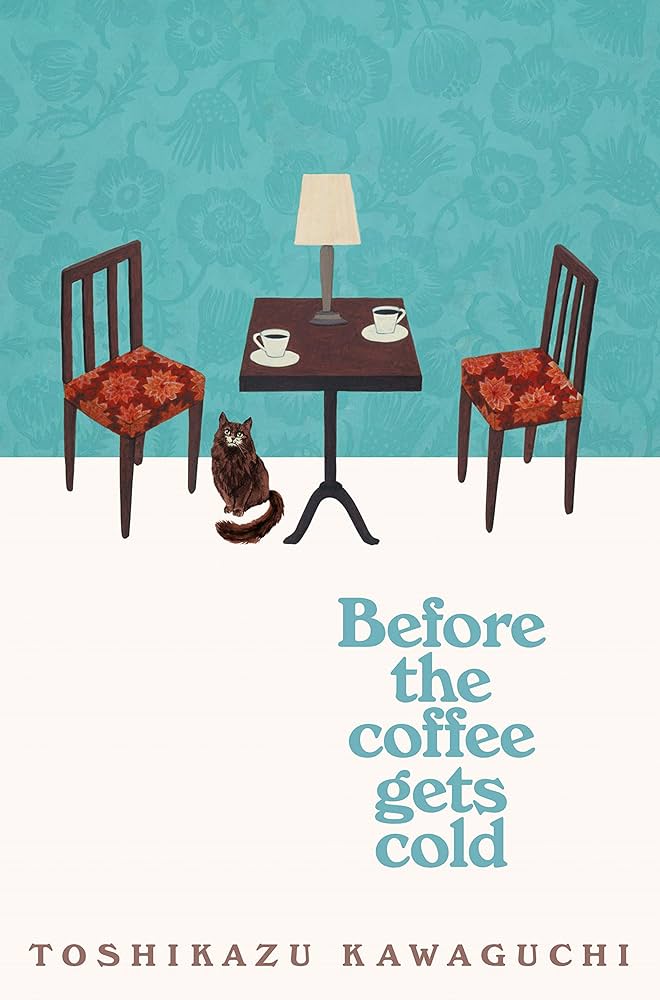
01If you could go back, who would you want to meet? In a small back alley in Tokyo, there is a café which has been serving carefully brewed coffee for more than one hundred years. Local legend says that this shop offers something else besides coffee - the chance to travel back in time. Over the course of one summer, four customers visit the cafe in the hopes of making that journey. But tiem travel isn't so simple, and there are rules that must be followed. Most important, the trip can take only as long as it takes for the coffee to get cold.
Toshikazu Kawaguchi’s beautiful, moving story – translated from Japanese by Geoffrey Trousselot – explores the age-old question: what would you change if you could travel back in time?
§Our take
This is time travel with the plot deliberately put on a leash: one seat, one basement café, one cup of coffee, and no changes to history. That constraint is the book's real invention. The Chicago Review of Books praises it for stopping the premise sprawling and calls the closing story the cleverest, though it finds the first weakest and the stage-play machinery showing in passages that read like stage directions. The Christian Science Monitor calls the book quirky, wise and emotionally deep, while warning that it meanders and never reaches the literary stature of Japan's best-known novelists. Reader reactions divide most sharply over the plain English: some call it gentle and compassionate, others stiff or too flat. The better approach is to stop expecting a clever time-travel plot and accept a quiet ensemble about regret, memory and what remains possible in the present.
§Themes
- A deadline in a cup
- Each trip lasts only until the coffee goes cold, turning an ordinary drink into a clock.
- The past stays put
- Travelers cannot rewrite what happened, so the real change happens inside them.
- The unsaid conversation
- Each customer wants a second chance to say what was left unsaid to someone important.
- Comfort over complexity
- The warm café, short episodes and restrained tone favor reflection rather than intricate plotting.
- The play on the page
- One setting and a rotating cast provide discipline, though the stage directions can show.
§How it was received
English-language reviews were generally warm but not rapturous: the emotional pull and neatly bounded premise drew praise, while the prose drew complaints. The Chicago Review of Books valued the strict rules, called the closing story the cleverest and the first the weakest, and disliked passages that read like stage directions; the Christian Science Monitor called it quirky, wise and emotionally deep but uneven. The Harvard Crimson was more enthusiastic, praising the simple rules, four-part structure and Kazu as the connecting thread, while student and blog reviews split over shallow characters, episodic plotting and plain style.
§Read it if
- You want a gentle, short novel with strict time-travel rules and a warm café setting
- You enjoy linked episodes about regret, family and memory more than intricate plotting
- You like books you can comfortably finish in one sitting
§Skip it if
- You came for plot-heavy time travel. The pace is calm and some stories feel predictable.
- Plain, repetitive prose or thin character interiors will make you quit during the crowded opening chapters.
§Before you start
- Reading experience
- The pace is calm and dialogue-heavy, with the opening crowded by similar names and several rules re-explained, so the first chapter may take a little settling.
- Reading order
- Book 1 of the Before the Coffee Gets Cold series. Start here because it establishes the time-travel rules and the original Tokyo café. Pan Macmillan says later volumes work as standalones, though sequence is best; Tales from the Cafe comes next, followed by Before Your Memory Fades at a sister café and further entries.
- Content notes
- Illness and memory loss, including a husband with Alzheimer's disease; Grief and family estrangement; A ghost who cannot move on.
§Common questions
- How does the time travel work?
- One seat in the Tokyo café sends a visitor back. The traveler can only meet people who have visited the café, must stay in the seat, and has to return before the coffee goes cold. Nothing they do changes the present.
- Do I need to read the series in order?
- No. Pan Macmillan says each book works as a standalone, but this is Book 1 and the best place to learn the rules.
- Is this based on a play?
- Yes. Kawaguchi developed the story as a stage play in 2010 before turning it into his debut novel.
§If you liked this
- The Kamogawa Food Detectives by Hisashi Kashiwai — A cozier Japanese ensemble in which food opens paths into memory and glimpses of the future.
- What You Are Looking For Is in the Library by Michiko Aoyama — Warm, episodic Tokyo stories with small magical-realist interventions at the center.
- The Full Moon Coffee Shop by Mai Mochizuki — Another Japanese café tale, using coffee as a setting for healing and lost souls finding their way.
- The Midnight Library by Matt Haig — Shares this book's interest in regret and acceptance, but uses a fantastical device to look at roads not taken.
Track this book
Add to your library to track progress and write reviews