London life just after World War I, devoid of values and moving headlong into chaos at breakneck speed—Aldous Huxley's Antic Hay. like Hemingway's The Sun Also Rises, portrays a world of lost souls madly pursuing both pleasure and meaning. Fake artists, third-rate poets, pompous critics, pseudo-scientists, con-men, bewildered romantics, cock-eyed futurists—all inhabit this world spinning out of control, as wildly comic as it is disturbingly accurate. In a style that ranges from the lyrical to the absurd, and with characters whose identities shift and change as often as their names and appearances, Huxley has here invented a novel that bristles with life and energy. What the New York Times called “a delirium of sense enjoyment!”

London life just after World War I, devoid of values and moving headlong into chaos at breakneck speed—Aldous Huxley's Antic Hay. like Hemingway's The Sun Also Rises, portrays a world of lost souls madly pursuing both pleasure and meaning. Fake artists, third-rate poets, pompous critics, pseudo-scientists, con-men, bewildered romantics, cock-eyed futurists—all inhabit this world spinning out of control, as wildly comic as it is disturbingly accurate. In a style that ranges from the lyrical to the absurd, and with characters whose identities shift and change as often as their names and appearances, Huxley has here invented a novel that bristles with life and energy. What the New York Times called “a delirium of sense enjoyment!”
Add to your library to track progress and write reviews
Find Antic Hay Aldous Huxley in PDF, EPUB, ebook, audiobook, print, or library editions.

4 books in catalog
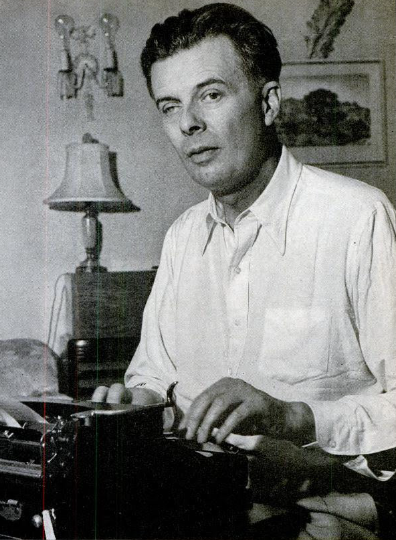
Dystopian fiction reached a major milestone with Brave New World, a novel projecting a scientifically controlled future society stripped of emotional depth and personal freedom. Writing across nearly fifty books, Aldous Huxley established a lasting presence in twentieth-century literature through his sharp social satire and philosophical inquiry, probing the consequences of technological progress, political authoritarianism, and human vulnerabilities.
Born in Godalming, Surrey, England, on July 26, 1894, Aldous Leonard Huxley belonged to a prominent family of scientists and intellectuals. His grandfather was the biologist Thomas Henry Huxley, his father Leonard Huxley edited the Cornhill Magazine, and his mother Julia Arnold was the niece of poet Matthew Arnold. Although Huxley originally planned to pursue a career in science, a severe case of keratitis during his youth left him partially blind and altered his professional trajectory. Turning to literary study, he attended Balliol College, Oxford, and graduated with a degree in English literature in 1916.
Huxley began his literary career editing Oxford Poetry and publishing verse, followed by his debut novel Crome Yellow in 1921. Throughout the 1920s and 1930s, he produced a steady stream of satirical fiction, short stories, and critical essays while residing in Europe. In 1937, Huxley moved to the United States and settled in Los Angeles, California, where he lived for the remainder of his life. During his American years, he expanded his work to include screenwriting, historical biographies, and philosophical treatises on ethics and mysticism before his death on November 22, 1963.
Huxley's prose is characterized by erudite wit, conversational irony, and pessimistic satire. Drawing on his family's scientific tradition as well as humanistic scholarship, his narratives repeatedly examine the conflict between technological advances, individual autonomy, and moral responsibility.
A prominent feature of his approach is the 'novel of ideas,' a technique in which plot serves primarily as a framework for intellectual debate. His characters frequently represent contrasting philosophical stances, enabling Huxley to explore contemporary disillusionment, social cynicism, and the pursuit of spiritual meaning in a rapidly modernizing world.

4 books in catalog
Dystopian fiction reached a major milestone with Brave New World, a novel projecting a scientifically controlled future society stripped of emotional depth and personal freedom. Writing across nearly fifty books, Aldous Huxley established a lasting presence in twentieth-century literature through his sharp social satire and philosophical inquiry, probing the consequences of technological progress, political authoritarianism, and human vulnerabilities.
Born in Godalming, Surrey, England, on July 26, 1894, Aldous Leonard Huxley belonged to a prominent family of scientists and intellectuals. His grandfather was the biologist Thomas Henry Huxley, his father Leonard Huxley edited the Cornhill Magazine, and his mother Julia Arnold was the niece of poet Matthew Arnold. Although Huxley originally planned to pursue a career in science, a severe case of keratitis during his youth left him partially blind and altered his professional trajectory. Turning to literary study, he attended Balliol College, Oxford, and graduated with a degree in English literature in 1916.
Huxley began his literary career editing Oxford Poetry and publishing verse, followed by his debut novel Crome Yellow in 1921. Throughout the 1920s and 1930s, he produced a steady stream of satirical fiction, short stories, and critical essays while residing in Europe. In 1937, Huxley moved to the United States and settled in Los Angeles, California, where he lived for the remainder of his life. During his American years, he expanded his work to include screenwriting, historical biographies, and philosophical treatises on ethics and mysticism before his death on November 22, 1963.
Huxley's prose is characterized by erudite wit, conversational irony, and pessimistic satire. Drawing on his family's scientific tradition as well as humanistic scholarship, his narratives repeatedly examine the conflict between technological advances, individual autonomy, and moral responsibility.
A prominent feature of his approach is the 'novel of ideas,' a technique in which plot serves primarily as a framework for intellectual debate. His characters frequently represent contrasting philosophical stances, enabling Huxley to explore contemporary disillusionment, social cynicism, and the pursuit of spiritual meaning in a rapidly modernizing world.