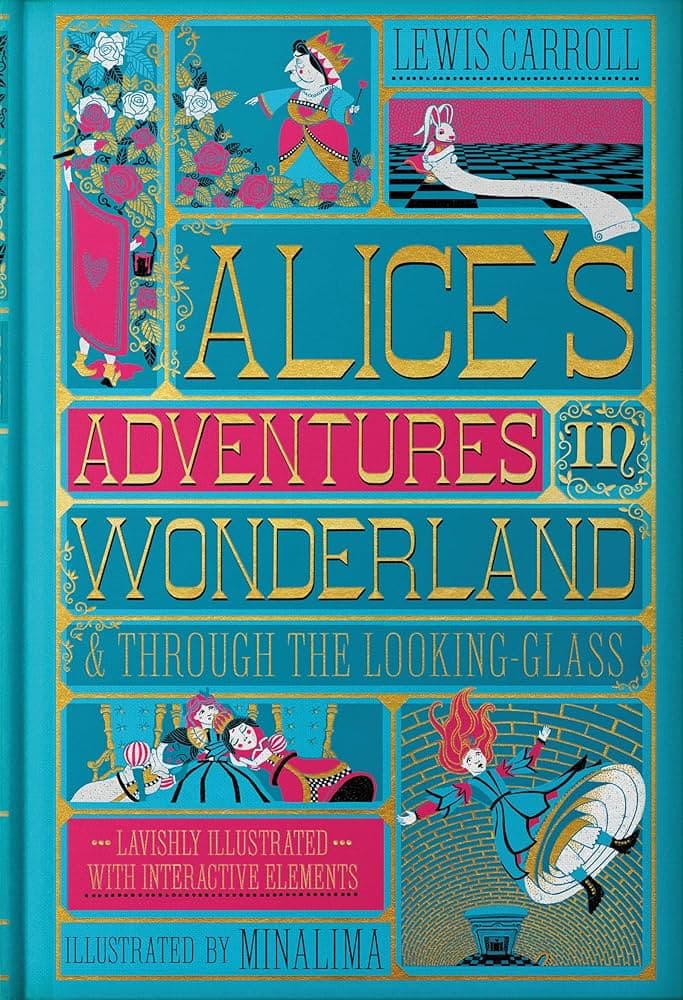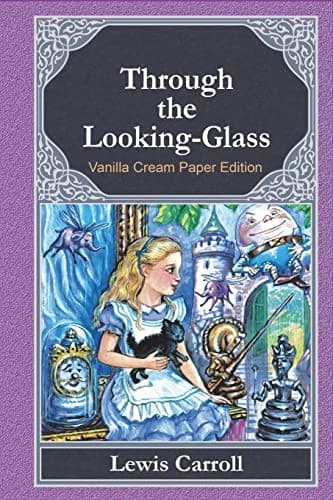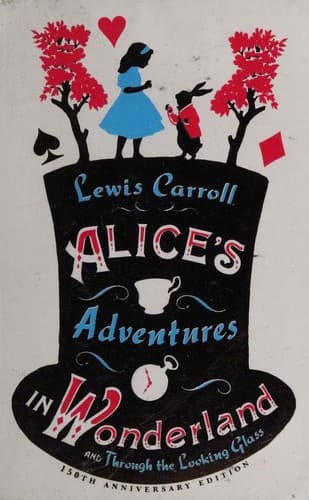
№ 2 · Alice's Adventures in Wonderland
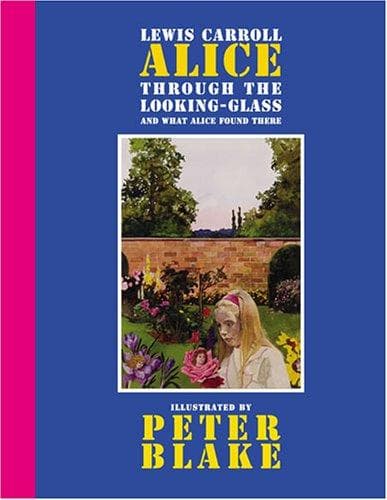
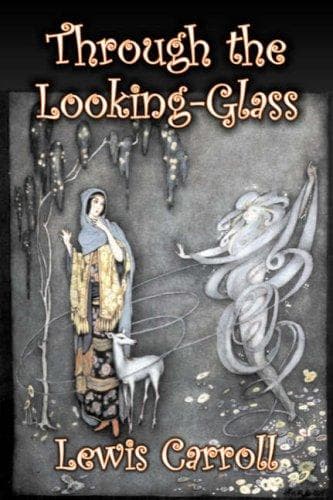
Through the Looking-Glass, and What Alice Found There (1871) is a work of children's literature by Lewis Carroll (Charles Lutwidge Dodgson), generally categorized in the fairy tale genre. It is the sequel to Alice's Adventures in Wonderland (1865). Although it makes no reference to the events in the earlier book, the themes and settings of Through the Looking-Glass make it a kind of mirror image of Wonderland: the first book begins outdoors, in the warm month of May, uses frequent changes in size as a plot device, and draws on the imagery of playing cards; the second opens indoors on a snowy, wintry night exactly six months later, on November 4 (the day before Guy Fawkes Night), uses frequent changes in time and spatial directions as a plot device, and draws on the imagery of chess. In it, there are many mirror themes, including opposites, time running backwards, and so on. (Wikipedia)
Add to your library to track progress and write reviews
Find Through the Looking-Glass by Lewis Carroll, Fiction, Classics, Fantasy Lewis Carroll in PDF, EPUB, ebook, audiobook, print, or library editions.

5 books in catalog
Victorian literary nonsense and fantasy were redefined by innovative narrative structures, wordplay, and logical puzzles in classic works of English fiction. Author Charles Lutwidge Dodgson, writing under the pseudonym Lewis Carroll, published Alice's Adventures in Wonderland in 1865, establishing a foundational model for imaginative children's literature that continues to engage readers of all ages.
Born on January 27, 1832, in Daresbury, Cheshire, England, Charles Lutwidge Dodgson was the eldest son in a family of eleven children raised by an Anglican clergyman. He demonstrated an early talent for creating games, poetry, and family magazines to entertain his siblings. At age twenty, he secured a studentship at Christ Church, Oxford, where he subsequently served as a lecturer in mathematics and was ordained as a deacon. In addition to his academic research in mathematical logic, he became an accomplished pioneer in early portrait photography.
In July 1862, during a rowing trip on the River Thames with Alice Liddell and her sisters, Dodgson improvised an imaginative story that he later expanded at her request into the manuscript Alices Adventures Underground. After revising the text for publication, he adopted the pen name Lewis Carroll and published Alice's Adventures in Wonderland in 1865. Its success led to the 1871 sequel Through the Looking-Glass, as well as major nonsensical poems including Jabberwocky and The Hunting of the Snark, establishing his dual legacy as an Oxford mathematician and an author until his death on January 14, 1898.
The writings of Lewis Carroll are celebrated for their sophisticated blend of literary nonsense, linguistic games, rigorous mathematical logic, and clever parody. In works such as Alice's Adventures in Wonderland and Through the Looking Glass, Carroll constructed dreamlike worlds governed by absurd social etiquette, shifting physical scales, and inverted rules of reasoning. His poems, including Jabberwocky, introduced invented portmanteau words that challenged conventional syntax while remaining grammatically structured.
By pairing whimsical fantasy with underlying formal logic, Carroll appealed simultaneously to young readers and adult intellectuals. His narrative technique dismantled traditional moralizing Victorian children's tropes in favor of playful exploration, satire, and philosophical inquiry into identity, time, and language.
Alice's Adventures in Wonderland