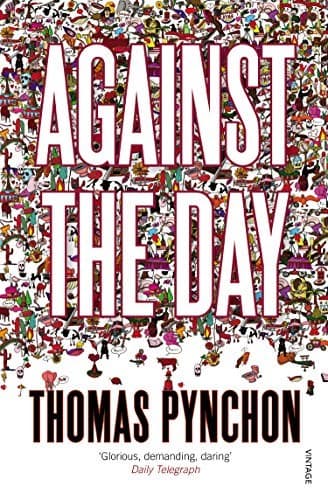
Spanning the period between the Chicago World's Fair of 1893 and the years just after World War I, this novel moves from the labor troubles in Colorado to turn-of-the-century New York, to London and Gottingen, Venice and Vienna, the Balkans, Central Asia, Siberia at the time of the mysterious Tunguska Event, Mexico during the Revolution, postwar Paris, silent-era Hollywood, and one or two places not strictly speaking on the map at all.
With a worldwide disaster looming just a few years ahead, it is a time of unrestrained corporate greed, false religiosity, moronic fecklessness, and evil intent in high places. No reference to the present day is intended or should be inferred.
The sizable cast of characters includes anarchists, balloonists, gamblers, corporate tycoons, drug enthusiasts, innocents and decadents, mathematicians, mad scientists, shamans, psychics, and stage magicians, spies, detectives, adventuresses, and hired guns. There are cameo appearances by Nikola Tesla, Bela Lugosi, and Groucho Marx.
As an era of certainty comes crashing down around their ears and an unpredictable future commences, these folks are mostly just trying to pursue their lives. Sometimes they manage to catch up; sometimes it's their lives that pursue them.
Meanwhile, the author is up to his usual business. Characters stop what they're doing to sing what are for the most part stupid songs. Strange sexual practices take place. Obscure languages are spoken, not always idiomatically. Contrary-to-the-fact occurrences occur. If it is not the world, it is what the world might be with a minor adjustment or two. According to some, this is one of the main purposes of fiction.
Let the reader decide, let the reader beware. Good luck.
--Thomas Pynchon
Add to your library to track progress and write reviews
Find Against the Day Thomas Pynchon in PDF, EPUB, ebook, audiobook, print, or library editions.

10 books in catalog
Dense historical landscapes, secret postal networks, V-2 rocket trajectories, and sprawling conspiracies form the foundation of postmodern fiction's most complex narratives.
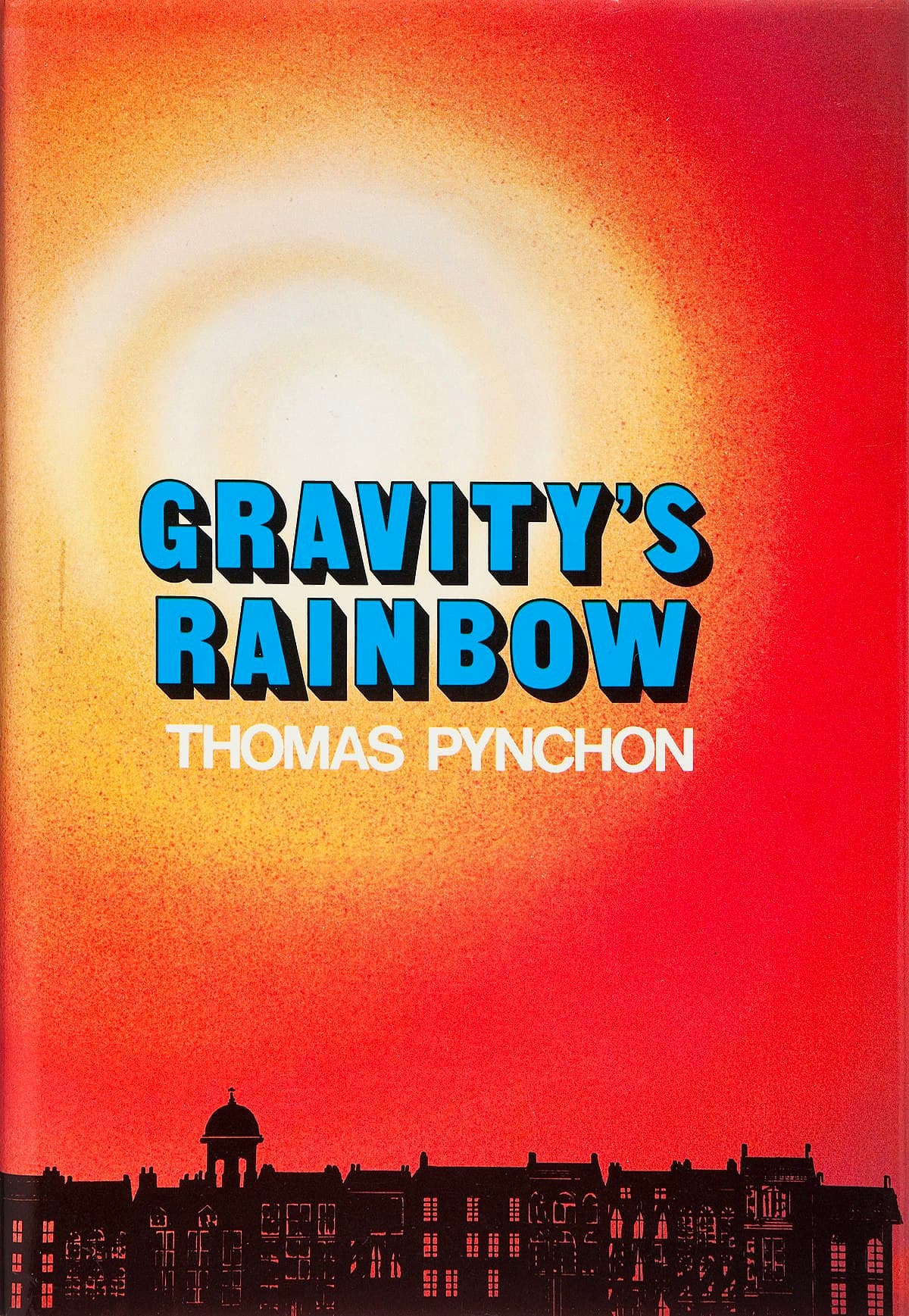
Thomas Pynchon established a distinct presence in post-World War II American literature through encyclopedic novels such as Gravity's Rainbow and The Crying of Lot 49, blending mathematical concepts, historical research, and absurd humor.
Born Thomas Ruggles Pynchon Jr. on May 8, 1937, in Glen Cove, New York, he spent his childhood in nearby East Norwich and Oyster Bay against the backdrop of World War II and the early Cold War. He initially attended Cornell University to study engineering physics before serving two years in the United States Navy. Returning to Cornell, he earned a bachelor's degree in English in 1959, combining scientific and literary training in a way that shaped his rigorous approach to complex systems.
Pynchon published short fiction in the late 1950s before launching his novelistic career with V. in 1963. Throughout decades of writing, he maintained extreme personal privacy, declining public appearances and media interviews while living outside the public spotlight. His private correspondence from 1963 to 1982 with literary agent Candida Donadio offers documented glimpses into his creative discipline, personal anxieties, and the meticulous archival research required to build his multi-layered fiction.
Pynchon's prose is characterized by its paranoid atmosphere, vast structural scope, and dense interweaving of high-level mathematics, physics, history, and popular culture. Rather than focusing solely on individual psychological drama, his books explore how individuals are caught inside sprawling institutional networks, corporate monopolies, technological momentum, and state authority that operate beyond personal control.
A defining hallmark of his fiction is the juxtaposition of deep erudition with lowbrow comedy, slapstick, and musical numbers. His narratives frequently feature sprawling casts, underground countercultures, and unresolved mysteries where truth is fragmented and motives remain intentionally elusive.