SSansFiction
The libraryCollectionsJournalStatsFor authors
Sign inJoin now
Sansfiction,

A digital library for books. Made by readers, for readers.

v 2.0 · 2026
The library
  • Discover
  • Collections
  • Book tracker
  • Journal
  • Stats
For authors
  • SF Links
  • Analytics
  • How it works
  • FAQ
Elsewhere
  • X / @sansfiction
  • Privacy
  • Terms
  • Contact
© 2026 SansFiction · Digital · GlobalA quiet room for your reading life.
The libraryCollectionsJournalStatsFor authors
Sign inJoin now →
Navigation
Library
Bookshelf
Journal
Discover
Collections
Tierlists
Stats
Profile
Author Page
Link Builder
Account
Sign in
S
G
BooksadventureA Tale of Two Cities
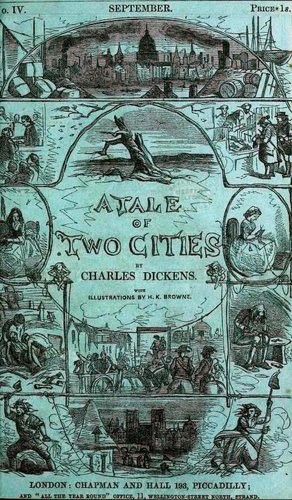
Cover of A Tale of Two Cities by Charles Dickens
Oxford Bookworms

A Tale of Two Cities,

by Charles Dickens

Ask AI
Rating3.6/ 5
Ratings596
Pages544
Reading Hours11h
Published1859
LanguageEnglish

§Synopsis

01

After eighteen years as a political prisoner in the Bastille the aging Dr. Manette is finally released and reunited with his daughter in England. There, two very different men, Charles Darnay, an exiled French aristocrat, and Sydney Carton, a disreputable but brilliant English lawyer, become enmeshed through their love for Lucie Manette. From the tranquil lanes of London, they are all drawn against their will to the vengeful, bloodstained streets of Paris at the height of the Reign of Terror and soon fall under the lethal shadow of La Guillotine.

§Our take

A Tale of Two Cities is Dickens in an unusual mode: compact, tightly plotted and short on the comic sprawl his other novels are loved for. It moves between a quiet London household and Paris on the edge of revolution, and its sympathy cuts both ways, showing aristocratic cruelty as the cause of popular fury while recoiling from what that fury becomes. Victorian critics such as James Fitzjames Stephen found it clumsy and thin on ideas, and even Dickens's friend John Forster thought it short on humour; later critics have been kinder, crediting its psychological portraits and its force as historical fiction.

Its biggest legacy may be outside literature. The historian Eric Hobsbawm argued that the British image of the Revolution as essentially the Terror owes much to this novel and to Carlyle, the history Dickens drew on. Expect a slow, scene-setting first book before the story gathers speed.

§Themes

Revolution's double edge
Dickens shows aristocratic cruelty as the cause of popular fury, but is equally unsettled by what the revolutionaries become.
The double life
Carton and Darnay look alike, and critics often read them as halves of one psyche.
Resurrection
Prisons and graves recur throughout, and the idea of being 'recalled to life' runs from the opening chapters onward.
Fate woven by history
Madame Defarge's knitting and Lucie's golden thread echo the Fates of Greek myth, suggesting personal destinies woven by history.

§How it was received

Reception was mixed from the start: the serial sold well, but Victorian reviewers such as James Fitzjames Stephen dismissed it as clumsy and thin on ideas, and John Forster judged it short on humour. Carlyle, whose history Dickens drew on, was enthusiastic. Twentieth-century critics generally rated it higher than the Victorians did, crediting its psychological portraits, though some Dickens fans still rank it among his weaker novels. It placed 63rd in the BBC's 2003 Big Read poll.

§Read it if

  • You want a Dickens novel that’s shorter and tighter than most, with a clear moral focus.
  • You’re interested in how a 1859 book shaped how Britain pictures the French Revolution.
  • You don’t mind a slow, antithesis-heavy opening if the later payoff rewards you.

§Skip it if

  • You prefer Dickens’s comic, sprawling style and can’t stand a tightly plotted, morally clear story.
  • You’re looking for deep psychological complexity in every character, since Lucie and Darnay are widely seen as passive and near-static.

§Before you start

Reading experience
The first book is largely set-up, and the pace speeds markedly later.
Content notes
Public executions and guillotine violence; A recounted rape; Alcoholism and drinking.

§Common questions

Is it part of a series?
No, it’s a standalone novel, though Dickens wrote another historical novel, Barnaby Rudge.
When was A Tale of Two Cities published?
It was serialized in Dickens's magazine All the Year Round in 1859 and published as a book the same year.
Is it historically accurate?
Dickens mixed invented characters with real events like the storming of the Bastille, and scholar Alev Baysal argues it’s more accurate in detail than early critics allowed.

§If you liked this

  • Les Misérables by Victor Hugo — Both are sweeping French-history novels about injustice, redemption and sacrifice, as readers often note.
  • Barnaby Rudge by Charles Dickens — Dickens's only other historical novel, built around the Gordon Riots, and the closest comparison within his own bibliography.
  • The French Revolution: A History by Thomas Carlyle — The nonfiction source Dickens used for rhetoric and imagery; a natural pairing for readers wanting the history behind the novel.
  • A Far Better Thing by H. G. Parry — A 2025 retelling from Carton's perspective, reimagining the original's ending.
  • A Far Better Rest by Susanne Alleyn — Susanne Alleyn's 2000 novel continues and reimagines the story from Carton's side.
Sources
  • Wikipedia
  • LitCharts
  • Common Sense Media
  • Project Gutenberg
  • Goodreads
  • The Victorian Web
  • The Victorian Web (essay by Alev Baysal, Hacettepe University)
  • Encyclopedia.com

Track this book

Add to your library to track progress and write reviews
§Genres
adventure1british1classics1comics1friendship1general1literary criticism1
§Content Warnings
§Moods
challenging1dark1emotional1hopeful1informative1inspiring1mysterious1
§Tags
#clasici1#cursing1#historical fiction1#istorical1

§About the Author

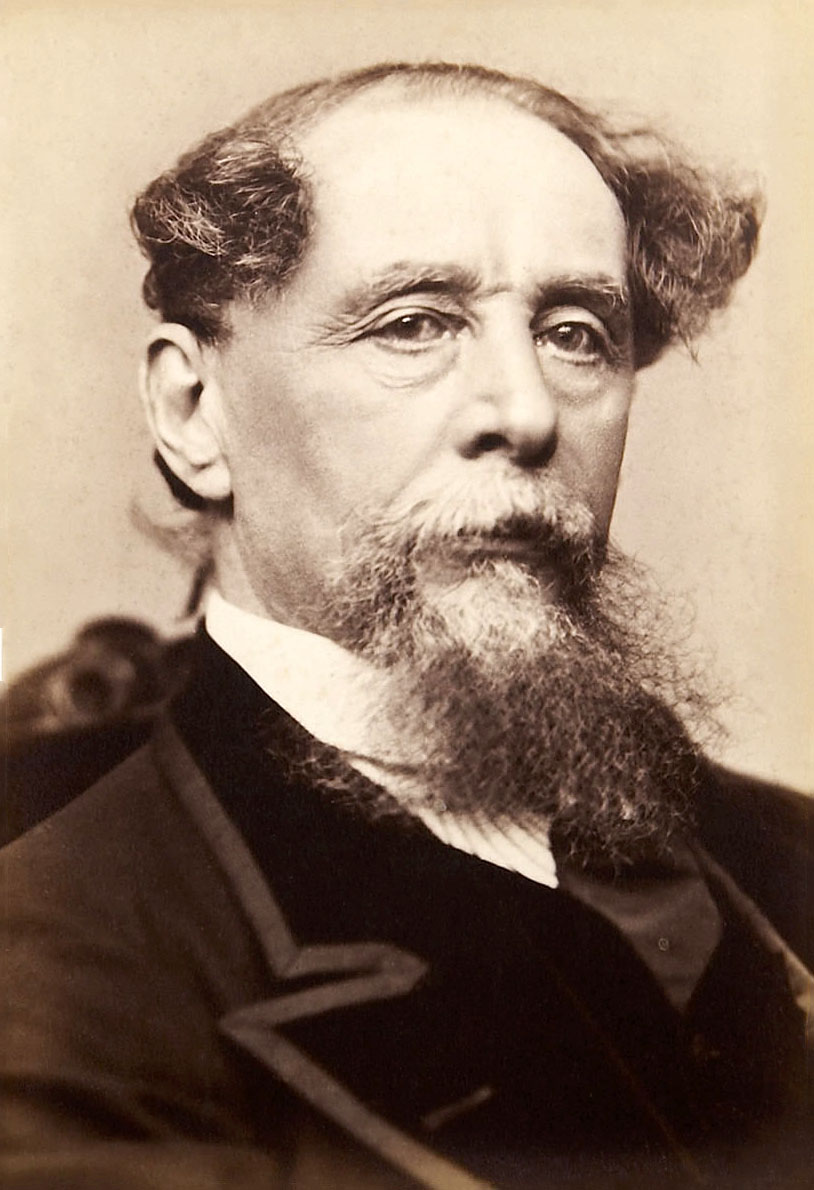
Charles Dickens
Charles Dickens

13 books in catalog

Victorian narrative fiction gained its most widespread public engagement through serialized novels depicting urban industrial life, institutional neglect, and personal redemption, exemplified by A Christmas Carol. Charles Dickens emerged during the nineteenth century as a central figure in English literature, publishing fourteen major novels along with extensive journalistic reports, essays, and seasonal short stories that have remained continuously in print since their initial publication.

His fiction transformed popular entertainment into a platform for social critique, combining vivid characterization with detailed observations of contemporary London society.

Career & Background

Born in Portsmouth on February 7, 1812, to John and Elizabeth Dickens, Charles John Huffam Dickens experienced financial instability early in life. In 1824, his father was imprisoned for debt in London's Marshalsea Prison, forcing the twelve-year-old Dickens to work at Warren's Blacking Factory. This traumatic period of hardship shaped his perspective on poverty and institutional injustice, directly influencing novels such as David Copperfield, in which his father served as the model for Mr. Micawber.

Dickens began his professional writing career as a journalist and court reporter before achieving major literary success with serialized fiction like The Pickwick Papers in 1837 and Oliver Twist in 1838. In addition to writing novels, he worked extensively as an editor and commentator, using periodicals to publish topical articles on political and social conditions across Victorian Britain until his death on June 9, 1870.

Writing Style & Themes

Dickens's narrative technique relies on acute social realism, satirical commentary, and memorable characterizations to critique contemporary institutions. A central theme running throughout his work is social reform, specifically targeting debtor prisons, child labor, legal corruption, and the indifference of privileged classes. Through works such as Bleak House and Hard Times, he combined outraged social commentary with sprawling, interconnected plots that reflected the complexities of Victorian life.

Major Works

  • A Christmas Carol — Published in 1843, this novella addresses greed, isolation, and moral redemption through a seasonal ghost story that critiques economic heartlessness.
  • Oliver Twist — Published in 1838, this novel highlights orphanhood, criminal underworlds, and the harsh realities of the workhouse system in Victorian London.
  • David Copperfield — Published in 1850, this semi-autobiographical novel draws on Dickens's early personal hardships and his father's imprisonment for debt.
  • Bleak House — Published in 1853, this novel satirizes the English legal system through the protracted Court of Chancery lawsuit of Jarndyce and Jarndyce.
  • Great Expectations — Published in 1861, this coming-of-age story examines ambition, class mobility, and personal integrity through the life of the orphan Pip.
  • A Tale of Two Cities — A historical novel set in London and Paris during the French Revolution, depicting political upheaval, sacrifice, and resurrection.
  • Hard Times — A novel set in an industrial town that critiques utilitarian philosophy, mechanized labor, and rigid educational systems.
  • Little Dorrit — A novel exploring the crippling effects of debt and institutional dysfunction, centered around the Marshalsea debtor's prison.
  • Nicholas Nickleby — A story following a young man's struggle to support his family while exposing cruel conditions in private boarding schools.
  • Our Mutual Friend — Dickens's last completed novel, examining the corrupting influence of wealth and social ambition along the River Thames.
  • Martin Chuzzlewit — A satire examining selfishness and hypocrisy, featuring observations inspired by Dickens's travels to North America.

§Featured Series

Oxford Bookworms

Cover of A Tale of Two Cities by Charles Dickens

A Tale of Two Cities

Charles Dickens, 1800
§Genres
adventure1british1classics1comics1friendship1general1literary criticism1
§Content Warnings
§Moods
challenging1dark1emotional1hopeful1informative1inspiring1mysterious1
§Tags
#clasici1#cursing1#historical fiction1#istorical1

Metadata

ISBN-139780985278779
ISBN-100985278773

Editions and availability

Find A Tale of Two Cities Charles Dickens in PDF, EPUB, ebook, audiobook, print, or library editions.

Bookshop.orgGoogle Play BooksBarnes & NobleOpen Library

Featured In Lists

Book cover from this collectionBook cover from this collectionBook cover from this collectionBook cover from this collection
Book cover from this collection

100 Must Read Classics

99 books
Book cover from this collectionBook cover from this collectionBook cover from this collectionBook cover from this collection
Book cover from this collection

Gilmore Girls Reading List 🍂

407 books
Book cover from this collectionBook cover from this collectionBook cover from this collectionBook cover from this collection
Book cover from this collection

List 1001 Books Boxall

1000 books