
§Author· 1 book
Ruth Ozeki
Also known as Ruth Diana Lounsbury, Ruth L. Ozeki
Bridging contemporary fiction with Zen philosophy, environmental politics, and hybrid narrative formats, multi-layered prose explores the intersections of human connection, technology, and memory. The 2013 novel A Tale for the Time Being highlights this distinctive approach, telling the story of a diary washed ashore on a Canadian island that links a troubled teenager in Tokyo with a writer reflecting on time and mortality.
Ruth Ozeki has built a body of work that integrates personal storytelling with critical social and global issues, establishing her as an influential voice in modern fiction.
Career & Background
Born Ruth Diana Lounsbury on March 12, 1956, in New Haven, Connecticut, Ozeki was raised by a Japanese mother and an American father. She attended Smith College, graduating with degrees in English Literature and Asian Studies, before earning a Japanese Ministry of Education Fellowship to study classical Japanese literature at Nara Women's University.
In addition to her writing and filmmaking projects, Ozeki is a longtime Zen Buddhist practitioner. She was ordained as a Zen Buddhist priest by Zoketsu Norman Fischer in June 2010 and is affiliated with the Everyday Zen Foundation. Professionally, she served as the Grace Jarcho Ross 1933 Professor of Humanities at Smith College, where she taught creative writing and now holds the title of Professor Emerita. A dual citizen of Canada and the United States, she divides her time between Western Massachusetts, New York City, and British Columbia.
Writing Style & Themes
Ozeki's narrative style is characterized by experimental and hybrid structures that weave together science, technology, religion, environmental politics, and global popular culture. Her novels frequently examine complex socio-environmental concerns, including corporate agriculture, consumerism, race, war, and mental health.
Through meta-fictional techniques and alternating perspectives, her stories explore how individual lives connect to broader historical and ecological systems, often incorporating Buddhist concepts regarding impermanence, mindfulness, and the nature of self.
Major Works
- A Tale for the Time Being — Published in 2013, this novel follows a novelist on a remote island off the coast of British Columbia who discovers a diary washed ashore from Japan in the wake of the 2011 tsunami. The book won the Los Angeles Times Book Prize, the Independent Booksellers Book Award, and the Kitchies Red Tentacle Award, while also being shortlisted for the Booker Prize and the National Book Critics Circle Award.
- My Year of Meats — Published in 1998, Ozeki's debut novel explores corporate agriculture, media manipulation, and cross-cultural identity through the lens of a documentary filmmaker producing a sponsored Japanese television program about American beef.
- All Over Creation — Published in 2003, this novel focuses on environmental activism, genetic modification, industrial potato farming, and family reconciliation within an Idaho farming community.
- The Book of Form and Emptiness — Published in 2021, this novel addresses loss, mental health, and consumerism through the story of a boy who begins hearing the voices of everyday physical objects following the death of his father.
§All Books
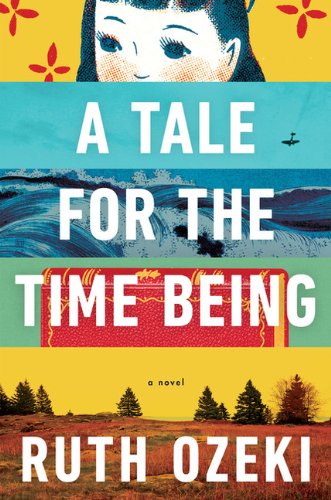
A Tale for the Time Being
Ruth Ozeki, 2013
230 ratings
§ About Ruth Ozeki's books
- Books on SansFiction
- 1
- Published
- 2013
- Average rating
- 4.0 / 5 across 230 ratings
- Genres
- Buddhist Nuns, Coming Of Age, Fantasy, Fiction
The book: A Tale for the Time Being (2013)
A brilliant, unforgettable, and long-awaited novel from bestselling author Ruth Ozeki "A time being is someone who lives in time, and that means you, and me, and every one of us who is, or was, or ever will be." In Tokyo, sixteen-year-old Nao has decided there's only one escape from her aching loneliness and her classmates' bullying.
Common questions about Ruth Ozeki
- Who is Ruth Ozeki?
- Born Ruth Diana Lounsbury on March 12, 1956, in New Haven, Connecticut, Ozeki was raised by a Japanese mother and an American father. She attended Smith College, graduating with degrees in English Literature and Asian Studies, before earning a Japanese Ministry of Education Fellowship to study classical Japanese literature at Nara Women's University.
- What is Ruth Ozeki best known for?
- Ruth Ozeki is best known for A Tale for the Time Being, published in 2013 with 230 ratings and a 4.0 average. It is the most-rated of Ruth Ozeki's books on SansFiction.
- What genres does Ruth Ozeki write?
- Ruth Ozeki's books on SansFiction are tagged Buddhist Nuns, Coming Of Age, Fantasy and Fiction.
Explore: Buddhist Nuns · Coming Of Age · Fantasy · Fiction