Roberto Bolaño
Also known as Roberto Bolaño Ávalos
Sprawling narrative structures, poet-detectives, and haunting examinations of literary culture define the fiction of one of Latin America's most influential late-twentieth-century writers. Roberto Bolaño transformed contemporary Spanish-language literature through formally innovative novels and short stories that blend autobiography, political history, and literary mystery, most notably in The Savage Detectives.
Career & Background
Born in Santiago, Chile, in 1953, Roberto Bolaño grew up in Chile before relocating with his family to Mexico City in 1968. As a young writer in Mexico, he co-founded the Infrarealist poetry movement, an avant-garde group that challenged established literary conventions. In 1973, Bolaño returned to Chile to support the socialist government of Salvador Allende. Shortly after his arrival, Augusto Pinochet seized power in a military coup, and Bolaño was arrested and detained in Concepción. Following his release, he returned to Mexico and later moved to Europe, living in Paris and eventually settling in Spain, where he worked various jobs as a salesperson and night watchman while writing poetry and prose.
Although Bolaño focused primarily on poetry during his early career, he turned to fiction in the 1980s and 1990s. In 1983, he co-wrote the novel Advice from a Morrison Disciple to a Joyce Fanatic with A. G. Porta, which was published in 1984. His major critical break came with The Savage Detectives (published in Spanish as Los detectives salvajes in 1998), which earned the Herralde Prize and the 1999 Rómulo Gallegos Prize. Bolaño continued to write prolifically until his death from liver failure in July 2003 in Barcelona at age fifty. His ambitious final novel, 2666, was published posthumously and received the National Book Critics Circle Award for Fiction in 2008.
Writing Style & Themes
Bolaño's narrative technique combines elements of noir detective fiction, poetic manifestos, and sprawling multi-perspective structures. His stories frequently center on vagabond poets, obscure scholars, and enigmatic writers navigating political unrest and exile across Latin America and Europe. Rather than relying on conventional plot resolutions, his work utilizes fragmentary scenes, nested anecdotes, and open-ended investigations.
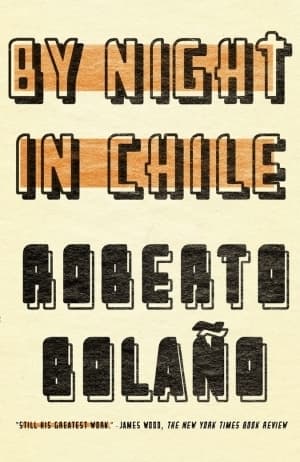
A central focus of his writing is the relationship between literature, art, and political violence. In novels like By Night in Chile, he employs dark irony and a continuous monologue to probe intellectual complicity during authoritarian regimes. His non-fiction and essay collection Between Parentheses (Entre paréntesis), along with his short fiction and poetry, reflect a sustained investigation into the nature of evil and the precarious idealism of writers.
Major Works
- The Savage Detectives — Published in Spanish as Los detectives salvajes in 1998, this novel follows young poets searching for a vanished avant-garde figure across Mexico and several continents, winning both the Herralde Prize and the Rómulo Gallegos Prize.
- 2666 — A posthumously published epic divided into five parts that addresses unsolved murders along the U.S.-Mexico border and the quest for a secretive German novelist, earning the 2008 National Book Critics Circle Award for Fiction.
- By Night in Chile — A feverish deathbed monologue by a priest and literary critic detailing political compromise, morality, and artistic life under a military dictatorship.
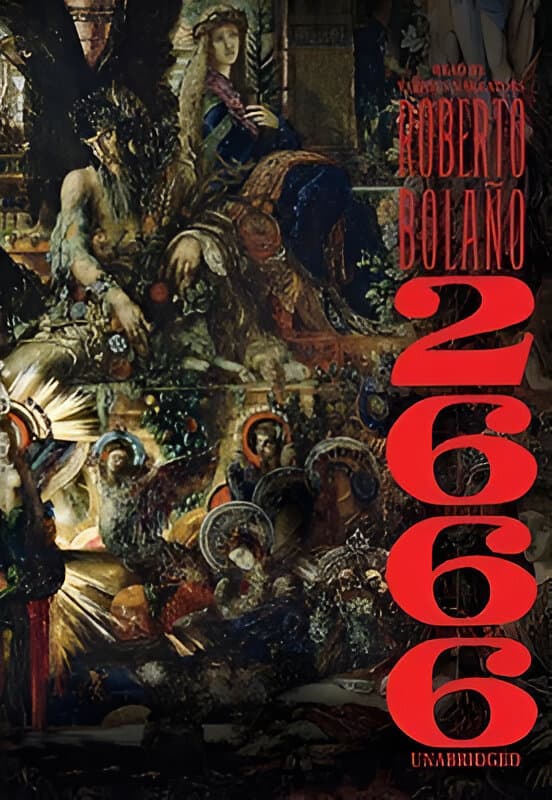
2666
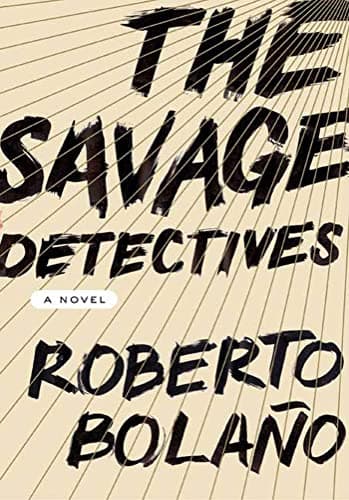
The Savage Detectives
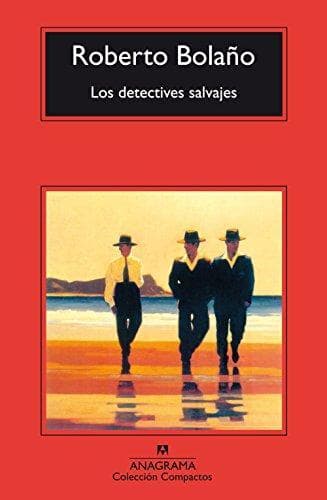
Los detectives salvajes