
§Author· 2 books
Oliver Burkeman
Philosophical investigations into productivity and time management offer a grounded counterweight to conventional self-help narratives by examining the reality of human finitude. Oliver Burkeman established a distinct presence in contemporary non-fiction by encouraging readers to embrace their natural limitations rather than striving for impossible efficiency, a perspective popularized in his bestselling book Four Thousand Weeks: Time Management for Mortals.
Through long-running journalism and widely read books, Burkeman's work addresses the psychological friction of modern living. His writing provides accessible, counterintuitive insights into productivity, mortality, and happiness without relying on rigid motivational formulas.
Career & Background
Born in 1975 in Liverpool, England, Burkeman attended Huntington School in York before studying at the University of Cambridge. He began his career in journalism, serving for many years as a feature writer and columnist for The Guardian. There he wrote the popular weekly psychology column 'This Column Will Change Your Life', where he critically examined self-improvement theories, mindfulness, and practical philosophy. Over his career, he has also contributed to publications such as The Observer and The New York Times.
Burkeman published early non-fiction books including Help! How to Become Slightly Happier and Get a Bit More Done and The Antidote: Happiness for People Who Can't Stand Positive Thinking. After living in Brooklyn for a decade, he shifted toward writing full-length books and publishing The Imperfectionist, a twice-monthly email newsletter focusing on mortality, attention, and building a meaningful life amidst modern distractions.
Writing Style & Themes
Burkeman's writing style blends journalistic reporting, psychological research, and practical philosophy with a dry, humorous tone. Rather than promising total control over time or emotions, his work centers on the concept of 'the power of limits'—arguing that accepting uncertainty, insecurity, and impermanence leads to greater mental clarity and fulfillment.
A recurring theme across his books and essays is the critique of relentless positivity and obsessive productivity. By encouraging readers to confront uncomfortable truths—such as the brevity of an average human lifespan—Burkeman advocates for choosing what truly matters and letting go of the illusion that everything can be accomplished.
Major Works
- Four Thousand Weeks: Time Management for Mortals — Published in 2021, this New York Times and UK Sunday Times bestseller explores time management from a philosophical perspective, noting that an average human life consists of roughly four thousand weeks. Burkeman argues against hyper-productivity hacks, encouraging readers to accept their finitude and make deliberate choices about how to spend their limited time.
- Meditations for Mortals: Four Weeks to Embrace Your Limitations and Make Time for What Counts — Structured as a four-week guide, this book offers daily reflections and practical productivity advice designed to help readers face reality, reject perfectionism, and focus on meaningful priorities amidst daily overwhelm.
- The Antidote: Happiness for People Who Can't Stand Positive Thinking — This work explores an alternative path to well-being by examining the benefits of uncertainty, pessimism, and embracing negative emotions rather than attempting to eliminate them through forced positive thinking.
- Help! How to Become Slightly Happier and Get a Bit More Done — Drawing on material from his long-running Guardian column, this volume presents lighthearted explorations of self-help literature, practical psychology, and everyday productivity strategies.
§All Books
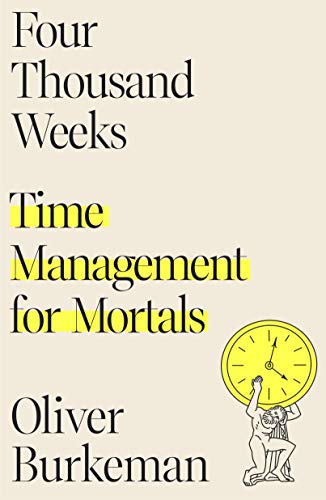
Four Thousand Weeks: Time Management for Mortals
Oliver Burkeman, 2021
391 ratings
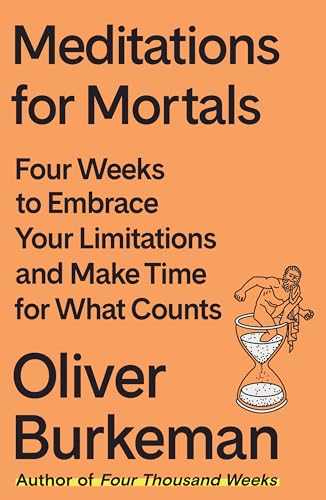
Meditations for Mortals: Four Weeks to Embrace Your Limitations and Make Time for What Counts
Oliver Burkeman, 2024
50 ratings
§ About Oliver Burkeman's books
- Books on SansFiction
- 2
- Published
- 2021–2024
- Average rating
- 4.2 / 5 across 441 ratings
- Genres
- Nonfiction, Philosophy, Psychology, Self-Help
Start here: Four Thousand Weeks: Time Management for Mortals (2021)
The average human lifespan is absurdly, outrageously, insultingly brief: if you live to 80, you have about four thousand weeks on earth. How should we use them best? Of course, nobody needs telling that there isn't enough time.
Common questions about Oliver Burkeman
- Who is Oliver Burkeman?
- Born in 1975 in Liverpool, England, Burkeman attended Huntington School in York before studying at the University of Cambridge. He began his career in journalism, serving for many years as a feature writer and columnist for The Guardian.
- What is Oliver Burkeman best known for?
- Oliver Burkeman is best known for Four Thousand Weeks: Time Management for Mortals, published in 2021 with 391 ratings and a 4.2 average. It is the most-rated of Oliver Burkeman's books on SansFiction.
- How many books has Oliver Burkeman written?
- SansFiction lists 2 books by Oliver Burkeman, published between 2021 and 2024. The most popular are Four Thousand Weeks: Time Management for Mortals and Meditations for Mortals: Four Weeks to Embrace Your Limitations and Make Time for What Counts.
- Which Oliver Burkeman book should I read first?
- Four Thousand Weeks: Time Management for Mortals is the usual place to start: it is Oliver Burkeman's most-rated book here, with a 4.2 average.
- What genres does Oliver Burkeman write?
- Oliver Burkeman's books on SansFiction are tagged Nonfiction, Philosophy, Psychology and Self-Help.
Explore: Nonfiction · Philosophy · Psychology · Self-Help