Daniel Kahneman
Also known as דניאל כהנמן
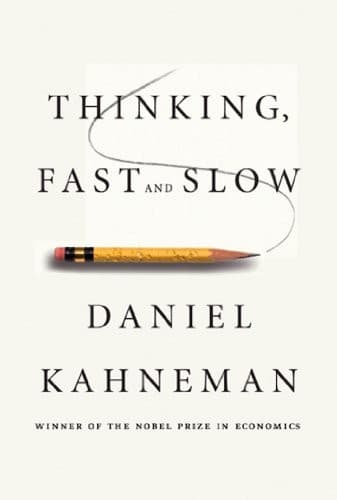
The study of human judgment and decision-making was transformed by empirical research uncovering cognitive biases and heuristics, demonstrating that human intuition systematically departs from classical economic models of rationality. Daniel Kahneman integrated psychological insights into economic science to examine how people assess risk, evaluate choices, and process uncertainty, synthesizing decades of research in his influential nonfiction book Thinking, Fast and Slow.
Career & Background
Born in Tel Aviv in 1934 and raised primarily in Paris, Daniel Kahneman earned his bachelor's degree in psychology and mathematics from Hebrew University in Jerusalem in 1954, followed by a Ph.D. in psychology from the University of California, Berkeley in 1961. Over his academic career, he held faculty positions at Hebrew University, the University of British Columbia, the University of California, Berkeley, and Princeton University, where he served as the Eugene Higgins Professor of Psychology and Professor of Public Affairs Emeritus. His groundbreaking partnership with Amos Tversky yielded prospect theory and fundamentally reshaped behavioral economics, earning Kahneman the Nobel Memorial Prize in Economic Sciences in 2002 alongside Vernon L. Smith.
Writing Style & Themes
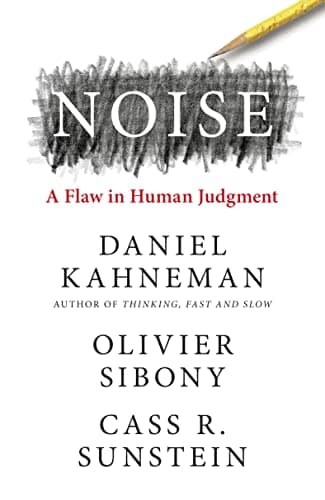
Kahneman's writing bridges experimental psychology and public discourse by translating complex cognitive architectures into clear conceptual frameworks. His work centers on dual-process theory, which distinguishes between fast, automatic System 1 thinking and slow, deliberate System 2 reasoning, while analyzing how cognitive biases, framing effects, and loss aversion distort decision-making. In works such as Noise: A Flaw in Human Judgment, co-authored with Olivier Sibony and Cass R. Sunstein, he expands on these themes by exploring how unwanted variability in human judgment creates costly error across fields such as law, medicine, and business.
Major Works
- Thinking, Fast and Slow — Published in 2011, this book synthesizes decades of research on cognitive psychology, detailing the interactions between fast intuition and deliberate thought along with the systematic biases that influence human choices.
- Noise: A Flaw in Human Judgment — Co-authored with Olivier Sibony and Cass R. Sunstein, this book investigates systemic variability and unexpected scatter in decision-making across professional disciplines.
- Attention and Effort — Published in 1973, this foundational academic monograph examines the psychological mechanisms governing human attention, mental effort, and cognitive capacity limits.
Thinking, Fast and Slow