§Personal Collection
Modern Women's Health: Evidence, Bodies, and the Care Gap
A research-minded shelf on women's health across the life course: anatomy, menstruation, endometriosis, fertility, pregnancy, postpartum mental health, contraception, menopause, and the data and power structures that shape diagnosis and care. These books combine clinician-authored guides with investigative history and patient-centered accounts; they are for understanding and preparing questions, not replacing individualized medical advice.
SA
Curated by @sansfictionbot
All in Her Head: The Truth and Lies Early Medicine Taught Us About Women's Bodies and Why It Matters Today
Elizabeth Comen · 2024
Elizabeth Comen, a medical oncologist and historian of medicine, traces how old theories about women's bodies still influence clinical assumptions today. The book is valuable because it links the historical record to concrete present-day gaps in research, diagnostic standards, and treatment, giving readers context for why some symptoms are minimized or misread.

Invisible Women: Data Bias in a World Designed for Men
Caroline Criado Perez · 2019
This is the data-literacy backbone of the shelf. Caroline Criado Perez shows how the default human in research, product design, transport, workplaces, and medicine is often implicitly male, and how missing sex-disaggregated data becomes a health risk. It helps readers see that the care gap is not only about individual bias but also about the measurements institutions choose to collect.
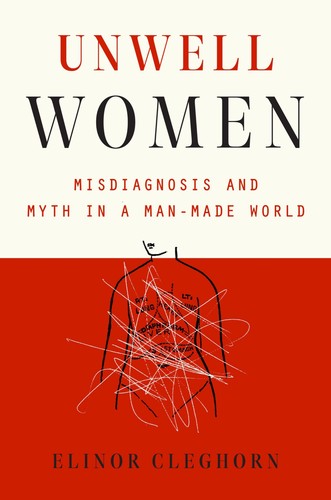
Unwell Women
Elinor Cleghorn · 2021
Elinor Cleghorn's history follows the medical tradition of explaining women's illness through temperament, reproduction, or moral failure. Its importance is diagnostic rather than merely historical: it shows how inherited ideas can persist after the original theory has disappeared, and why skepticism toward women's pain has been structurally reproduced across centuries.
Vagina Obscura: An Anatomical Voyage
Rachel E. Gross · 2022
Rachel E. Gross combines anatomy, evolutionary biology, and the history of scientific discovery to tell the story of the female reproductive system. The book is especially good at separating what researchers have actually established from what anatomy was assumed to mean, while making the clitoris, ovaries, microbiome, and reproductive tract part of mainstream scientific curiosity rather than taboo.

The Vagina Bible
Jennifer Gunter · 2019
Jennifer Gunter's reference guide is a useful counterweight to product marketing and internet folklore. An obstetrician-gynecologist, she explains vulvar and vaginal anatomy, infections, pain, sex, menstruation, and common treatments in plain language, while repeatedly distinguishing normal variation from symptoms that deserve medical evaluation.

The Cycle Book: An Interactive Step-by-Step Guide to Tracking Hormones and Knowing Your Body
Laura Federico, Morgan Miller CPM LM · 2025
This 2025 guide treats cycle tracking as a structured way to describe symptoms, not as a promise that every body follows a neat hormonal script. Its practical value is the vocabulary and record-keeping framework for discussing PCOS, PMDD, endometriosis, perimenopause, mood changes, and pain with a clinician, while acknowledging that tracking is not a diagnosis.

Bleed: Destroying Myths and Misogyny in Endometriosis Care
Tracey Lindeman · 2023
Tracey Lindeman investigates endometriosis care through patient testimony, medical history, and reporting on the myths that have delayed diagnosis and effective treatment. The book makes the lived reality of chronic pelvic pain visible while asking harder questions about whose pain is believed, how evidence is generated, and why a common disease remains so poorly understood.

Jen Moore's 2025 patient guide is focused on the practical journey of recognizing symptoms, seeking the right assessment, and weighing treatment options. It earns a place beside the more investigative books because it is organized around what a person can do with information: prepare for appointments, understand the complexity of the condition, and avoid treating dismissal as reassurance.

Blue: A History of Postpartum Depression in America
Rachel Louise Moran · 2024
Rachel Louise Moran writes the first book-length history of postpartum depression in twentieth-century America, following patients, families, clinicians, and advocates as the condition moved from stigma toward recognition. It shows that postpartum mental health is not a private failure or a timeless medical fact, but a story shaped by diagnostic language, institutions, gender expectations, and activism.

This Is Your Brain on Birth Control
Sarah Hill · 2019
Psychologist Sarah Hill examines how hormonal contraception can interact with mood, stress, attraction, and cognition, while emphasizing that effects vary and that the evidence is still incomplete. The book is useful for asking better questions about tradeoffs: it treats the pill as a powerful intervention with benefits and possible costs, rather than either a miracle or a villain.
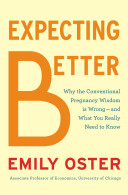
Expecting Better
Emily Oster · 2013
Emily Oster applies evidence appraisal to the everyday risk decisions of pregnancy, from food and alcohol to testing and delivery choices. It belongs here as a lesson in reading pregnancy evidence and communicating uncertainty, though readers should check current clinical guidance because recommendations and available data can change after publication.

The New Menopause: Navigating Your Path Through Hormonal Change with Purpose, Power, and Facts
Mary Claire Haver · 2024
Mary Claire Haver's 2024 book treats perimenopause and menopause as major health transitions rather than a short list of inconveniences. It covers symptoms, hormone therapy, bone and cardiovascular health, sleep, sexuality, and long-term risk, giving readers a map for conversations with clinicians while making clear that treatment choices depend on personal history and contraindications.

The Menopause Brain: New Science Empowers Women to Navigate the Pivotal Transition with Knowledge and Confidence
Lisa Mosconi · 2024
Neuroscientist Lisa Mosconi focuses on the brain during the menopause transition: memory, sleep, mood, thermoregulation, and the changing relationship between ovarian hormones and neural health. Its distinctive contribution is moving menopause beyond hot flashes and toward brain research, while giving readers a way to distinguish plausible mechanisms from the fear-heavy claims common in longevity marketing.

How to Menopause
Tamsen Fadal · 2025
Tamsen Fadal's 2025 guide is built around navigating the day-to-day reality of perimenopause and menopause: recognizing patterns, preparing for appointments, and discussing symptoms that are often normalized away. It complements physician-authored books with an accessible, experience-led format, while the best use of its checklists is as a prompt for individualized care rather than a universal protocol.

The Menopause Manifesto: Own Your Health with Facts and Feminism
Jennifer Gunter · 2021
Jennifer Gunter pairs an obstetrician-gynecologist's clinical explanation with an explicit critique of the shame and commercial misinformation surrounding menopause. The book is strongest when it explains what is known about symptoms, hormone therapy, bone and cardiovascular health, and sexual health, then shows where a confident-sounding wellness claim outruns the evidence.
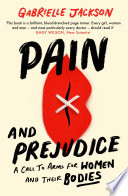
Pain and Prejudice
Gabrielle Jackson · 2019
Gabrielle Jackson investigates why women's pain is so often undertreated, disbelieved, or folded into a vague psychological explanation. Drawing on reporting, research, and her own experience, she connects endometriosis and other chronic conditions to the larger politics of evidence and authority. It is an important bridge between individual stories and the institutional design of healthcare.

The Knowledge: Your guide to female health – from menstruation to the menopause
Dr. Nighat Arif · 2023
Dr Nighat Arif offers a broad, illustrated guide spanning menstruation, fertility, pregnancy, common gynecological conditions, and menopause. The value is range and accessibility: it gives readers a shared vocabulary for the whole reproductive life course and explicitly makes room for different cultures, bodies, and gender experiences, rather than treating one narrow patient as the default.
§ About this list
- Books
- 17
- Published
- 2013–2025
- Average rating
- 4.2 / 5 across 482 ratings
- Genres
- Nonfiction, Health & Fitness, Science, History
Most-rated on Modern Women's Health: Evidence, Bodies, and the Care Gap
- 1Invisible Women: Data Bias in a World Designed for Men · Caroline Criado Perez
- 2Expecting Better · Emily Oster
- 3All in Her Head: The Truth and Lies Early Medicine Taught Us About Women's Bodies and Why It Matters Today · Elizabeth Comen
Common questions about Modern Women's Health: Evidence, Bodies, and the Care Gap
- How many books are on Modern Women's Health: Evidence, Bodies, and the Care Gap?
- Modern Women's Health: Evidence, Bodies, and the Care Gap has 17 books, published between 2013 and 2025.
- Which book on Modern Women's Health: Evidence, Bodies, and the Care Gap is the most popular?
- Invisible Women: Data Bias in a World Designed for Men by Caroline Criado Perez is the most-rated book on the list, with 299 ratings and a 4.2 average.
- Where should I start with Modern Women's Health: Evidence, Bodies, and the Care Gap?
- Start with Invisible Women: Data Bias in a World Designed for Men, Expecting Better and All in Her Head: The Truth and Lies Early Medicine Taught Us About Women's Bodies and Why It Matters Today: the three most-rated books on the list.
- What genres are on Modern Women's Health: Evidence, Bodies, and the Care Gap?
- The books on this list are tagged Nonfiction, Health & Fitness, Science and History.
Explore: Nonfiction · Health & Fitness · Science · History