SSansFiction
The libraryCollectionsJournalStatsFor authors
Sign inJoin now
Sansfiction,

A digital library for books. Made by readers, for readers.

v 2.0 · 2026
The library
  • Discover
  • Collections
  • Book tracker
  • Journal
  • Stats
For authors
  • SF Links
  • Analytics
  • How it works
  • FAQ
Elsewhere
  • X / @sansfiction
  • Privacy
  • Terms
  • Contact
© 2026 SansFiction · Digital · GlobalA quiet room for your reading life.
The libraryCollectionsJournalStatsFor authors
Sign inJoin now →
Navigation
Library
Bookshelf
Journal
Discover
Collections
Tierlists
Stats
Profile
Author Page
Link Builder
Account
Sign in
S
G
BooksadventureYumi and the Nightmare Painter
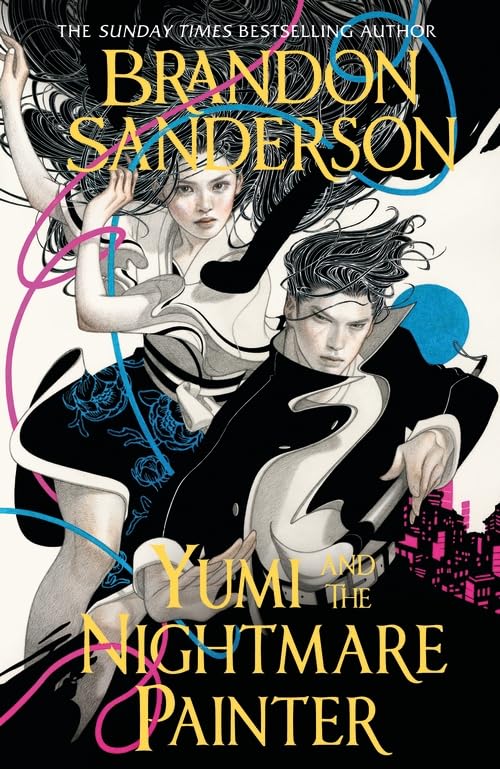
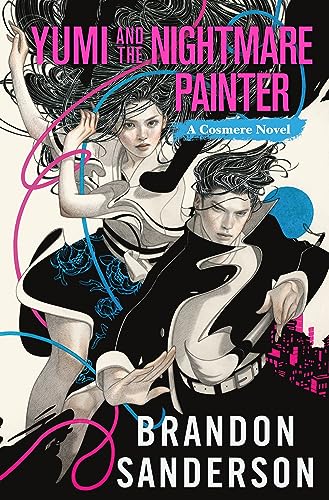
Cover of Yumi and the Nightmare Painter by Brandon Sanderson
№ 2 · Hoid's Travails

Yumi and the Nightmare Painter,

by Brandon Sanderson

Ask AI
Rating4.5/ 5
Ratings860
Pages384
Reading Hours8h
Published2023
LanguageEnglish

§Synopsis

01

In a universe where light and shadow are divided by more than just geography, two strangers find their souls tethered by a cosmic glitch. Yumi, a ritualist whose every movement is dictated by tradition and the heavy burden of her people’s spiritual well-being, exists in a world of constant sunlight and meticulous beauty. Opposite her is Nikaro, known only as "Painter," a man navigating a city of eternal night where the only defense against soul-consuming Nightmares is the stroke of a brush. Their connection is not a choice but a survival mechanism triggered by a desperate plea from a spirit, forcing them to inhabit each other’s lives in a literal, disorienting exchange of perspectives.

This story explores the friction between the creator and the creation, examining how art serves as both a shield and a bridge. While one character struggles with the crushing weight of being "chosen," the other drowns in the invisibility of being average. As they are thrust into each other's cultures—one a pastoral land of gardens and the other a neon-lit urban landscape—the mystery of the "shroud" that covers one world and the rigid rituals that define the other begins to unravel. They must quickly master each other's crafts to maintain a facade of normalcy, all while investigating the strange entity that bound them together.

The Mechanics of Two Worlds

The narrative operates on a duality of settings, each defined by its relationship with the supernatural. Yumi’s homeland, Torio, is a world of heat and blinding light where the ground is too hot to touch, and the people rely on spirits for basic necessities. The magic here is the art of "stone stacking," a meditative practice where Yumi attracts spirits by creating impossible, gravity-defying sculptures.

In contrast, Painter’s city of Kilahito is encased in the Shroud, a thick perimeter of black mist that blocks the sun. Here, technology has advanced to a mid-to-late 20th-century level, powered by the very essence that threatens it. The "Nightmares" are entities that emerge from the mist to consume the identities of the living; they can only be neutralized when a Painter depicts them on canvas, giving them a stable shape and rendering them harmless. The atmosphere shifts between the serene, high-stakes ritualism of Torio and the gritty, noir-inspired tension of Kilahito.

Main Characters

  • Yumi: A Yoki-hijo of immense discipline who has spent her life as a living icon, possessing the rare ability to command spirits through the art of stone stacking.
  • Painter (Nikaro): A struggling artist in Kilahito who lives a lonely, isolated existence, working a low-tier job neutralizing Nightmares to pay his rent.
  • Liyun: Yumi’s high-ranking and strictly traditional warden, whose rigid expectations for Yumi’s behavior provide the primary obstacle for Painter while he inhabits Yumi's body.
  • Design: A strange, cryptic being with a visual appearance resembling a mess of geometric lines who assists the duo in understanding the technicalities of their connection.

The Burden of Identity and Art

The character arcs center on the psychological toll of their respective roles. Yumi suffers from a total lack of agency; her life is a series of scheduled prayers and performances, leaving her with no sense of self outside of her utility to her people. Her development begins as she experiences the relative "freedom" of Painter’s world, even amidst its darkness.

Nikaro, conversely, is defined by his perceived mediocrity and a past social trauma that has led him to push everyone away. His journey involves moving from a state of "just getting by" to finding genuine purpose in his art. Their relationship is built on the necessity of teaching: Yumi must teach Nikaro the spiritual patience required for stone stacking, while Nikaro must teach Yumi how to express herself through the more fluid, chaotic medium of painting.

Subverting Fantasy Tropes

The novel utilizes the "Body Swap" trope but introduces a mechanical twist: rather than a simple swap, one character often exists as a semi-transparent phantom that only the other can see, creating a "coach and player" dynamic. It also subverts the "Chosen One" narrative. While Yumi is literally the most important person in her world, the story focuses on the dehumanization that comes with such a title.

The book also addresses the "Magic vs. Technology" trope not as a conflict, but as two different responses to the same cosmic environment. By framing art—painting and sculpture—as the primary magic system, the narrative emphasizes human intent and emotional resonance over mere power levels or destructive capability.

§Our take

Sanderson's most romance-forward book is also a persuasive case for art as magic. Yumi stacks stones to call spirits; Painter gives Nightmares a stable shape on canvas. The setup is neat, but the book earns its dreaminess through character rather than spectacle.

The trouble is the opening stretch. The leads keep trading places, and the explanations grow thick enough to test patience. Once the mystery catches up, the romance and final stretch reward the wait. Hoid's asides can charm or feel like a lecture, and the side cast often fades beside the leads. Aliya Chen's illustrations belong in the edition, not on the margins. Readers who came for battles will find little; readers who wanted a gentler, stranger love story may have found the better book.

§Themes

Art as a shield
Painter tames Nightmares by giving them stable shapes on canvas, while Yumi calls spirits by stacking impossible stones.
Chosen, not free
Yumi's spiritual importance makes her indispensable to Torio, but leaves her with almost no say over her own life.
Trading identities
A spirit's plea binds Yumi and Nikaro, forcing each to learn the other's customs, craft and expectations.
Purpose found in practice
Yumi moves from living for others' needs toward making choices, while Painter moves from isolation and drift toward art with genuine purpose.

§How it was received

The book arrived through Sanderson's Kickstarter rather than the usual trade-review cycle, so its reception lives mostly in genre reviews and reader communities. Genre reviewers widely rank it the strongest of Sanderson's four Secret Projects, with Novel Notions placing it above his earlier standalones and among his best work. The sharpest split is over pacing: some found no dull stretch, while Quill to Live, Elitist Book Reviews and Library Ladies flagged a slow build; readers praise the slow-burn romance and inventive magic but complain about repetitive early switches and late exposition.

§Read it if

  • You want a slower, romance-forward Sanderson with art, identity and friendship doing more work than battles
  • You enjoy fantasy in which painting and stone stacking are forms of magic, not decorative metaphors
  • You want the illustrations to be part of the reading experience, not an afterthought

§Skip it if

  • You want Sanderson's battlefield scale and big set pieces; this book has little combat
  • Expository passages and a slow setup bother you; several reviewers flagged the first half, and the late explanation can feel heavy

§Before you start

Reading experience
The first half is deliberately slow while the leads learn each other's worlds, then the pace accelerates into a fast finale; the prose is accessible and no Cosmere reading is required.
Reading order
A Cosmere standalone and the third Secret Project. Since 2025, Sanderson has grouped it with Tress of the Emerald Sea and the planned The Fires of December as Hoid's Travails. Tress and Yumi are deliberately unnumbered and can be read in either order; Goodreads labels Yumi #2, but no other Cosmere books are required.
Content notes
Romance stays at kissing-level intimacy; Themes of isolation, duty, loss and identity being consumed; Nightmare creatures and scenes of peril.

§Common questions

Are other Cosmere books required first?
No. It's a standalone; Stormlight references are a bonus, not a prerequisite.
Is this a body-swap romance?
Yes. A spirit's plea binds Yumi and Nikaro, and one often appears to the other as a semi-transparent phantom while they take turns living in each other's world.
How much action is there?
Little. The danger comes from Nightmares and the pressure of keeping up appearances, not sustained combat.

§If you liked this

  • Tress of the Emerald Sea by Brandon Sanderson — The sibling Hoid-narrated standalone is lighter and more openly adventurous, while Yumi is slower, more romantic and more dramatic.
  • Hikaru no Go by Yumi Hotta and Takeshi Obata — Sanderson cites this manga about a boy bonded to a spirit as the original spark for Yumi's premise and discipline.
  • Warbreaker by Brandon Sanderson — Another Cosmere standalone in which art and color drive the magic, though Novel Notions ranks Yumi above it.
  • The Emperor's Soul by Brandon Sanderson — A compact Cosmere standalone in which artistry becomes power, making it the cleanest companion on the book's central idea.
Sources
  • Wikipedia
  • Reactor (formerly Tor.com)
  • Brandon Sanderson (author site)
  • Novel Notions (Petrik Leo)
  • The Quill to Live (Cole Rush)
  • Elitist Book Reviews
  • The Library Ladies
  • Goodreads

Track this book

Add to your library to track progress and write reviews

§Genres
adventure1fantasy1fiction1romance1science fiction1young adult1
§Moods
adventurous1emotional1funny1hopeful1inspiring1lighthearted1mysterious1
§Tags
#a mix driven1#character driven1#diverse characters1#loveable characters1#not diverse characters1#plot driven1#read1

§About the Author

Brandon Sanderson
Brandon Sanderson

37 books in catalog

The creation of the Cosmere, a vast interconnected universe where magic systems are governed by distinct physical laws, has redefined the scope of modern epic fantasy. Brandon Sanderson established this shared setting through a series of novels that began with the publication of Elantris and expanded into the multi-volume saga The Stormlight Archive.

His work is characterized by intricate world-building and a commitment to "hard magic," where the limitations of supernatural abilities are as important as the powers themselves. This approach has made his books, such as Mistborn: The Final Empire and The Way of Kings, central to contemporary discussions of genre construction and narrative consistency.

Career & Background

Born on December 19, 1975, in Lincoln, Nebraska, Brandon Winn Sanderson was the eldest of four children born to Barbara and Winn Sanderson. Although he was a reluctant reader in his early youth, his perspective changed in the eighth grade when his teacher, Mrs. Reeder, gave him a copy of Dragonsbane by Barbara Hambly. This encounter led him to explore the works of Robert Jordan, Melanie Rawn, David Eddings, Anne McCaffrey, and Orson Scott Card, eventually inspiring his own early attempts at fiction. In 1994, he enrolled at Brigham Young University (BYU) as a biochemistry major. However, a two-year hiatus from 1995 to 1997 to serve as a missionary for the Church of Jesus Christ of Latter-day Saints in Seoul, South Korea, shifted his focus. During this time, he realized he missed writing more than chemistry. Upon returning to BYU, he changed his major to English, much to the dismay of his mother, who had hoped he would become a doctor.

To support his education while maximizing his writing time, Sanderson worked as a night desk clerk at a local hotel, writing between midnight and 5:00 AM. By the time he finished his undergraduate degree, he had completed seven novels, though he faced a steady stream of rejections from publishers. He also volunteered for The Leading Edge, BYU’s science fiction and fantasy magazine, where he served as Editor in Chief during his senior year. This role allowed him to read many submissions and form lifelong friendships within the industry. He learned about the business side of writing by taking a class from David Farland, author of the Runelords series, who advised him to attend conventions like WorldCon and World Fantasy to connect with professionals. He eventually met his current agent and one of his editors at these events.

His persistence paid off in 2003 when editor Moshe Feder at Tor Books discovered the manuscript for Elantris in a slush pile. The novel was published in May 2005, marking the official start of his professional career. Shortly after, he launched the Mistborn trilogy, which includes Mistborn: The Final Empire (2006), The Well of Ascension (2007), and The Hero of Ages. In 2004, after graduating with his Master’s degree in creative writing from BYU, he was asked to teach the same genre-focused writing class he had once taken as an undergraduate. He continues to teach this section because he enjoys helping aspiring writers. In July 2006, he married Emily Bushman, a fellow English major from BYU. Emily began working as his business manager following the birth of their first child in October 2007.

A significant turning point occurred in December 2007 when Harriet McDougal Rigney selected Sanderson to complete Robert Jordan’s The Wheel of Time series following Jordan's death. This massive undertaking resulted in three volumes: The Gathering Storm (2009), Towers of Midnight (2010), and A Memory of Light (2013). During this same period, Sanderson began his own magnum opus, The Stormlight Archive, starting with The Way of Kings in 2010. He has since balanced these epic projects with middle-grade series like Alcatraz Versus the Evil Librarians (2007) and young adult science fiction such as Skyward. His novella The Emperor’s Soul won the Hugo Award in 2013, and he has been a judge for Writers of the Future since 2016. He also co-hosts the podcast Writing Excuses, which has won multiple awards for its writing advice.

Writing Style & Themes

Sanderson is widely recognized for his development of "Sanderson’s Laws of Magic," a set of guidelines for authors to create consistent and logical magic systems. His approach emphasizes that an author's ability to solve problems with magic is directly proportional to how well the reader understands said magic. This philosophy is evident in the "Allomancy" of the Mistborn series, where characters ingest and "burn" metals to gain specific abilities, and the "Surgebinding" found in The Stormlight Archive. By establishing clear costs and limitations, he ensures that magical resolutions feel earned rather than arbitrary. This dedication to internal logic has influenced a generation of fantasy writers seeking to move away from "soft" magic systems where powers are ill-defined.

His world-building often incorporates unique geological and ecological elements that directly influence the cultures and technologies of his characters. For instance, the landscape of Roshar in The Stormlight Archive features a rocky terrain and flora that retracts into the ground, a design inspired by the sandstone buttes and slot canyons of southeastern Utah. Similarly, the world of Scadrial in Mistborn is defined by falling ash and a red sun, environmental factors that shape the social hierarchy and survival strategies of its inhabitants. His background in linguistics, influenced by his time in Korea, often informs the naming conventions and structural logic of his fictional languages, adding a layer of authenticity to his diverse civilizations.

Thematic depth in his work often explores the intersection of leadership, morality, and mental health. Characters in The Stormlight Archive frequently struggle with depression, post-traumatic stress, or identity crises, reflecting a nuanced approach to heroism that acknowledges human vulnerability. The "Cosmere" framework allows for subtle cross-over elements, where characters known as "Worldhoppers" appear in different series, rewarding observant readers with a deeper layer of narrative connectivity. This interconnectedness is further explored in his "Secret Projects," such as Tress of the Emerald Sea and The Sunlit Man, which expand the boundaries of his shared universe into new genres and planetary systems, including the transition into a space age as seen in Wind and Truth.

Major Works

  • The Stormlight Archive — A projected ten-volume epic fantasy series set on the world of Roshar, beginning with The Way of Kings (2010) and continuing through Words of Radiance (2014), Oathbringer, Rhythm of War, and the upcoming Wind and Truth.
  • Mistborn — An initial trilogy consisting of Mistborn: The Final Empire, The Well of Ascension, and The Hero of Ages, followed by the "Wax and Wayne" era starting with The Alloy of Law (2011) and continuing through Shadows of Self, The Bands of Mourning (2016), and The Lost Metal.
  • The Wheel of Time — The final three volumes of Robert Jordan's legendary series, completed by Sanderson: The Gathering Storm (2009), Towers of Midnight (2010), and A Memory of Light (2013).
  • Elantris — Sanderson's 2005 debut novel, which introduced the first iteration of the Cosmere and explored a city of fallen, god-like beings.
  • Warbreaker — A standalone novel featuring a color-based magic system known as Awakening, which has significant ties to the broader Cosmere.
  • Skyward — A young adult science fiction series following a girl named Spensa who dreams of being a pilot in a world under constant alien siege, continuing through Starsight, Cytonic, and Defiant.
  • Secret Projects — A series of novels originally funded via a record-breaking Kickstarter campaign, including Tress of the Emerald Sea, The Frugal Wizard's Handbook for Surviving Medieval England, Yumi and the Nightmare Painter, and The Sunlit Man.
  • Alcatraz Versus the Evil Librarians — A middle-grade series beginning in 2007 that follows a boy who discovers his family's legacy of fighting a secret society of librarians.

§Featured Series

Hoid's Travails

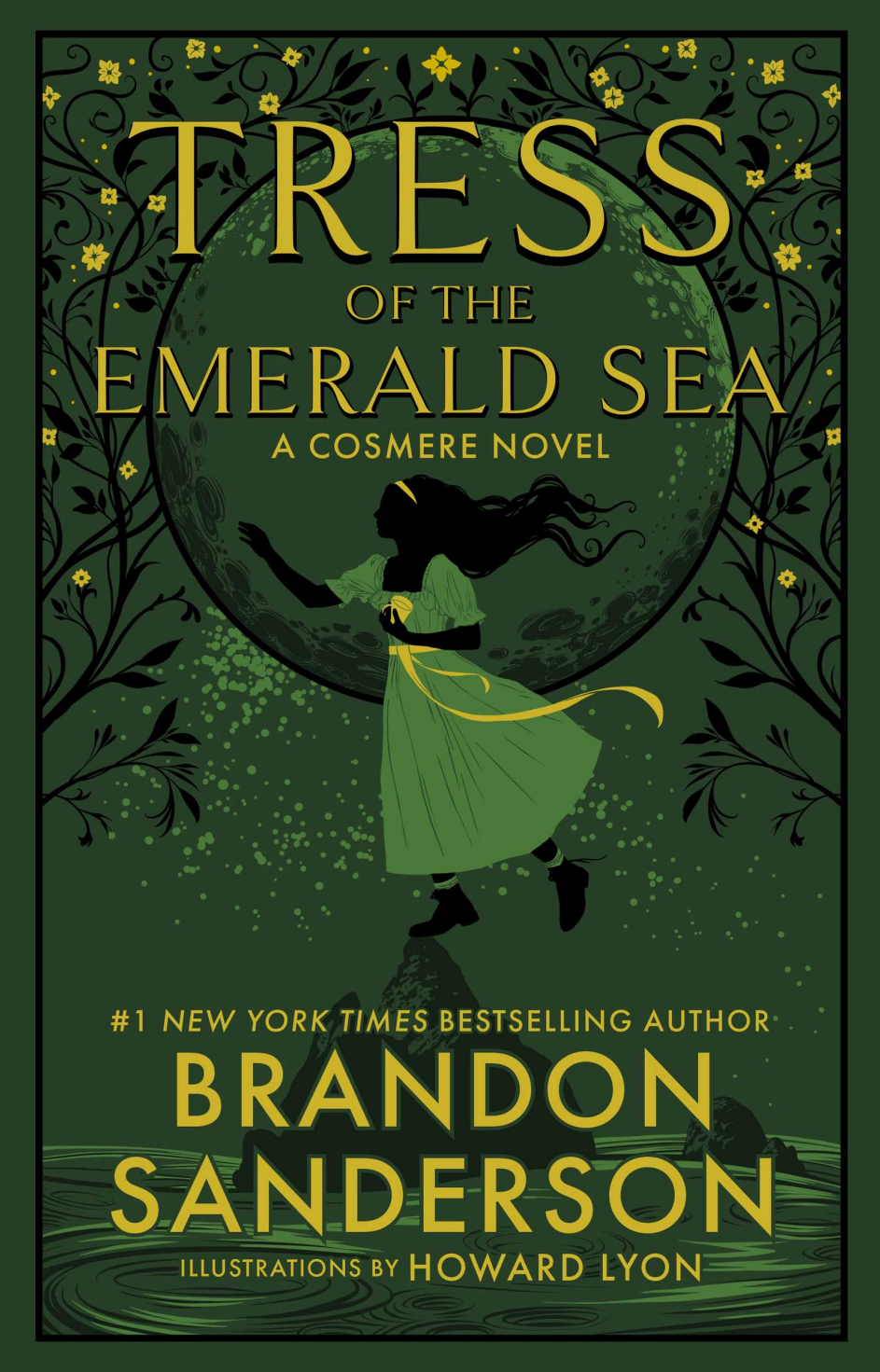
Cover of Tress of the Emerald Sea by Brandon Sanderson

Tress of the Emerald Sea

Brandon Sanderson, 2023
Cover of Yumi and the Nightmare Painter by Brandon Sanderson

Yumi and the Nightmare Painter

Brandon Sanderson, 2023

§Also part of

Secret ProjectsThe Cosmere

§Other Editions

Showing 2 of 24 editions
Cover of Yumi and the Nightmare Painter

Yumi and the Nightmare Painter

engHardcover365 pgs
Gollancz20239781399613439
Amazon
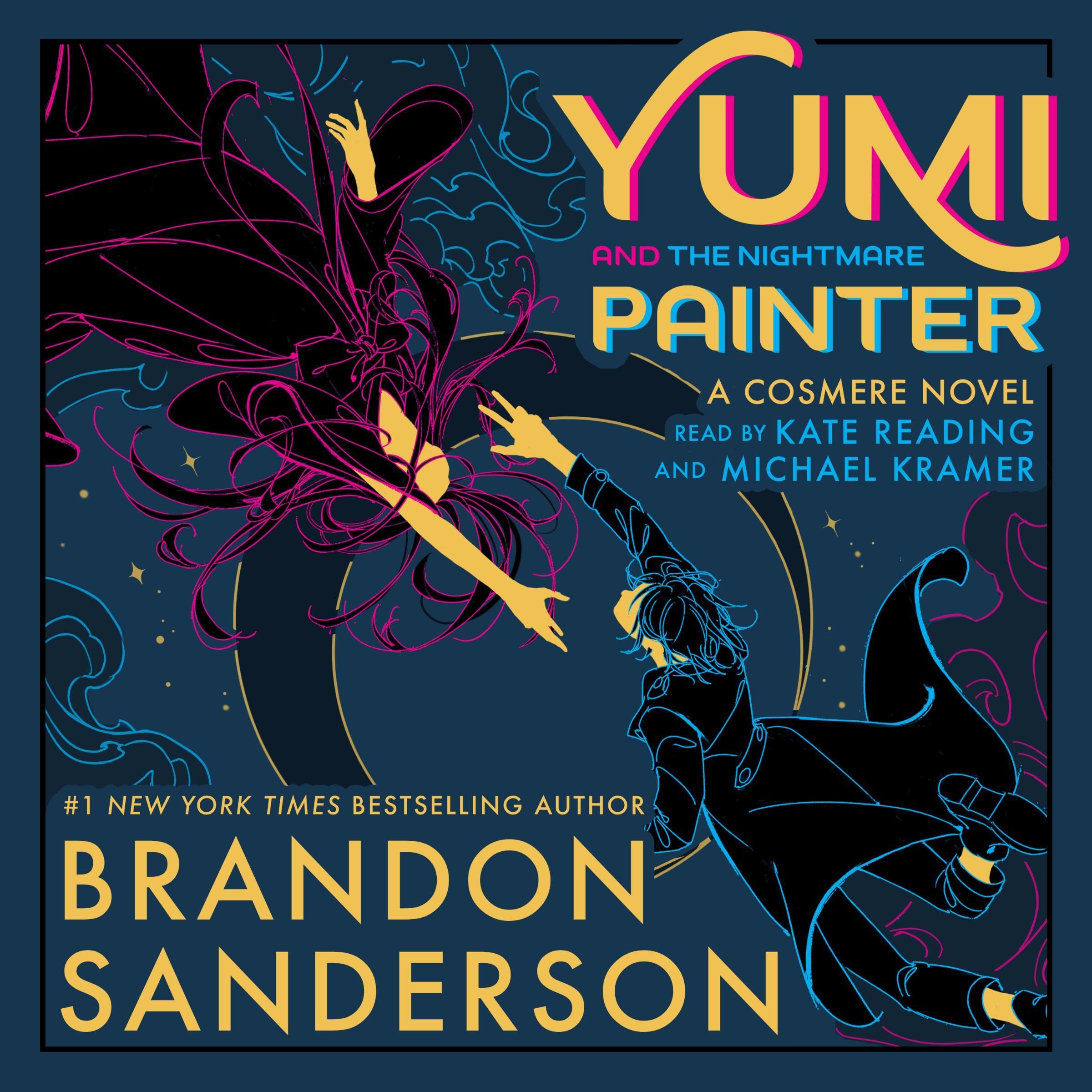
Cover of Yumi and the Nightmare Painter

Yumi and the Nightmare Painter

engAudibleUnabridged
Dragonsteel20249781938570445
Amazon
§Genres
adventure1fantasy1fiction1romance1science fiction1young adult1
§Moods
adventurous1emotional1funny1hopeful1inspiring1lighthearted1mysterious1
§Tags
#a mix driven1#character driven1#diverse characters1#loveable characters1#not diverse characters1#plot driven1#read1

Metadata

ISBN-139781250899705
ISBN-101250899702
ASIN1250899702

Editions and availability

Find Yumi and the Nightmare Painter Brandon Sanderson in PDF, EPUB, ebook, audiobook, print, or library editions.

View on Amazon
Bookshop.orgGoogle Play BooksBarnes & NobleOpen Library

Featured In Lists

Book cover from this collectionBook cover from this collectionBook cover from this collectionBook cover from this collection
Book cover from this collection

2023 Year in Books

150 books