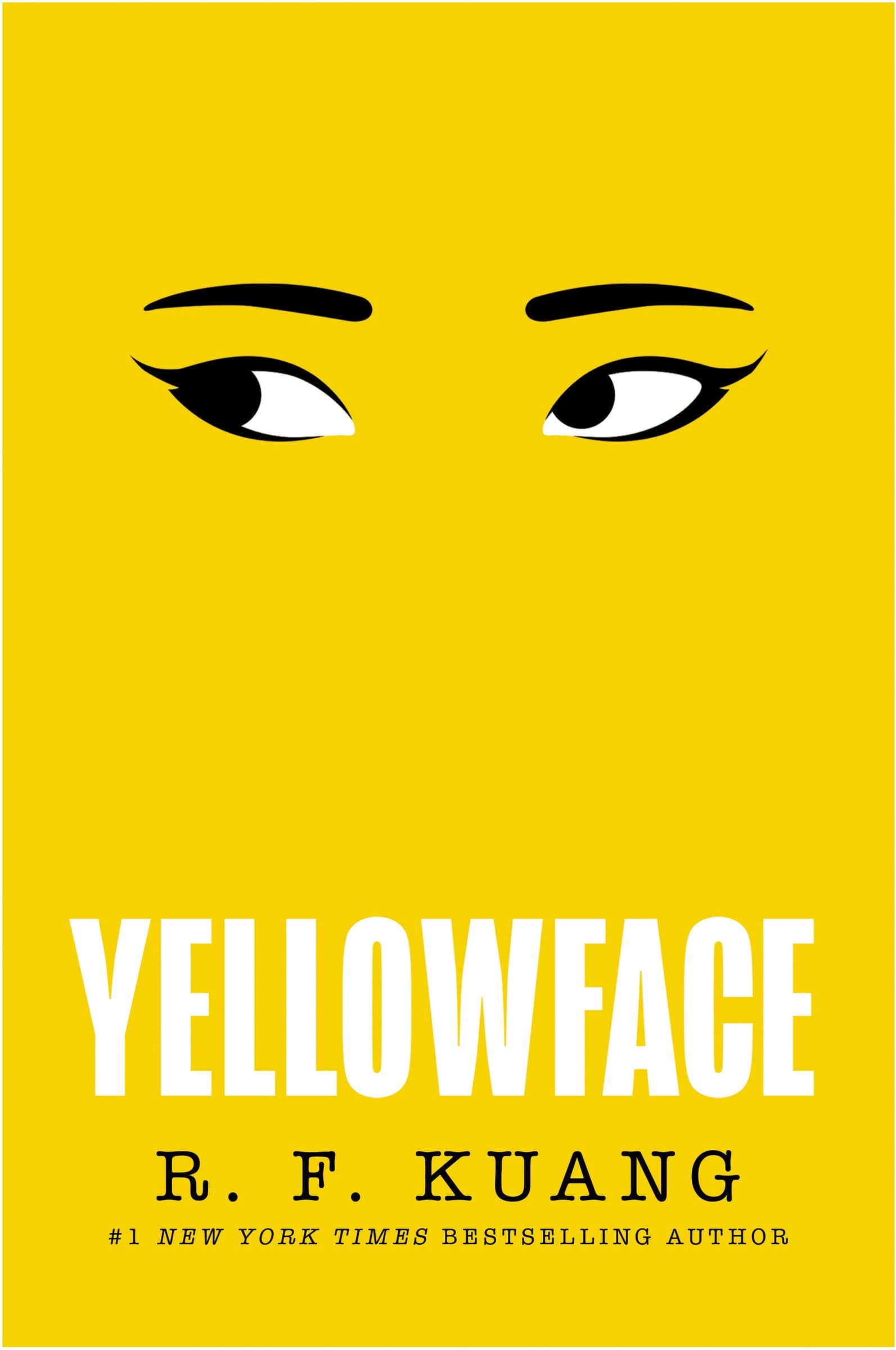
Authors June Hayward and Athena Liu were supposed to be twin rising stars. But Athena’s a literary darling. June Hayward is literally nobody. Who wants stories about basic white girls, June thinks.
So when June witnesses Athena’s death in a freak accident, she acts on impulse: she steals Athena’s just-finished masterpiece, an experimental novel about the unsung contributions of Chinese laborers during World War I.
So what if June edits Athena’s novel and sends it to her agent as her own work? So what if she lets her new publisher rebrand her as Juniper Song—complete with an ambiguously ethnic author photo? Doesn’t this piece of history deserve to be told, whoever the teller? That’s what June claims, and the New York Times bestseller list seems to agree.
But June can’t get away from Athena’s shadow, and emerging evidence threatens to bring June’s (stolen) success down around her. As June races to protect her secret, she discovers exactly how far she will go to keep what she thinks she deserves.
With its totally immersive first-person voice, Yellowface grapples with questions of diversity, racism, and cultural appropriation, as well as the terrifying alienation of social media. R.F. Kuang’s novel is timely, razor-sharp, and eminently readable.
Add to your library to track progress and write reviews
Find Yellowface R.F. Kuang in PDF, EPUB, ebook, audiobook, print, or library editions.

17 books in catalog
Speculative fiction that blends modern East Asian history, translation theory, and academic satire has reshaped contemporary fantasy literature, exemplified by the bestselling The Poppy War trilogy. Author Rebecca F. Kuang entered the genre with this military fantasy sequence before expanding into historical fantasy and satirical fiction. Her writing has earned major recognition, including the Nebula, Locus, Crawford, and British Book Awards, along with #1 New York Times and #1 Sunday Times bestseller status.
Born in Guangzhou, China, in 1996, Kuang immigrated to the United States at age four and grew up in Dallas, Texas. She earned her undergraduate degree from Georgetown University and honed her craft at the Odyssey Writing Workshop in 2016 and the CSSF Novel Writing Workshop in 2017. As a Marshall Scholar, she completed an MPhil in Chinese Studies at Cambridge University and an MSc in Contemporary Chinese Studies at Oxford University. She went on to pursue a PhD in East Asian Languages and Literatures at Yale University, researching diaspora, contemporary Sinophone literature, and Asian American literature. Beyond her graduate studies, she has served as the inaugural Millard Distinguished Writer in Residence at the College of the Holy Cross. She was named to the 2023 Time 100 Next list and selected for the Forbes 30 Under 30 Class of 2024.
Kuang's novels examine the mechanics of imperial expansion, institutional corruption, and the politics of language and publishing. Her military fantasy incorporates meticulous historical research into twentieth-century Chinese military strategy and conflict, while her dark academia and satirical fiction probe how elite academic institutions and literary industries perpetuate systemic inequality. By combining precise historical grounding with sharp social critique, her narratives analyze how individuals navigate, resist, or assimilate into powerful power structures.