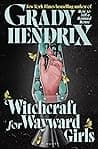
There’s power in a book…
They call them wayward girls. Loose girls. Girls who grew up too fast. And they’re sent to Wellwood House in St. Augustine, Florida, where unwed mothers are hidden by their families to have their babies in secret, to give them up for adoption, and most important of all, to forget any of it ever happened.
Fifteen-year-old Fern arrives at the home in the sweltering summer of 1970, pregnant, terrified and alone. Under the watchful eye of the stern Miss Wellwood, she meets a dozen other girls in the same predicament. There’s Rose, a hippie who insists she’s going to find a way to keep her baby and escape to a commune. And Zinnia, a budding musician who plans to marry her baby’s father. And Holly, a wisp of a girl, barely fourteen, mute and pregnant by no-one-knows-who.
Everything the girls eat, every moment of their waking day, and everything they’re allowed to talk about is strictly controlled by adults who claim they know what’s best for them. Then Fern meets a librarian who gives her an occult book about witchcraft, and power is in the hands of the girls for the first time in their lives. But power can destroy as easily as it creates, and it’s never given freely. There’s always a price to be paid…and it’s usually paid in blood.
In Witchcraft for Wayward Girls, the author of How to Sell a Haunted House and The Final Girl Support Group delivers another searing, completely original novel and further cements his status as a “horror master” (NPR).
Add to your library to track progress and write reviews

8 books in catalog
Blending satirical humor with genuine horror, contemporary fiction has found a distinctive voice in stories that juxtapose domestic routines and pop culture with supernatural dread. Grady Hendrix made a notable impact on the horror genre with his 2014 debut novel Horrorstör, set inside a haunted Swedish flat-pack furniture superstore, and has since written multiple bestselling novels that re-examine classic horror tropes through relatable social settings.
From suburban book clubs confronting undead threats to teenage friendships tested by demonic possession, his stories ground terrifying scenarios in detailed, humorous, and emotionally resonant realities. His work spans bestselling fiction, award-winning nonfiction on horror literature history, and feature film screenplays.
Born in 1972 in Charleston, South Carolina, Grady Hendrix eventually relocated to New York City, where he established a career as a New York Times bestselling novelist and screenwriter. Before achieving wide recognition for his fiction, he developed a deep knowledge of genre history, which later informed his Bram Stoker Award-winning nonfiction history of the 1970s and 1980s horror paperback boom, Paperbacks from Hell: The Twisted History of '70s and '80s Horror Fiction. In addition to his novels, Hendrix expanded his creative work into film, writing the screenplays for the horror film Mohawk, set during the War of 1812, and Satanic Panic, which follows a pizza delivery worker confronting wealthy cultists.
His fiction career expanded rapidly as several of his titles were optioned and adapted for screen media, including feature film and television development for My Best Friend's Exorcism, The Southern Book Club's Guide to Slaying Vampires, and How to Sell a Haunted House. By pairing sharp narrative pacing with research-backed subgenre tropes, Hendrix has published a diverse bibliography that includes the heavy metal horror story We Sold Our Souls and the slasher homage The Final Girl Support Group, published on July 13, 2021. His books have reached broad international audiences, selling millions of copies and appearing in over twenty translations.
Hendrix's writing style is characterized by a balance of absurdist wit, nostalgic detail, and intense emotional warmth mixed with body horror. He frequently places ordinary people—such as retail employees, suburban mothers, or teenage best friends—into extraordinary supernatural danger, exploring how personal relationships, grief, and institutional pressures shape human resilience. Whether examining suburban domesticity or corporate consumerism, his narratives treat characters' emotional bonds with sincere gravity while maintaining an irreverent, fast-paced comic tone.