An ageless hermit runs a secret way station for alien visitors in the Wisconsin woods in this Hugo Award-winning science fiction classic Enoch Wallace is not like other humans. Living a secluded life in the backwoods of Wisconsin, he carries a nineteenth-century rifle and never seems to age--a fact that has recently caught the attention of prying government eyes. The truth is, Enoch is the last surviving veteran of the American Civil War and, for close to a century, he has operated a secret way station for aliens passing through on journeys to other stars. But the gifts of knowledge and immortality that his intergalactic guests have bestowed upon him are proving to be a nightmarish burden, for they have opened Enoch's eyes to humanity's impending destruction. Still, one final hope remains for the human race . . . though the cure could ultimately prove more terrible than the disease. Winner of the Hugo Award for Best Novel, Way Station is a magnificent example of the fine art of science fiction as practiced by a revered Grand Master. A cautionary tale that is at once ingenious, evocative, and compassionately human, it brilliantly supports the contention of the late, great Robert A. Heinlein that "to read science-fiction is to read Simak."
Add to your library to track progress and write reviews
Find Way Station Clifford D. Simak in PDF, EPUB, ebook, audiobook, print, or library editions.

5 books in catalog
Exploring peaceful rural landscapes transformed by mysterious cosmic encounters became a hallmark of mid-century speculative fiction. Clifford D. Simak established this distinct pastoral approach by grounding extraordinary alien contact, time travel, and technological breakthroughs within quiet Midwestern settings, as seen in celebrated novels such as Way Station.
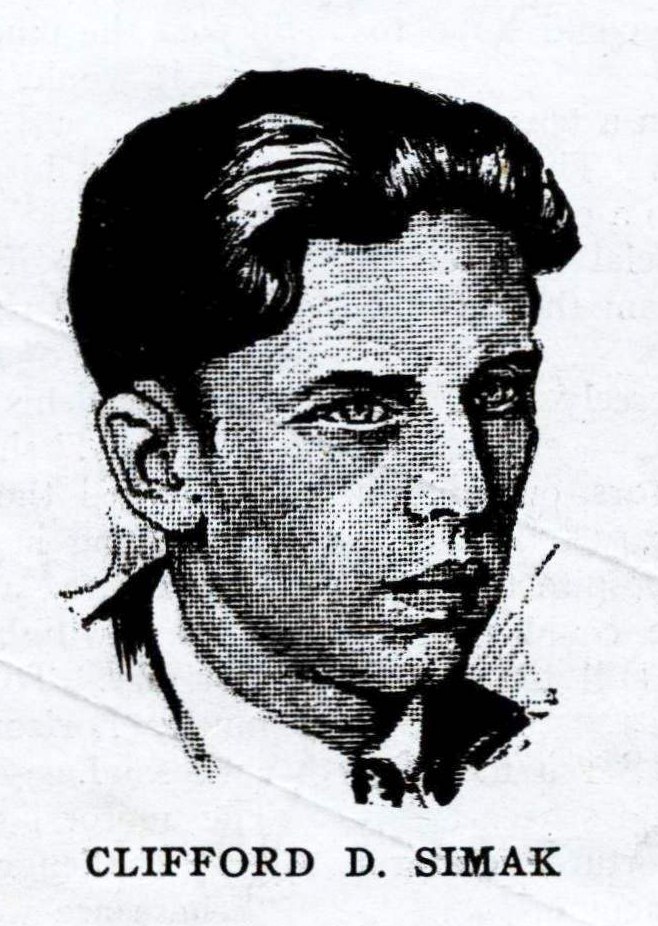
Over a writing career spanning more than five decades, Simak produced dozens of novels and over 140 short stories while working concurrently as a full-time journalist. His contributions earned him three Hugo Awards, a Nebula Award, election as the third SFWA Grand Master, and an inaugural Bram Stoker Award for Lifetime Achievement.
Born on August 3, 1904, in Millville, Wisconsin, Simak developed an early interest in speculative fiction after reading the works of H. G. Wells. He began his writing career while working in journalism, publishing his first story, The World of the Red Sun, in the December 1931 issue of Wonder Stories. From 1929 to 1976, newspaper journalism served as his primary vocation, including a long tenure at the Minneapolis Star starting in 1939. Following his retirement from newspaper work, he dedicated himself to full-time fiction writing until his death on April 25, 1988, in Minneapolis, Minnesota.
Simak became closely identified with pastoral science fiction, frequently placing cosmic anomalies and extraordinary visitors against the backdrop of rural Wisconsin. Rather than emphasizing militarized space warfare or hyper-industrial futures, his stories focus on themes of gentle alien communion, human mortality, nostalgia, and peaceful coexistence among intelligent species. Time travel served as his primary narrative device for introducing otherworldly beings into serene, everyday environments, establishing a contemplative tone across his body of work.

5 books in catalog
Exploring peaceful rural landscapes transformed by mysterious cosmic encounters became a hallmark of mid-century speculative fiction. Clifford D. Simak established this distinct pastoral approach by grounding extraordinary alien contact, time travel, and technological breakthroughs within quiet Midwestern settings, as seen in celebrated novels such as Way Station.
Over a writing career spanning more than five decades, Simak produced dozens of novels and over 140 short stories while working concurrently as a full-time journalist. His contributions earned him three Hugo Awards, a Nebula Award, election as the third SFWA Grand Master, and an inaugural Bram Stoker Award for Lifetime Achievement.
Born on August 3, 1904, in Millville, Wisconsin, Simak developed an early interest in speculative fiction after reading the works of H. G. Wells. He began his writing career while working in journalism, publishing his first story, The World of the Red Sun, in the December 1931 issue of Wonder Stories. From 1929 to 1976, newspaper journalism served as his primary vocation, including a long tenure at the Minneapolis Star starting in 1939. Following his retirement from newspaper work, he dedicated himself to full-time fiction writing until his death on April 25, 1988, in Minneapolis, Minnesota.
Simak became closely identified with pastoral science fiction, frequently placing cosmic anomalies and extraordinary visitors against the backdrop of rural Wisconsin. Rather than emphasizing militarized space warfare or hyper-industrial futures, his stories focus on themes of gentle alien communion, human mortality, nostalgia, and peaceful coexistence among intelligent species. Time travel served as his primary narrative device for introducing otherworldly beings into serene, everyday environments, establishing a contemplative tone across his body of work.