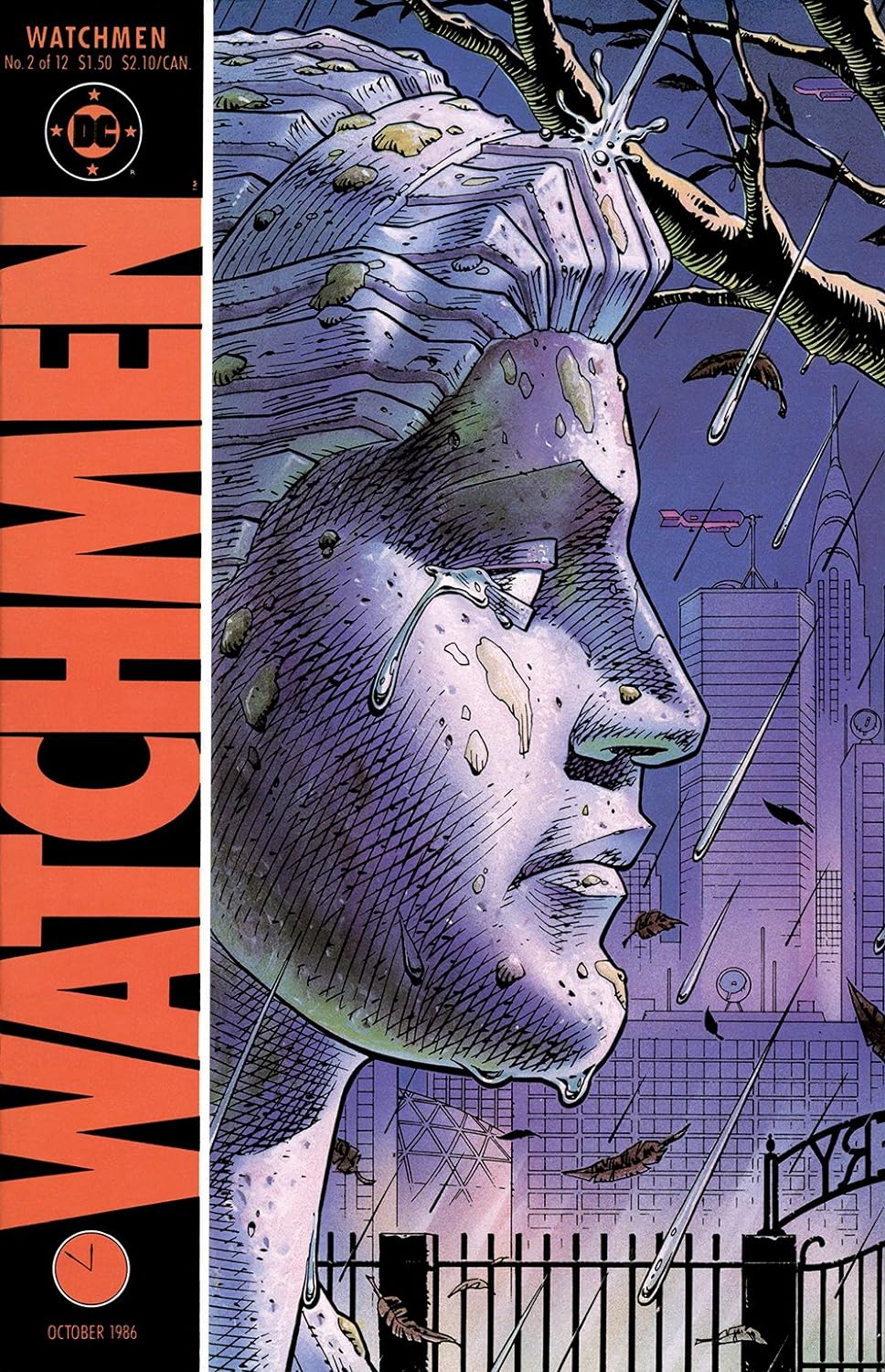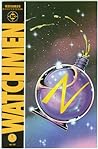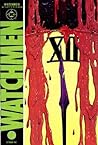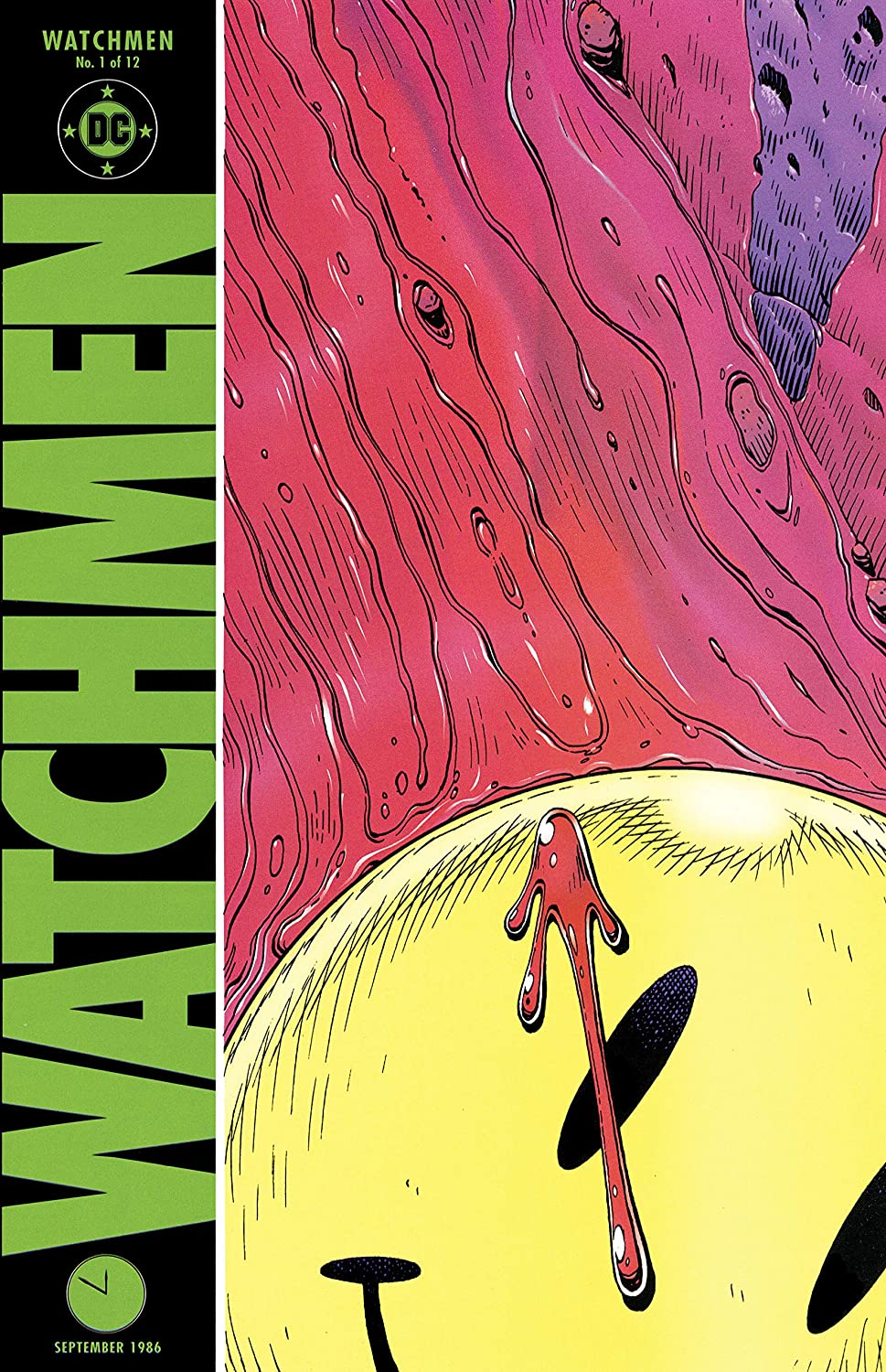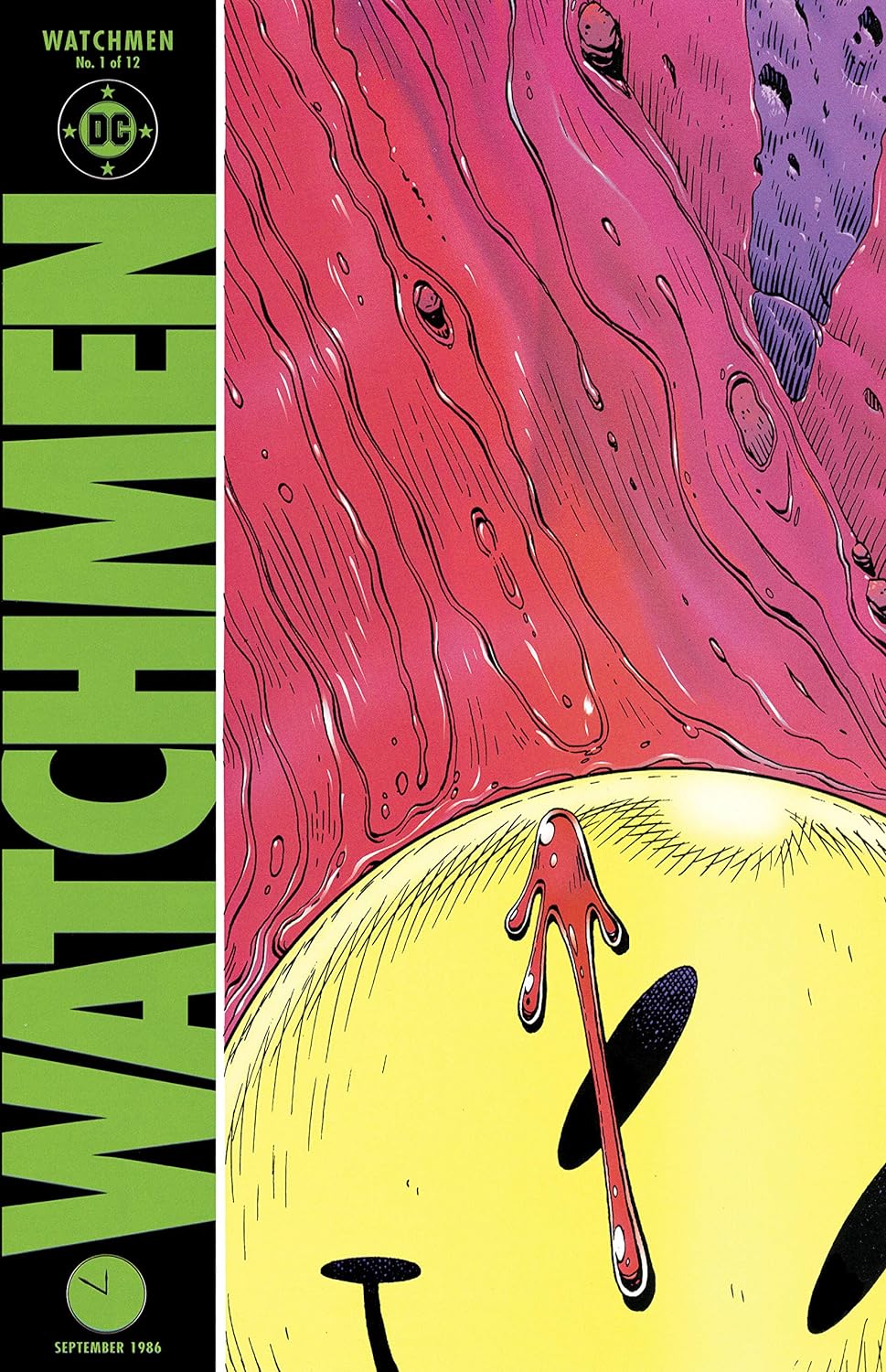
Featuring the first appearance of Rorschach, Ozymandias, Dr. Manhattan, Silk Spectre, Nite Owl, and the Comedian! When the Comedian dies, a series of events are set into motion that bring the world ever closer to a deadly threat no one saw coming.

Featuring the first appearance of Rorschach, Ozymandias, Dr. Manhattan, Silk Spectre, Nite Owl, and the Comedian! When the Comedian dies, a series of events are set into motion that bring the world ever closer to a deadly threat no one saw coming.
Add to your library to track progress and write reviews

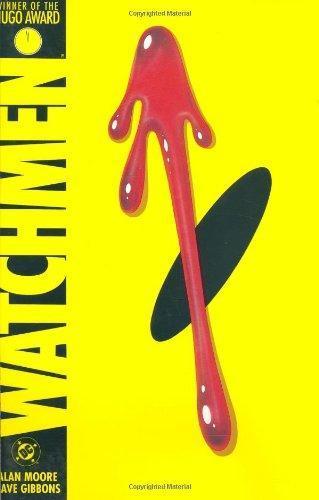
Find Watchmen #1: At Midnight, All the Agents... Alan Moore in PDF, EPUB, ebook, audiobook, print, or library editions.
11 books in catalog
Deconstructing superhero conventions and pushing the boundaries of graphic narrative, comic book storytelling transformed sequential art in the late twentieth century, most visibly through the landmark series Watchmen. English author Alan Moore (born November 18, 1953, Northampton, England) established himself as a prominent writer in comic books and prose through meticulous world-building and dense literary structure.
Moore entered the publishing industry during the 1970s, writing and drawing for independent UK magazines and fanzines before gaining mainstream recognition with scripts for Doctor Who Weekly and the science-fiction anthology 2000 AD. His work on British series such as Marvelman (later known as Miracleman in the United States), The Ballad of Halo Jones, and Skizz demonstrated a talent for revising established genre tropes. In 1983, Moore began writing for American publisher DC Comics, taking over Swamp Thing and revitalizing the title with sophisticated psychological and environmental horror themes.
Throughout the mid-1980s and beyond, Moore produced influential titles across major and independent publishers, including V for Vendetta, Batman: The Killing Joke, Superman: Whatever Happened to the Man of Tomorrow?, and From Hell. Later projects included creating the America's Best Comics imprint, featuring titles like The League of Extraordinary Gentlemen, Promethea, Top Ten, and Tom Strong. Over his multi-decade career, Moore also published under pseudonyms such as Curt Vile, Jill de Ray, Brilburn Logue, and Translucia Baboon, while reprints of certain works were credited to The Original Writer. In later years, Moore transitioned away from comic books to focus on prose fiction and novels.
Moore's writing style is characterized by intricate formal structures, deep historical research, and a deliberate subversion of classical heroic tropes. His narratives frequently examine political authority, fascism, moral ambiguity, and the psychological reality of characters living under extraordinary circumstances. By introducing formal experimentation and narrative complexity to graphic literature, Moore helped broaden the thematic possibilities of the graphic novel medium.
11 books in catalog
Deconstructing superhero conventions and pushing the boundaries of graphic narrative, comic book storytelling transformed sequential art in the late twentieth century, most visibly through the landmark series Watchmen. English author Alan Moore (born November 18, 1953, Northampton, England) established himself as a prominent writer in comic books and prose through meticulous world-building and dense literary structure.
Moore entered the publishing industry during the 1970s, writing and drawing for independent UK magazines and fanzines before gaining mainstream recognition with scripts for Doctor Who Weekly and the science-fiction anthology 2000 AD. His work on British series such as Marvelman (later known as Miracleman in the United States), The Ballad of Halo Jones, and Skizz demonstrated a talent for revising established genre tropes. In 1983, Moore began writing for American publisher DC Comics, taking over Swamp Thing and revitalizing the title with sophisticated psychological and environmental horror themes.
Throughout the mid-1980s and beyond, Moore produced influential titles across major and independent publishers, including V for Vendetta, Batman: The Killing Joke, Superman: Whatever Happened to the Man of Tomorrow?, and From Hell. Later projects included creating the America's Best Comics imprint, featuring titles like The League of Extraordinary Gentlemen, Promethea, Top Ten, and Tom Strong. Over his multi-decade career, Moore also published under pseudonyms such as Curt Vile, Jill de Ray, Brilburn Logue, and Translucia Baboon, while reprints of certain works were credited to The Original Writer. In later years, Moore transitioned away from comic books to focus on prose fiction and novels.
Moore's writing style is characterized by intricate formal structures, deep historical research, and a deliberate subversion of classical heroic tropes. His narratives frequently examine political authority, fascism, moral ambiguity, and the psychological reality of characters living under extraordinary circumstances. By introducing formal experimentation and narrative complexity to graphic literature, Moore helped broaden the thematic possibilities of the graphic novel medium.
Watchmen
Watchmen