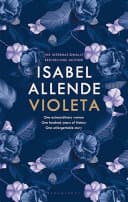
Violeta comes into the world on a stormy day in 1920, the first girl in a family with five boisterous sons. From the start, her life is marked by extraordinary events, for the ripples of the Great War are still being felt, even as the Spanish flu arrives on the shores of her South American homeland almost at the moment of her birth.
Through her father’s prescience, the family will come through that crisis unscathed, only to face a new one as the Great Depression transforms the genteel city life she has known. Her family loses everything and is forced to retreat to a wild and beautiful but remote part of the country. There, she will come of age, and her first suitor will come calling.
She tells her story in the form of a letter to someone she loves above all others, recounting times of devastating heartbreak and passionate affairs, poverty and wealth, terrible loss and immense joy. Her life is shaped by some of the most important events of history: the fight for women’s rights, the rise and fall of tyrants, and ultimately not one, but two pandemics.
Through the eyes of a woman whose unforgettable passion, determination, and sense of humor carry her through a lifetime of upheaval, Isabel Allende once more brings us an epic that is both fiercely inspiring and deeply emotional.
Add to your library to track progress and write reviews
Find Violeta Isabel Allende in PDF, EPUB, ebook, audiobook, print, or library editions.

7 books in catalog
Blending myth and political history into multi-generational family sagas, Latin American fiction found a distinct voice in narratives that examine personal resilience during times of national crisis. Isabel Allende emerged as the world's most widely read Spanish-language author after transforming her exile into internationally acclaimed fiction, beginning with her debut novel, The House of the Spirits.
Born on August 2, 1942, in Lima, Peru, she was raised in Chile and began her professional writing career as a journalist. Her family was directly intertwined with Chilean political history; she was the niece and goddaughter of Salvador Allende, who served as president of Chile from 1970 to 1973. Following the overthrow of Chile's coalition government and her uncle's assassination in 1973, she fled her homeland and found refuge in Venezuela. During her exile, she drafted a letter to her dying grandfather that ultimately grew into her acclaimed first novel, The House of the Spirits, published in English in 1985. She followed this triumph with additional successful novels, including Of Love and Shadows and Eva Luna.
Over a career spanning several decades, her books have been translated into more than 35 languages and sold tens of millions of copies worldwide. Her literary contributions have earned prestigious accolades, including induction into the American Academy of Arts and Letters in 2004, Chile's National Literature Prize in 2010, and the United States Presidential Medal of Freedom in 2014.
Her writing style frequently blends myth and realism, fusing extraordinary elements with grounded historical contexts in the tradition of magic realism. Many of her stories are rooted in her own childhood recollections, family history, and personal experience with displacement under authoritarian political regimes. Her narratives consistently emphasize formidable female characters who overcome political persecution, violence, and intense personal loss.
Recurring themes throughout her work include fear, memory, political struggle, and family loyalty, whether examining nineteenth-century historical events or twentieth-century strife. Historical works like Daughter of Fortune, Violeta, and My Name Is Emilia del Valle demonstrate her ongoing focus on women navigating social unrest and turbulent political transformations.