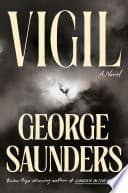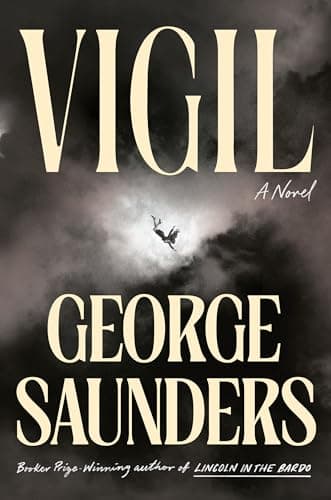
Not for the first time, Jill “Doll” Blaine finds herself hurtling toward earth, reconstituting as she falls, right down to her favorite black pumps. She plummets towards her newest charge, yet another soul she must usher into the afterlife, and lands headfirst in the circular drive of his ornate mansion.
She has performed this sacred duty 343 times since her own death. Her charges, as a rule, have been greatly comforted in their final moments. But this charge, she soon discovers, isn’t like the others. The powerful K. J. Boone will not be consoled, because he has nothing to regret. He lived a big, bold, epic life, and the world is better for it. Isn’t it?
Vigil transports us, careening, through the wild final evening of a complicated man. Visitors begin to arrive (worldly and otherworldly, alive and dead), clamoring for a reckoning. Birds swarm the dying man’s room; a black calf grazes on the love seat; a man from a distant, drought-ravaged village materializes; two oil-business cronies from decades past show up with chilling plans for Boone’s postdeath future.
With the wisdom, playfulness, and explosive imagination we’ve come to expect, George Saunders takes on the gravest issues of our time—the menace of corporate greed, the toll of capitalism, the environmental perils of progress—and, in the process, spins a tale that encompasses life and death, good and evil, and the thorny question of absolution.
Add to your library to track progress and write reviews
Find Vigil George Saunders in PDF, EPUB, ebook, audiobook, print, or library editions.

4 books in catalog
Blending social satire, speculative fiction, and emotional resonance, short story collections and experimental novels have reshaped modern fiction through distinct tragicomic voices and surreal settings. The novel Lincoln in the Bardo received the 2017 Man Booker Prize for its innovative construction of historical excerpts and theatrical ghost monologues surrounding Abraham Lincoln's mourning of his son.
George Saunders gained broad literary recognition through acclaimed collections such as Tenth of December and Pastoralia, establishing a distinct approach to exploring corporate bureaucracy, human vulnerability, and moral choices.
Born on December 2, 1958, in Amarillo, Texas, George Saunders was raised in a working-class community in south Chicago. He earned a Bachelor of Science degree in geophysical engineering from the Colorado School of Mines before working in diverse environments, including the oil fields of Sumatra, Indonesia, a Texas slaughterhouse, and an environmental engineering firm in Rochester, New York.
Saunders went on to complete a Master of Fine Arts in creative writing at Syracuse University, studying under author Tobias Wolff. He joined the faculty of Syracuse University's creative writing program, where he continues to teach. His fiction began appearing regularly in The New Yorker in 1992, leading to his debut story collection, CivilWarLand in Bad Decline, in 1996. Over his career, he has earned fellowships from the Guggenheim Foundation, the Lannan Foundation, and a MacArthur Fellowship in 2006, alongside induction into the American Academy of Arts and Letters in 2018.
Saunders's fiction consistently examines the absurdities of contemporary labor, consumer culture, and institutional pressure placed upon everyday working-class figures. His narratives frequently take place in themed environments, simulated historical reenactments, and near-future corporate landscapes, using dark humor to highlight underlying human grief and desire for connection.
Stylistically, his work relies on fragmented narrative perspectives, invented corporate dialects, colloquial speech, and rapid shifts between comedy and tragedy. In Lincoln in the Bardo, this style expanded into a multi-voiced narrative structure, while stories like Vigil and Pastoralia maintain a focused examination of character integrity, regret, and empathy under systemic constraint.