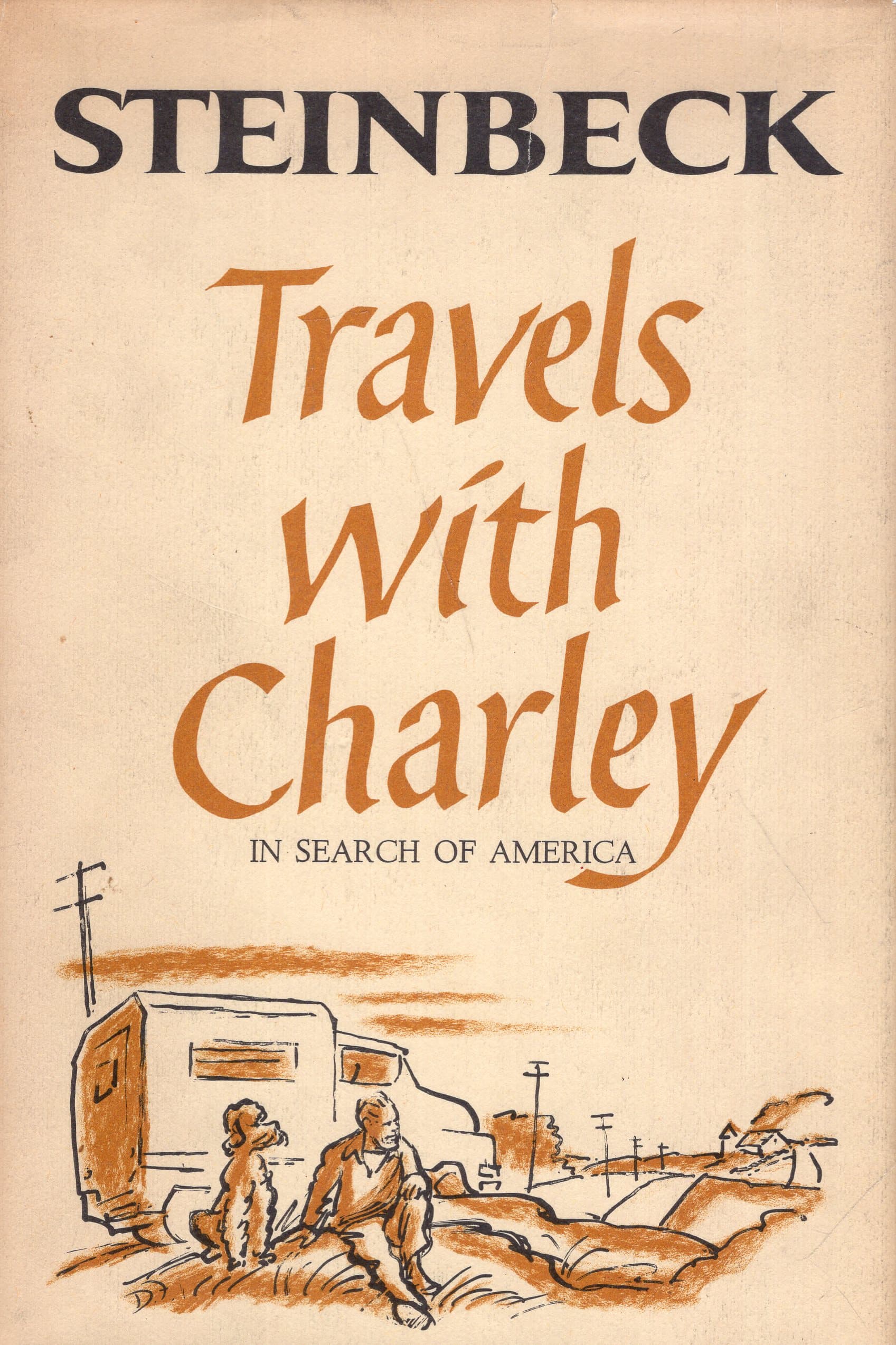
A quest across America, from the northernmost tip of Maine to California's Monterey Peninsula To hear the speech of the real America, to smell the grass and the tress, to see the colors and the light—these were John Steinbeck's goals as he set out, at the age of fifty-eight, to rediscover the country he had been writing about for so many years. With Charley, his French poodle, Steinbeck drives the interstates and the country roads, dines with truckers, encounters bears at Yellowstone and old friends in San Francisco. And he reflects on the American character, racial hostility, on a particular form of American loneliness he finds almost everywhere, and on the unexpected kindness of strangers that is also a very real part of our national identity.
A quest across America, from the northernmost tip of Maine to California's Monterey Peninsula To hear the speech of the real America, to smell the grass and the tress, to see the colors and the light—these were John Steinbeck's goals as he set out, at the age of fifty-eight, to rediscover the country he had been writing about for so many years. With Charley, his French poodle, Steinbeck drives the interstates and the country roads, dines with truckers, encounters bears at Yellowstone and old friends in San Francisco. And he reflects on the American character, racial hostility, on a particular form of American loneliness he finds almost everywhere, and on the unexpected kindness of strangers that is also a very real part of our national identity.
Add to your library to track progress and write reviews
Add to your library to track progress and write reviews
Find Travels with Charley John Steinbeck in PDF, EPUB, ebook, audiobook, print, or library editions.
Find Travels with Charley John Steinbeck in PDF, EPUB, ebook, audiobook, print, or library editions.

5 books in catalog
The realistic social novels chronicling rural labor, economic dislocation, and ordinary workers during the Great Depression shaped twentieth-century American fiction, most notably in The Grapes of Wrath. John Steinbeck drew directly from his experiences in the agricultural valleys of California to document the struggles of migrant farmworkers and disenfranchised families surviving severe hardship.
His narratives combine acute social observation with an abiding connection to the soil, offering empathetic portrayals of individuals striving for dignity amid economic crisis.
Born on February 27, 1902, in Salinas, California, John Ernst Steinbeck grew up in the fertile Salinas Valley surrounded by agricultural labor. He attended Stanford University intermittently between 1920 and 1926 but left without earning a degree. Moving to New York City in 1925 to establish himself as a freelance writer and manual laborer, he found little immediate success and returned to California. His literary breakthrough came with Tortilla Flat in 1935, a collection of humorous stories about Monterey paisanos. Steinbeck achieved widespread acclaim in 1937 with his tragic novella Of Mice and Men, followed by The Grapes of Wrath in 1939, which detailed the Dust Bowl migration from Oklahoma to California and won both a Pulitzer Prize and a National Book Award.
During World War II and later the Vietnam War, Steinbeck served as an independent journalist and war correspondent. His close friendship with marine biologist Ed Ricketts deeply influenced his non-fiction and fiction alike, shaping his ecological worldview and collaborative writings. Steinbeck was awarded the Nobel Prize in Literature in 1962 for his realistic and imaginative writings marked by sympathetic humor and keen social perception. He lived in California and New York until his death on December 20, 1968, in New York City.
Steinbeck's writing is characterized by realistic social inquiry, economic critique, and a reverence for the natural landscape. Many of his novels examine the systemic hardships confronting agricultural workers, laborers, and marginalized individuals, balancing stark depictions of poverty with warm humor and deep empathy.
His style weaves precise environmental detail with philosophical and ecological observations, reflecting his interest in marine biology and community dynamics. Whether portraying working-class life along coastal California or analyzing broader national conflicts as a war correspondent, Steinbeck consistently probed human resilience, moral responsibility, and the complex relationships between people and their environments.
5 books in catalog
The realistic social novels chronicling rural labor, economic dislocation, and ordinary workers during the Great Depression shaped twentieth-century American fiction, most notably in The Grapes of Wrath. John Steinbeck drew directly from his experiences in the agricultural valleys of California to document the struggles of migrant farmworkers and disenfranchised families surviving severe hardship.
His narratives combine acute social observation with an abiding connection to the soil, offering empathetic portrayals of individuals striving for dignity amid economic crisis.
Born on February 27, 1902, in Salinas, California, John Ernst Steinbeck grew up in the fertile Salinas Valley surrounded by agricultural labor. He attended Stanford University intermittently between 1920 and 1926 but left without earning a degree. Moving to New York City in 1925 to establish himself as a freelance writer and manual laborer, he found little immediate success and returned to California. His literary breakthrough came with Tortilla Flat in 1935, a collection of humorous stories about Monterey paisanos. Steinbeck achieved widespread acclaim in 1937 with his tragic novella Of Mice and Men, followed by The Grapes of Wrath in 1939, which detailed the Dust Bowl migration from Oklahoma to California and won both a Pulitzer Prize and a National Book Award.
During World War II and later the Vietnam War, Steinbeck served as an independent journalist and war correspondent. His close friendship with marine biologist Ed Ricketts deeply influenced his non-fiction and fiction alike, shaping his ecological worldview and collaborative writings. Steinbeck was awarded the Nobel Prize in Literature in 1962 for his realistic and imaginative writings marked by sympathetic humor and keen social perception. He lived in California and New York until his death on December 20, 1968, in New York City.
Steinbeck's writing is characterized by realistic social inquiry, economic critique, and a reverence for the natural landscape. Many of his novels examine the systemic hardships confronting agricultural workers, laborers, and marginalized individuals, balancing stark depictions of poverty with warm humor and deep empathy.
His style weaves precise environmental detail with philosophical and ecological observations, reflecting his interest in marine biology and community dynamics. Whether portraying working-class life along coastal California or analyzing broader national conflicts as a war correspondent, Steinbeck consistently probed human resilience, moral responsibility, and the complex relationships between people and their environments.