A telepath acquires a powerful alien consciousness—and must run to escape corporate assassins and angry mobs—in this novel by the author of Way Station. Space travel has been abandoned in the twenty-second century. It is deemed too dangerous, expensive, and inconvenient—and now the all-powerful Fishhook company holds the monopoly on interstellar exploration for commercial gain. Their secret is the use of “parries,” human beings with the remarkable telepathic ability to expand their minds throughout the universe. On what should have been a routine assignment, however, loyal Fishhook employee Shepherd Blaine is inadvertently implanted with a copy of an alien consciousness, becoming something more than human. Now he’s a company pariah, forced to flee the safe confines of the Fishhook complex. But the world he escapes into is not a safe sanctuary; Its people have been taught to hate and fear his parapsychological gift—and there is nowhere on Earth, or elsewhere, for Shepherd Blaine to hide. A Hugo Award nominee, Time Is the Simplest Thing showcases the enormous talents of one of the true greats of twentieth-century science fiction. This richly imagined tale of prejudice, corporate greed, oppression, and, ultimately, transcendence stands tall among Simak’s most enduring works.
Add to your library to track progress and write reviews
Find Time Is the Simplest Thing Clifford D. Simak in PDF, EPUB, ebook, audiobook, print, or library editions.

5 books in catalog
Exploring peaceful rural landscapes transformed by mysterious cosmic encounters became a hallmark of mid-century speculative fiction. Clifford D. Simak established this distinct pastoral approach by grounding extraordinary alien contact, time travel, and technological breakthroughs within quiet Midwestern settings, as seen in celebrated novels such as Way Station.
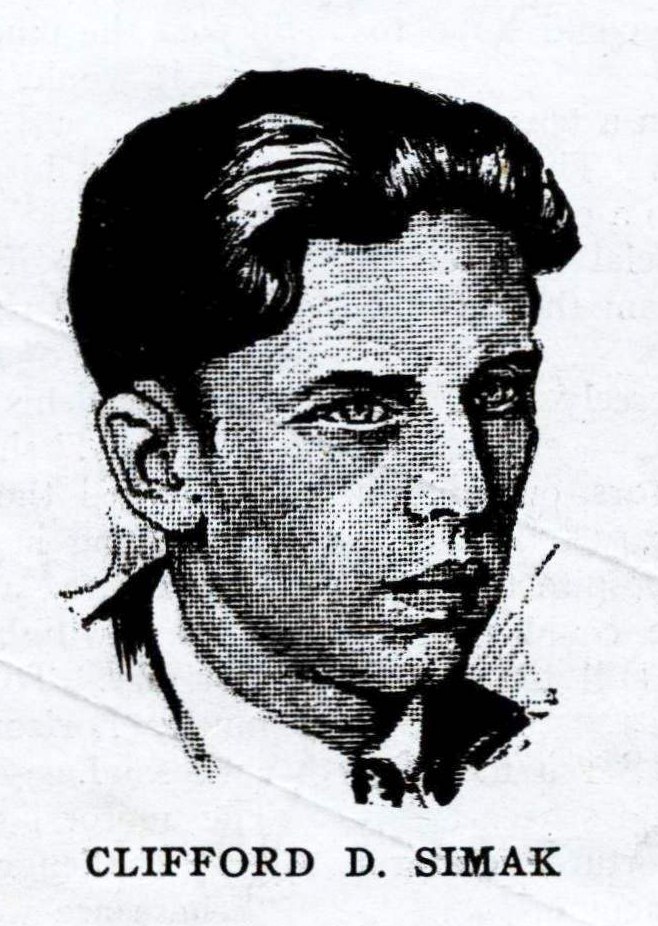
Over a writing career spanning more than five decades, Simak produced dozens of novels and over 140 short stories while working concurrently as a full-time journalist. His contributions earned him three Hugo Awards, a Nebula Award, election as the third SFWA Grand Master, and an inaugural Bram Stoker Award for Lifetime Achievement.
Born on August 3, 1904, in Millville, Wisconsin, Simak developed an early interest in speculative fiction after reading the works of H. G. Wells. He began his writing career while working in journalism, publishing his first story, The World of the Red Sun, in the December 1931 issue of Wonder Stories. From 1929 to 1976, newspaper journalism served as his primary vocation, including a long tenure at the Minneapolis Star starting in 1939. Following his retirement from newspaper work, he dedicated himself to full-time fiction writing until his death on April 25, 1988, in Minneapolis, Minnesota.
Simak became closely identified with pastoral science fiction, frequently placing cosmic anomalies and extraordinary visitors against the backdrop of rural Wisconsin. Rather than emphasizing militarized space warfare or hyper-industrial futures, his stories focus on themes of gentle alien communion, human mortality, nostalgia, and peaceful coexistence among intelligent species. Time travel served as his primary narrative device for introducing otherworldly beings into serene, everyday environments, establishing a contemplative tone across his body of work.

5 books in catalog
Exploring peaceful rural landscapes transformed by mysterious cosmic encounters became a hallmark of mid-century speculative fiction. Clifford D. Simak established this distinct pastoral approach by grounding extraordinary alien contact, time travel, and technological breakthroughs within quiet Midwestern settings, as seen in celebrated novels such as Way Station.
Over a writing career spanning more than five decades, Simak produced dozens of novels and over 140 short stories while working concurrently as a full-time journalist. His contributions earned him three Hugo Awards, a Nebula Award, election as the third SFWA Grand Master, and an inaugural Bram Stoker Award for Lifetime Achievement.
Born on August 3, 1904, in Millville, Wisconsin, Simak developed an early interest in speculative fiction after reading the works of H. G. Wells. He began his writing career while working in journalism, publishing his first story, The World of the Red Sun, in the December 1931 issue of Wonder Stories. From 1929 to 1976, newspaper journalism served as his primary vocation, including a long tenure at the Minneapolis Star starting in 1939. Following his retirement from newspaper work, he dedicated himself to full-time fiction writing until his death on April 25, 1988, in Minneapolis, Minnesota.
Simak became closely identified with pastoral science fiction, frequently placing cosmic anomalies and extraordinary visitors against the backdrop of rural Wisconsin. Rather than emphasizing militarized space warfare or hyper-industrial futures, his stories focus on themes of gentle alien communion, human mortality, nostalgia, and peaceful coexistence among intelligent species. Time travel served as his primary narrative device for introducing otherworldly beings into serene, everyday environments, establishing a contemplative tone across his body of work.