Threshold contains all of Zelazny's short works from his early years through the mid 1960s—a period of experimentation and growth that flowered into gems such as "A Rose for Ecclesiastes," "The Graveyard Heart," "The Doors of His Face, the Lamps of His Mouth," and "He Who Shapes." The stories in this series are enriched by editors' notes and Zelazny's own words, taken from his many essays, describing why he wrote the stories and what he thought about them in retrospect. TABLE OF CONTENTS Intros Out of Nowhere (by Robert Silverberg) Before Amber (by Carl B. Yoke) Stories A Rose for Ecclesiastes And the Darkness Is Harsh Mr. Fuller's Revolt Youth Eternal The Outward Sign Passion Play The Graveyard Heart Horseman! The Teachers Rode a Wheel of Fire Moonless in Byzantium On the Road to Splenoba Final Dining The Borgia Hand Nine Starships Waiting Circe Has Her Problems The Malatesta Collection The Stainless Steel Leech as by Harrison Denmark The Doors of His Face, the Lamps of His Mouth A Thing of Terrible Beauty as by Harrison Denmark Monologue for Two as by Harrison Denmark Threshold of the Prophet A Museum Piece Mine Is the Kingdom as by Harrison Denmark King Solomon's Ring The Misfit The Great Slow Kings Collector's Fever The Night Has 999 Eyes He Who Shapes Articles Sundry Notes on Dybology and Suchlike "...And Call Me Roger": The Literary Life of Roger Zelazny, Part 1 Curiosities Conditional Benefit Hand of the Master The Great Selchie of San Francisco Bay Studies in Saviory Poetry Braxa Ecclesiastes' Epilogue Bok Diet Slush, Slush, Slush TheAgnostic's Prayer On May 13, 1937 The Cactus King Our Wintered Way Through Evening, and Burning Bushes Along It In the Dogged House Future, Be Not Impatient Flight Sense and Sensibility The World of Stat's a Drunken Bat The Cat Licks Her Coat From a Seat in the Chill Park Rodin's "The Kiss" To His Morbid Mistress Old Ohio Folkrag How a Poem Means Concert Iceage Hart Crane... Southern Cross I Used to Think in Lines That Were Irregular to the Right Hybris, or The Danger of Hilltops St. Secaire's In Pheleney's Garage The Black Boy's Reply to William Butler Yeats Rite of Spring Decade Plus One of Roses See You Later, Maybe...
Threshold contains all of Zelazny's short works from his early years through the mid 1960s—a period of experimentation and growth that flowered into gems such as "A Rose for Ecclesiastes," "The Graveyard Heart," "The Doors of His Face, the Lamps of His Mouth," and "He Who Shapes." The stories in this series are enriched by editors' notes and Zelazny's own words, taken from his many essays, describing why he wrote the stories and what he thought about them in retrospect. TABLE OF CONTENTS Intros Out of Nowhere (by Robert Silverberg) Before Amber (by Carl B. Yoke) Stories A Rose for Ecclesiastes And the Darkness Is Harsh Mr. Fuller's Revolt Youth Eternal The Outward Sign Passion Play The Graveyard Heart Horseman! The Teachers Rode a Wheel of Fire Moonless in Byzantium On the Road to Splenoba Final Dining The Borgia Hand Nine Starships Waiting Circe Has Her Problems The Malatesta Collection The Stainless Steel Leech as by Harrison Denmark The Doors of His Face, the Lamps of His Mouth A Thing of Terrible Beauty as by Harrison Denmark Monologue for Two as by Harrison Denmark Threshold of the Prophet A Museum Piece Mine Is the Kingdom as by Harrison Denmark King Solomon's Ring The Misfit The Great Slow Kings Collector's Fever The Night Has 999 Eyes He Who Shapes Articles Sundry Notes on Dybology and Suchlike "...And Call Me Roger": The Literary Life of Roger Zelazny, Part 1 Curiosities Conditional Benefit Hand of the Master The Great Selchie of San Francisco Bay Studies in Saviory Poetry Braxa Ecclesiastes' Epilogue Bok Diet Slush, Slush, Slush TheAgnostic's Prayer On May 13, 1937 The Cactus King Our Wintered Way Through Evening, and Burning Bushes Along It In the Dogged House Future, Be Not Impatient Flight Sense and Sensibility The World of Stat's a Drunken Bat The Cat Licks Her Coat From a Seat in the Chill Park Rodin's "The Kiss" To His Morbid Mistress Old Ohio Folkrag How a Poem Means Concert Iceage Hart Crane... Southern Cross I Used to Think in Lines That Were Irregular to the Right Hybris, or The Danger of Hilltops St. Secaire's In Pheleney's Garage The Black Boy's Reply to William Butler Yeats Rite of Spring Decade Plus One of Roses See You Later, Maybe...
Add to your library to track progress and write reviews
Add to your library to track progress and write reviews
Find Threshold Roger Zelazny in PDF, EPUB, ebook, audiobook, print, or library editions.
Find Threshold Roger Zelazny in PDF, EPUB, ebook, audiobook, print, or library editions.

18 books in catalog
The blending of ancient mythology, modern technology, and speculative fiction reshaped mid-twentieth-century fantasy and science fiction, most prominently in epic works like Nine Princes in Amber and Lord of Light. Roger Zelazny emerged as a prominent voice in science fiction's New Wave movement during the 1960s, producing over 150 short stories and 50 books that explored the human and social implications of technological and cultural change.
Across a writing career spanning more than three decades, his fiction captured major literary honors, including three Nebula Awards and six Hugo Awards. His celebrated novels and short fiction established innovative approaches to mythic tropes and cross-genre storytelling that continue to introduce readers to expansive fantasy worlds.
Born on May 13, 1937, in Euclid, Ohio, to Joseph Frank Zelazny and Josephine Flora Sweet, he served as the editor of his high school newspaper before pursuing higher education. He earned a Bachelor of Arts degree from Western Reserve University in 1959 and a Master of Arts degree from Columbia University in 1962. Before dedicating himself entirely to creative writing in 1969, he worked as a claims representative and policy specialist for the U.S. Social Security Administration in Cleveland, Ohio, and Baltimore, Maryland.
His early publications in the 1960s coincided with the New Wave movement in science fiction, where writers moved away from technological optimism to examine psychological, philosophical, and social themes. His early serialized novel ...And Call Me Conrad, published in book form as This Immortal, won a Hugo Award for Best Novel, followed shortly by another Hugo Award for his novel Lord of Light. He continued writing full-time from Santa Fe, New Mexico, until his death on June 14, 1995.
A defining characteristic of his literary output is the integration of diverse mythologies and religious traditions into speculative settings. Novels such as Lord of Light draw directly upon Hindu and Buddhist pantheons, recasting deities as human beings utilizing advanced technology. His narratives frequently feature complex antiheroes, immortal or godlike figures, and fast-paced dialogue influenced by hard-boiled detective fiction.
In addition to long-form fiction, he made significant contributions to short fiction, publishing stories such as A Rose for Ecclesiastes and For a Breath I Tarry. His later works, including Doorways in the Sand, Jack of Shadows, and A Night in the Lonesome October, demonstrated his versatility across science fiction, urban fantasy, and horror-inflected comedy.
18 books in catalog
The blending of ancient mythology, modern technology, and speculative fiction reshaped mid-twentieth-century fantasy and science fiction, most prominently in epic works like Nine Princes in Amber and Lord of Light. Roger Zelazny emerged as a prominent voice in science fiction's New Wave movement during the 1960s, producing over 150 short stories and 50 books that explored the human and social implications of technological and cultural change.
Across a writing career spanning more than three decades, his fiction captured major literary honors, including three Nebula Awards and six Hugo Awards. His celebrated novels and short fiction established innovative approaches to mythic tropes and cross-genre storytelling that continue to introduce readers to expansive fantasy worlds.
Born on May 13, 1937, in Euclid, Ohio, to Joseph Frank Zelazny and Josephine Flora Sweet, he served as the editor of his high school newspaper before pursuing higher education. He earned a Bachelor of Arts degree from Western Reserve University in 1959 and a Master of Arts degree from Columbia University in 1962. Before dedicating himself entirely to creative writing in 1969, he worked as a claims representative and policy specialist for the U.S. Social Security Administration in Cleveland, Ohio, and Baltimore, Maryland.
His early publications in the 1960s coincided with the New Wave movement in science fiction, where writers moved away from technological optimism to examine psychological, philosophical, and social themes. His early serialized novel ...And Call Me Conrad, published in book form as This Immortal, won a Hugo Award for Best Novel, followed shortly by another Hugo Award for his novel Lord of Light. He continued writing full-time from Santa Fe, New Mexico, until his death on June 14, 1995.
A defining characteristic of his literary output is the integration of diverse mythologies and religious traditions into speculative settings. Novels such as Lord of Light draw directly upon Hindu and Buddhist pantheons, recasting deities as human beings utilizing advanced technology. His narratives frequently feature complex antiheroes, immortal or godlike figures, and fast-paced dialogue influenced by hard-boiled detective fiction.
In addition to long-form fiction, he made significant contributions to short fiction, publishing stories such as A Rose for Ecclesiastes and For a Breath I Tarry. His later works, including Doorways in the Sand, Jack of Shadows, and A Night in the Lonesome October, demonstrated his versatility across science fiction, urban fantasy, and horror-inflected comedy.
The Collected Stories of Roger Zelazny
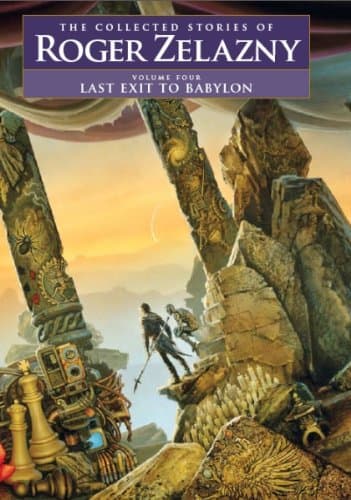
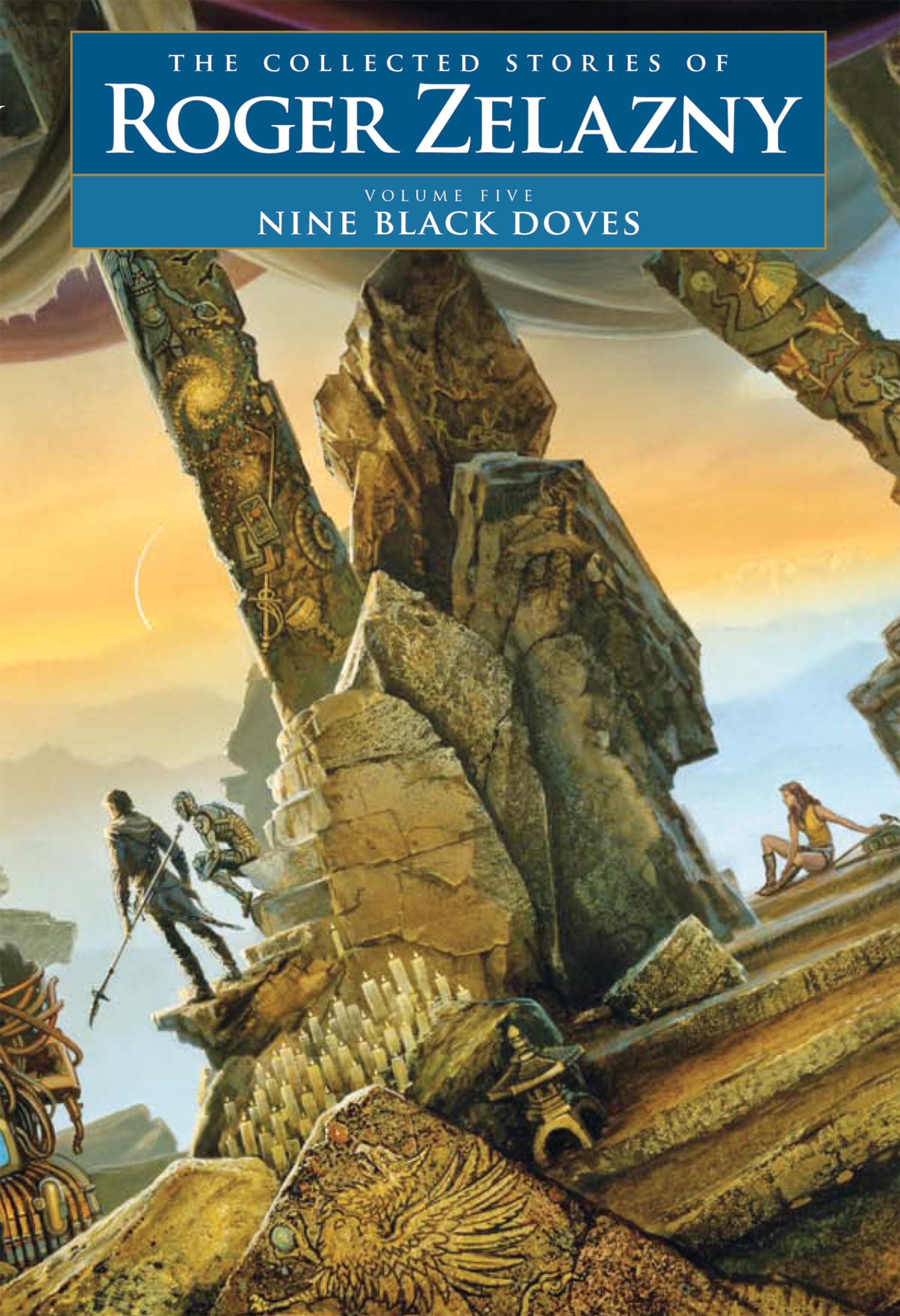
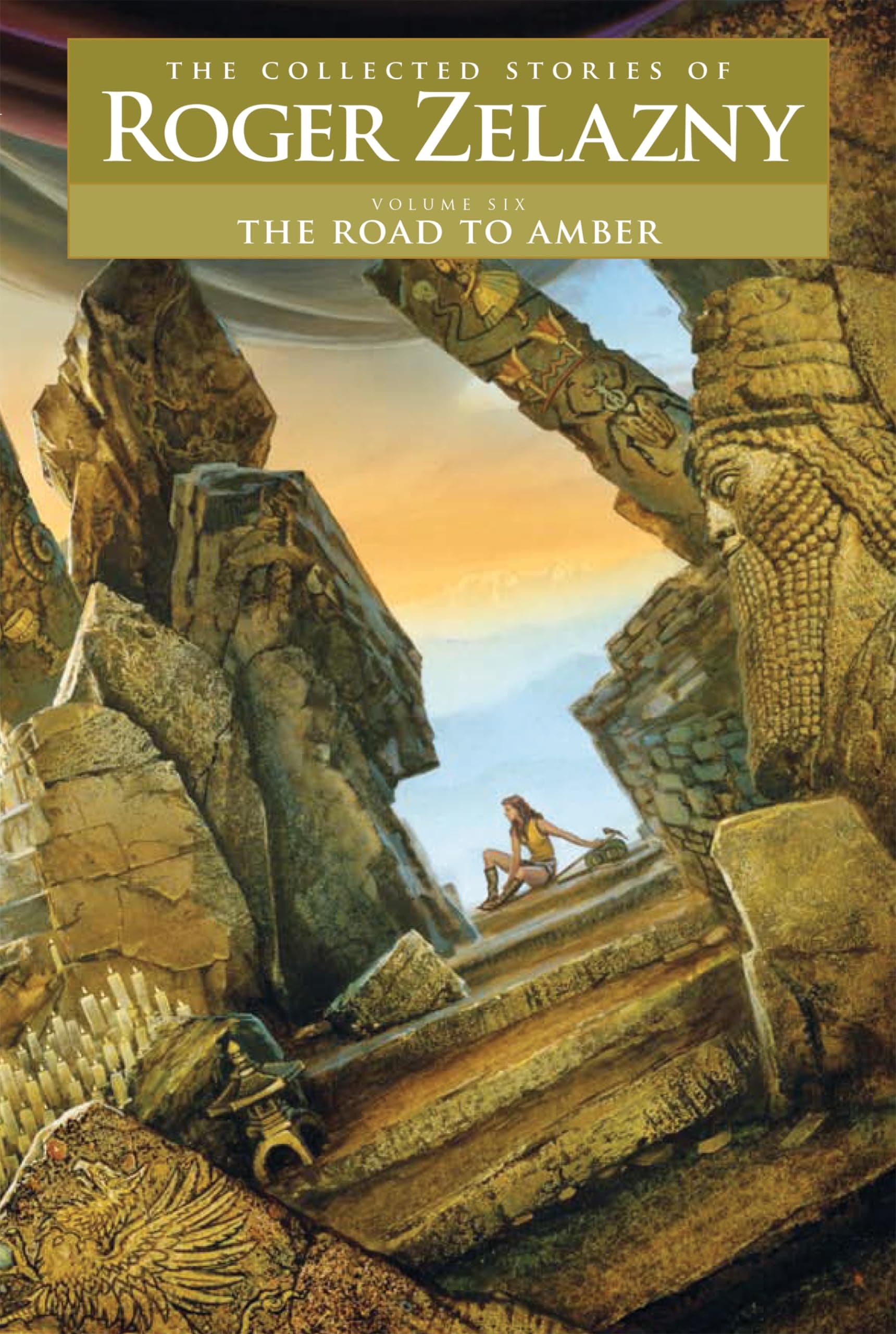
The Collected Stories of Roger Zelazny