§Synopsis
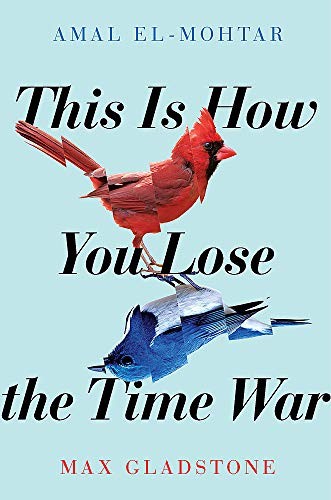
01"Thus begins an unlikely correspondence between two rival agents hellbent on securing the best possible future for their warring factions.
Now, what began as a taunt, a battlefield boast, becomes something more. Something epic. Something romantic. Something that could change the past and the future.
Except the discovery of their bond would mean the death of each of them. There’s still a war going on, after all. And someone has to win. That’s how war works, right?"-- Provided by Amazon
§Our take
This is a love story wearing a science fiction coat, and it works best if you accept that. Two authors wrote it, each voicing one agent's letters and responding to the other as they went, and the result is ornate, alliterative, allusive prose that Publishers Weekly called finely crafted and rewarding on a second read. Plenty of readers agree; some say it won them over despite never reading romance, and one admits to crying. Others call the same sentences purple and the letters mawkish, and even fans report needing a few false starts before the style clicked. The worldbuilding is thin on purpose: the war, the Agency and the Garden stay opaque, which one reviewer reads as emotional focus and another as emptiness. Sample a page before you commit. If the voice lands, this is a couple of hours of reading you'll want to repeat.
§Themes
- Rivals to lovers
- Two enemy agents start with battlefield taunts and end in love, told almost entirely through letters.
- Prose as poetry
- Deliberate excess: wordplay, alliteration, allusion. The book even pokes fun at its own flowery style.
- Worldbuilding by implication
- The war and its rules are never explained; the book bets everything on tone and feeling instead.
- Queer romance at the core
- A sapphic love story, and El-Mohtar has said the characters' genders were non-negotiable in adaptation talks.
§How it was received
Publishers Weekly praised a finely crafted blend of love letters and science fiction adventure, and NPR's Jason Sheehan said it makes strengths of the usual weaknesses of time-travel and epistolary fiction. It took the Nebula for Best Novella, plus the Locus, BSFA, Ignyte and Aurora as well — with the Hugo reportedly among them, though the official record shows finalist. Not everyone was won over; BiblioSanctum found the prose forced and the letters too sentimental, and one blogger called it purple and shallow.
§Read it if
- You want a short, lyrical romance first and science fiction second
- You like prose that rewards slow reading and rereading
- You'd rather feel a story than have its world explained
§Skip it if
- Ornate, poetic prose reads as purple to you; several reviewers bounced off exactly that
- You need clear rules and real stakes from your time-travel fiction; the war stays decoration
§Before you start
- Reading experience
- About 200 pages, readable in a few hours, but the style demands the right mood; even fans report a few false starts before it clicks.
- Content notes
- Violence between rival agents; A central romance between two women.
§Common questions
- Is This Is How You Lose the Time War a romance or science fiction?
- Both, but romance first. It's a love story between two enemy agents told through letters, set against a war across time that the book never fully explains.
- Is it worth reading twice?
- Publishers Weekly says it rewards a second read, and fans agree the wordplay pays off on rereading. First time through, expect to work for it.
- Is the audiobook good?
- Mixed. Cynthia Farrell and Emily Woo Zeller narrate, but one reviewer says the two voices sound too alike and doesn't recommend it.
§If you liked this
- The Lake House (film) by (film) — NPR's Sheehan compared the romantic core to this time-separated love story. A film, not a book, but the comparison tells you the register.
- The Seesaw by A. E. van Vogt — A classic science fiction story a reviewer says the book echoes on spacetime physics.
Track this book
Add to your library to track progress and write reviews