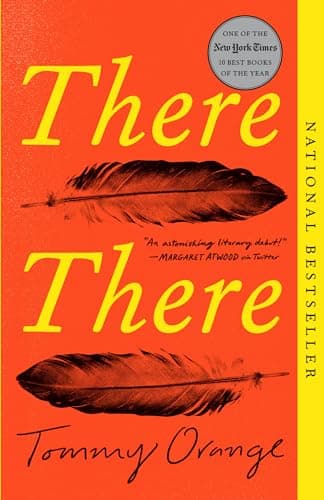
A contemporary classic, this “astonishing literary debut” (Margaret Atwood, bestselling author of The Handmaid’s Tale) “places Native American voices front and center” (NPR/Fresh Air).
One of The Atlantic’s Great American Novels of the Past 100 Years
Among them is Jacquie Red Feather, newly sober and trying to make it back to the family she left behind. Dene Oxendene, pulling his life together after his uncle’s death and working at the powwow to honor his memory. Fourteen-year-old Orvil, coming to perform traditional dance for the very first time. They converge and collide on one fateful day at the Big Oakland Powwow and together this chorus of voices tells of the plight of the urban Native American—grappling with a complex and painful history, with an inheritance of beauty and spirituality, with communion and sacrifice and heroism
A book with “so much jangling energy and brings so much news from a distinct corner of American life that it’s a revelation” (The New York Times). It is fierce, funny, suspenseful, and impossible to put down–full of poetry and rage, exploding onto the page with urgency and force. There There is at once poignant and unflinching, utterly contemporary and truly unforgettable.
Add to your library to track progress and write reviews
Find There There Tommy Orange in PDF, EPUB, ebook, audiobook, print, or library editions.

2 books in catalog
Contemporary fiction depicting urban Native American life gained a landmark voice with multi-generational stories examining identity, historical trauma, and community resilience in Oakland, California. Tommy Orange, an enrolled citizen of the Cheyenne and Arapaho Tribes of Oklahoma, emerged on the literary scene with a polyphonic narrative approach that gives voice to Native individuals navigating city life away from reservations.
Through deeply interconnected characters and multi-layered histories, his novels address the legacy of government assimilation policies, addiction, and cultural survival while connecting historical atrocities directly to modern urban realities.
Born on January 19, 1982, in Oakland, California, Orange grew up in the city's Dimond District in a biracial family with a Cheyenne and Arapaho father and a white mother. He did not fall in love with reading until his mid-twenties, when he worked at an Indian Center in Oakland and discovered commonalities among urban Native peoples. He went on to earn a Master of Fine Arts degree from the Institute of American Indian Arts in Santa Fe, New Mexico, where he subsequently served on the faculty teaching creative writing.
His literary career took off with the publication of his debut novel, There There, in 2018, which achieved bestseller status and received widespread critical recognition. In addition to his fiction writing, Orange acts as a public speaker for universities, libraries, and colleges, discussing craft, writing processes, and Native American history. In October 2025, Orange was awarded a MacArthur Foundation Fellowship in recognition of his contributions to literature.
Orange's literary style relies heavily on polyphonic structure, utilizing alternating perspective chapters that weave together diverse personal narratives into a broader collective chorus. His prose candidly explores urban Native identity, addressing personal and family experiences with addiction, dislocation, and recovery. By focusing on Oakland's Native community, his work expands the representation of Indigenous peoples beyond rural reservations into contemporary city landscapes.
A key theme across his work is the continuity of historical trauma into present-day lives. Orange embeds detailed historical contexts, such as Indian boarding schools, forced assimilation, and military imprisonment, directly into the lineage of his characters. This structure demonstrates how institutional history directly influences intergenerational family dynamics, personal identity struggles, and the search for belonging.