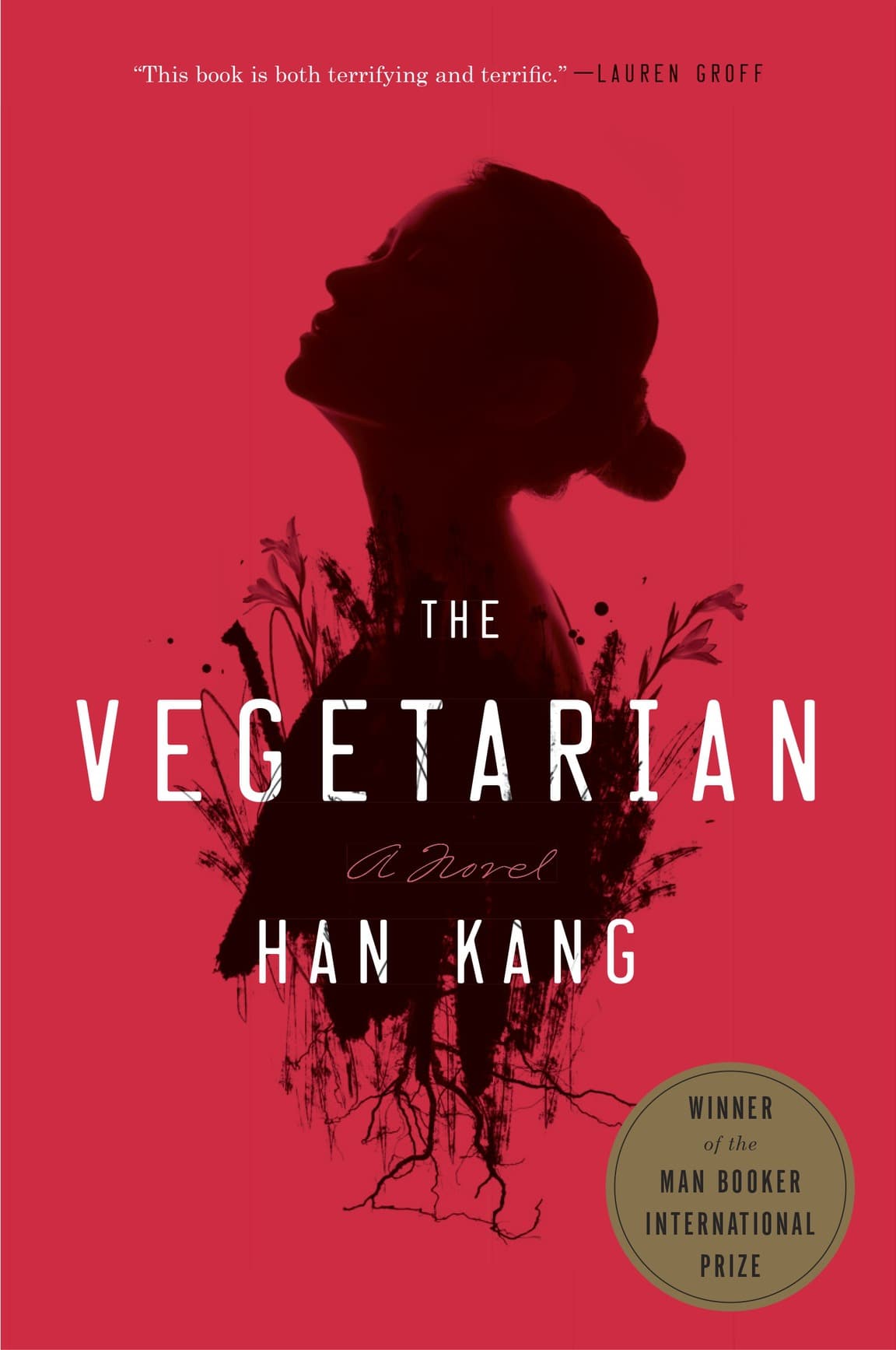
Yeong-hye and her husband are ordinary people. He is an office worker with moderate ambitions and mild manners; she is an uninspired but dutiful wife. The acceptable flatline of their marriage is interrupted when Yeong-hye, seeking a more 'plant-like' existence, decides to become a vegetarian, prompted by grotesque recurring nightmares. In South Korea, where vegetarianism is almost unheard-of and societal mores are strictly obeyed, Yeong-hye's decision is a shocking act of subversion. Her passive rebellion manifests in ever more bizarre and frightening forms, leading her bland husband to self-justified acts of sexual sadism. His cruelties drive her towards attempted suicide and hospitalisation. She unknowingly captivates her sister's husband, a video artist. She becomes the focus of his increasingly erotic and unhinged artworks, while spiralling further and further into her fantasies of abandoning her fleshly prison and becoming - impossibly, ecstatically - a tree. Fraught, disturbing and beautiful, The Vegetarian is a novel about modern day South Korea, but also a novel about shame, desire and our faltering attempts to understand others, from one imprisoned body to another.
Add to your library to track progress and write reviews
Find The Vegetarian Han Kang in PDF, EPUB, ebook, audiobook, print, or library editions.

2 books in catalog
South Korean fiction frequently examines the boundary between bodily autonomy, historical memory, and psychological trauma, a dynamic clearly demonstrated in the International Booker Prize-winning novel The Vegetarian. Author Han Kang gained international acclaim for her unsettling, deeply lyrical narratives that confront human violence and physical fragility. Her work explores how personal grief intersects with collective history, offering readers profound inquiries into vulnerability and endurance.
Born in Gwangju, Han Kang is the daughter of novelist Han Seung-won. At the age of 10, her family relocated to Suyuri in Seoul, a neighborhood she later recalled affectionately in her novel Greek Lessons. She studied Korean literature at Yonsei University. Her literary career began in 1993 when several of her poems were published in the winter issue of the quarterly journal Literature and Society. She made her official prose debut the following year when her short story "The Scarlet Anchor" won the daily Seoul Shinmun spring literary contest. She went on to receive prestigious recognitions, including the Today's Young Artist Award, the Korean Literature Novel Award, and the Yi Sang Literary Prize in 2005. From 2007 to 2018, including in 2013, she taught creative writing as a professor at the Seoul Institute of the Arts. In 2024, she was awarded the Nobel Prize in Literature.
Han Kang's writing is distinguished by an intense, poetic style that investigates historical trauma and human fragility. Devoting herself to music and visual art alongside her writing, she incorporates rhythmic and sensory qualities into her prose. Her narratives frequently depict individuals who reject institutionalized societal expectations or endure profound psychological pain, utilizing precise imagery to chart physical and emotional suffering. Moving between surreal allegories and historical realism, her books examine empathy, somatic resistance, and human dignity.