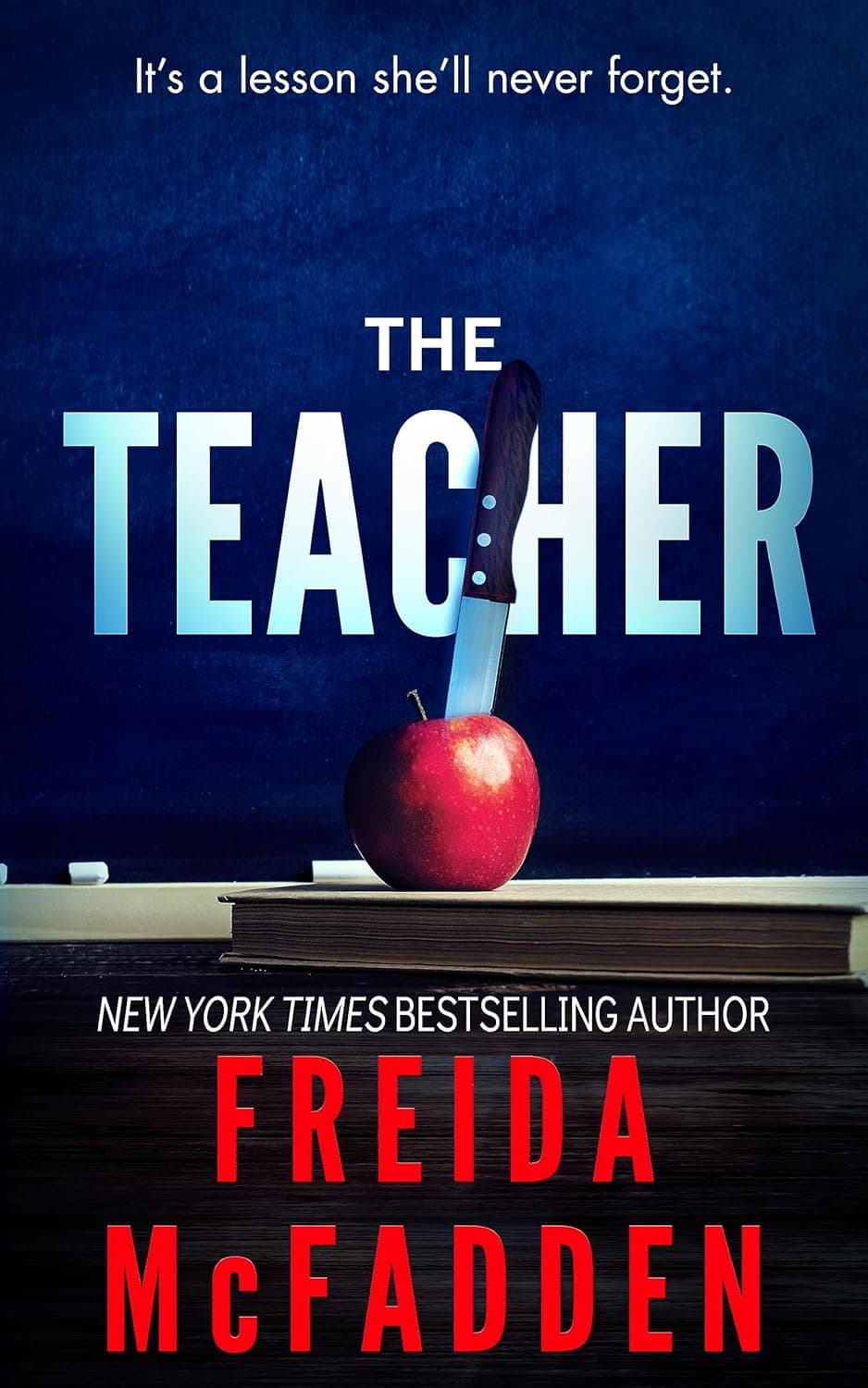
Caseham High is a landscape defined by its social hierarchies and the long shadows of past transgressions. For Eve, a math teacher who prides herself on precision and routine, her life with her husband Nate—a beloved English teacher at the same school—represents a carefully constructed fortress of stability. However, the equilibrium of their small-town academic life is perpetually threatened by the lingering fallout of a previous year’s scandal involving a student and a teacher, an event that has left the faculty and student body in a state of hyper-vigilance and suppressed suspicion.
At the center of this cultural friction is Addie, a student who has become a pariah within the school’s walls. Ostracized by her peers and viewed with profound distrust by the staff, Addie is a figure defined more by the rumors surrounding her than by her own voice. As she enters Nate’s classroom, the boundary between the professional and the personal begins to blur, forcing Eve into a defensive posture where she must reconcile her idyllic domestic life with the encroaching volatility of a girl who is widely believed to be a catalyst for ruin.
The setting of the novel functions as a pressurized microcosm where the "rules" are dictated by reputation and the collective memory of the student body. McFadden builds an atmosphere of stifling surveillance, where every interaction in a hallway or classroom is subject to interpretation by an audience of judgmental teenagers and weary educators. The world-building focuses on the psychological weight of a "social death sentence," illustrating how an institution designed for education can transform into a theater of isolation for those marked by scandal. The school is not just a backdrop; it is a character that enforces its own rigid morality and punishes those who deviate from the expected curriculum of behavior.
The narrative is anchored in the character of Eve, whose initial arc is defined by her desire for control. Her relationship with Nate is presented as the ultimate success of her life, a partnership of mutual respect and shared professional goals. However, the introduction of Addie into their orbit acts as a psychological irritant. The character development hinges on the tension between Eve’s need for order and the messy, unpredictable reality of Addie’s presence. As Eve becomes increasingly preoccupied with the potential threat Addie poses to her husband’s reputation and their collective future, the reader is invited to examine the fragility of a "perfect" life when it is built on the foundation of ignoring uncomfortable truths.
While the book utilizes the "forbidden relationship" trope as its primary engine, it does so through a lens of psychological suspense rather than melodrama. Instead of focusing solely on the mechanics of a scandal, the story explores the aftermath and the way a community weaponizes information. It subverts the typical high school thriller by shifting the focus to the psychological toll on the observer—the "wife of the teacher"—and the isolated student who has already been tried and convicted by the court of public opinion. The core conflict is not merely about what happened in the past, but how the perception of that past dictates the survival of the characters in the present.
Add to your library to track progress and write reviews
Find The Teacher Freida McFadden in PDF, EPUB, ebook, audiobook, print, or library editions.
11 books in catalog
Propelled by tight plotting and sharp suspense, psychological thrillers featuring domestic secrets and rapid twists have become a major fixture on bestseller lists worldwide. The breakout success of The Housemaid established Freida McFadden as a prominent voice in modern mystery fiction, earning top positions across major publishing charts.
Writing under her pen name, McFadden—the pseudonym of physician Sara Cohen—has reached #1 on bestseller lists from the New York Times, Amazon Charts, USA Today, Washington Post, Wall Street Journal, Sunday Times, and Publisher's Weekly. Her works have been translated into more than 45 languages and recognized among Amazon Editors' best books of the year.
Born Sara Cohen on May 1, 1980, in New York City, McFadden studied at Harvard University and Stony Brook University before completing medical training and practicing as a physician. She began her literary career in 2013 by self-publishing medical humor novels alongside dark domestic thrillers, balancing hospital work with fiction writing for nearly a decade.
Her 2022 novel The Housemaid marked a turning point in her publishing career, remaining on global bestseller lists for months and sparking sequels such as The Housemaid Is Watching. Following the adaptation of her work for a Lionsgate feature film starring Amanda Seyfried and Sydney Sweeney, she transitioned to writing full-time. Honored with the International Thriller Writers Award for Best Paperback Original and a Goodreads Choice Award for Best Thriller, McFadden resides with her family and cat in a centuries-old three-story oceanfront home with creaking staircases.
McFadden's thrillers typically center on everyday environments—including suburban homes, high schools, locked hospital wards, and remote properties—where mundane routines conceal hidden motives. Her narratives frequently employ unreliable narrators, short chapters, fast pacing, and late-stage plot twists that recontextualize earlier events.
Drawing directly on her background in medicine, McFadden often incorporates clinical settings and medical procedure details into her psychological suspense. Works like Ward D showcase her use of healthcare environments to generate claustrophobic tension, while standalone thrillers such as The Teacher, Never Lie, and The Boyfriend examine themes of trust, professional ethics, and deception in intimate relationships.