Nineteenth-century adventure literature and psychological horror were profoundly shaped by tales of high-seas buccaneers, hidden treasure, and split human personalities, most famously realized in Treasure Island and The Strange Case of Dr. Jekyll and Mr. Hyde. Robert Louis Stevenson created enduring narrative frameworks that transformed Victorian fiction and popular storytelling. Born in Edinburgh, Scotland, he produced an expansive body of work spanning novels, travel writing, poetry, and essays while battling chronic physical illness throughout his life.
Born Robert Lewis Balfour Stevenson to a family of prominent Scottish lighthouse engineers, his early childhood was spent in bed during harsh Edinburgh winters due to severe respiratory illness, possibly chronic bronchiectasis. Home tutoring and a broad early reading of William Shakespeare, Sir Walter Scott, John Bunyan, and The Arabian Nights nourished his literary imagination. Encouraged by his father, who printed his first publication, The Pentland Rising: A Page of History, 1666, in 1866, he began writing in his youth.
Career & Background
Although his father hoped he would pursue the family engineering trade, Stevenson enrolled at the University of Edinburgh in 1867 and found engineering unsuited to his talents. In 1871, he informed his father of his intention to become a writer, leading to a compromise where he agreed to read law at the University of Edinburgh. During his student years, he traveled to London and Paris, joining active literary circles in both capitals. After enduring a physical collapse in 1873 and taking time to recover on the French Riviera, he qualified for the Scottish bar in 1875. He never practiced law, choosing instead to devote his life to writing and travel.
While traveling in France in 1876, Stevenson met Fanny Vandegrift Osbourne, an American mother of two studying art. They met again in 1877 and became romantic partners, with Stevenson spending significant time with her and her children in France until she returned to San Francisco in 1878. During this period, his regional excursions yielded acclaimed travel memoirs, including Travels with a donkey. In 1879, Stevenson journeyed to the United States to join her, suffering severe illness during the transit across sea and land. In San Francisco, Osbourne nursed him back to health following her divorce, and the couple married in 1880. After honeymooning in the Napa Valley of California, they traveled back to Britain to reunite with his family.
Over the next seven years, Stevenson relocated constantly to find climates suited to his fragile lungs, spending summers in Scotland and England and winters in France. During this highly creative phase, he published Treasure Island in 1883, A Child's Garden of Verses in 1885, and both Kidnapped and The Strange Case of Dr. Jekyll and Mr. Hyde in 1886. Following his father's death in 1887, Stevenson moved with his mother and family to the Adirondacks. In 1888, they embarked on a chartered yacht to explore the South Pacific, spending nearly three years traveling through the Hawaiian Islands, the Gilbert Islands, Tahiti, New Zealand, and the Samoan Islands. A second voyage to the Equator in 1889 and a third in 1890 across the South Seas led Stevenson to purchase an estate in Samoa. Taking the Samoan name Tusitala, he engaged in local political disputes to defend indigenous interests against European colonial officials before dying at his estate, probably of a cerebral hemorrhage, in 1894.
Writing Style & Themes
Stevenson's prose is distinguished by rhythmic elegance, atmospheric precision, and a recurring focus on moral complexity. His narratives resist simple divides between good and evil, depicting characters with layered motives and internal conflicts. From swashbuckling maritime adventures to chilling gothic mysteries, his shorter fiction frequently appears in anthologies such as Tales for a Stormy Night: A Pandora's Box of Classic Chillers. His ability to blend rich geographical settings with psychological tension gave his work broad narrative power across multiple fiction and non-fiction formats.
Dual personality, loyalty under pressure, and the tension between social respectability and hidden desires remain prominent themes across his major works. In historical novels such as The Master of Ballantrae: A Winter's Tale, Stevenson explores intense family rivalries against the historical backdrop of eighteenth-century political upheaval. His poetry captures the vivid interior world of childhood memory, while his travel books record keen observations of landscape, culture, and human character.
Major Works
- Treasure Island — First published in 1883, this classic adventure novel established enduring pirate tropes, featuring the memorable antihero Long John Silver and a suspenseful quest for buried treasure.
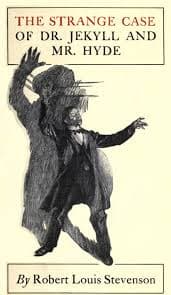
- The Strange Case of Dr. Jekyll and Mr. Hyde — Published in 1886, this landmark gothic novella explores the duality of human nature through the psychological and physical transformation of Dr. Jekyll into the menacing Mr. Hyde.
- Kidnapped — Published in 1886, this historical adventure novel follows young David Balfour through political intrigue and wilderness survival in eighteenth-century Scotland.
- Travels with a donkey — Published following his 1878 trekking expedition through the Cévennes region of France, this travel book highlights Stevenson's powers of observation and humor.
- The Master of Ballantrae: A Winter's Tale — Set during and after the Jacobite rising, this novel details a bitter, prolonged feud between two Scottish brothers across multiple continents.