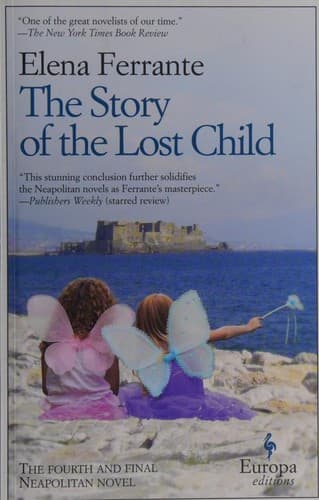
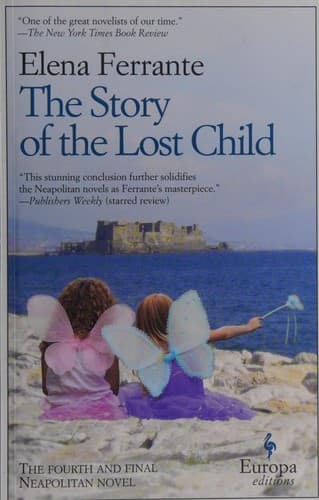
OVER 14M OF THE NEAPOLITAN QUARTET SOLD WORLDWIDE Nothing quite like this has ever been published before."— The Guardian "This is high stakes, subversive literature."— The Daily Telegraph "With the publication of her Neapolitan Novels, (Ferrante) has established herself as the foremost writer in Italy—and the world."— The Sunday Times "An unconditional masterpiece . . . I was totally enthralled."—Jhumpa Lahiri "An extraordinary epic."—Michiko Kakutani, The New York Times "To the uninitiated, Elena Ferrante is best described as Balzac meets The Sopranos and rewrites feminist theory."— The Times "Ferrante's writing seems to say something that hasn't been said before, in a way so compelling its readers forget where they are, abandon friends and disdain sleep."— London Review of Books "Stunning. An intense, forensic exploration of friendship."— The Times Literary Supplement The Story of the Lost Child is the concluding volume in the dazzling saga of two women— the brilliant, bookish Elena, and the fiery, uncontainable Lila. Both are now adults, with husbands, lovers, aging parents, and children. Their friendship has been the gravitational center of their lives. Both women fought to escape the neighborhood in which they grew up—a prison of conformity, violence, and inviolable taboos. Elena married, moved to Florence, started a family, and published several well-received books. In this final novel she has returned to Naples, drawn back as if responding to the city's obscure magnetism. Lila, on the other hand, could never free herself from the city of her birth. She has become a successful entrepreneur, but her success draws her into closer proximity with the nepotism, chauvinism, and criminal violence that infect the neighborhood. Proximity to the world she has always rejected only brings her role as its unacknowledged leader into relief. For Lila is unstoppable, unmanageable, unforgettable. Against the backdrop of a Naples that is as seductive as it is perilous and a world undergoing epochal change, Elena Ferrante tells the story of a lifelong friendship between two women with unmatched honesty and brilliance.
OVER 14M OF THE NEAPOLITAN QUARTET SOLD WORLDWIDE Nothing quite like this has ever been published before."— The Guardian "This is high stakes, subversive literature."— The Daily Telegraph "With the publication of her Neapolitan Novels, (Ferrante) has established herself as the foremost writer in Italy—and the world."— The Sunday Times "An unconditional masterpiece . . . I was totally enthralled."—Jhumpa Lahiri "An extraordinary epic."—Michiko Kakutani, The New York Times "To the uninitiated, Elena Ferrante is best described as Balzac meets The Sopranos and rewrites feminist theory."— The Times "Ferrante's writing seems to say something that hasn't been said before, in a way so compelling its readers forget where they are, abandon friends and disdain sleep."— London Review of Books "Stunning. An intense, forensic exploration of friendship."— The Times Literary Supplement The Story of the Lost Child is the concluding volume in the dazzling saga of two women— the brilliant, bookish Elena, and the fiery, uncontainable Lila. Both are now adults, with husbands, lovers, aging parents, and children. Their friendship has been the gravitational center of their lives. Both women fought to escape the neighborhood in which they grew up—a prison of conformity, violence, and inviolable taboos. Elena married, moved to Florence, started a family, and published several well-received books. In this final novel she has returned to Naples, drawn back as if responding to the city's obscure magnetism. Lila, on the other hand, could never free herself from the city of her birth. She has become a successful entrepreneur, but her success draws her into closer proximity with the nepotism, chauvinism, and criminal violence that infect the neighborhood. Proximity to the world she has always rejected only brings her role as its unacknowledged leader into relief. For Lila is unstoppable, unmanageable, unforgettable. Against the backdrop of a Naples that is as seductive as it is perilous and a world undergoing epochal change, Elena Ferrante tells the story of a lifelong friendship between two women with unmatched honesty and brilliance.
Add to your library to track progress and write reviews
Add to your library to track progress and write reviews
Find The Story of the Lost Child Elena Ferrante in PDF, EPUB, ebook, audiobook, print, or library editions.
Find The Story of the Lost Child Elena Ferrante in PDF, EPUB, ebook, audiobook, print, or library editions.
L'amica geniale
L'amica geniale
6 books in catalog
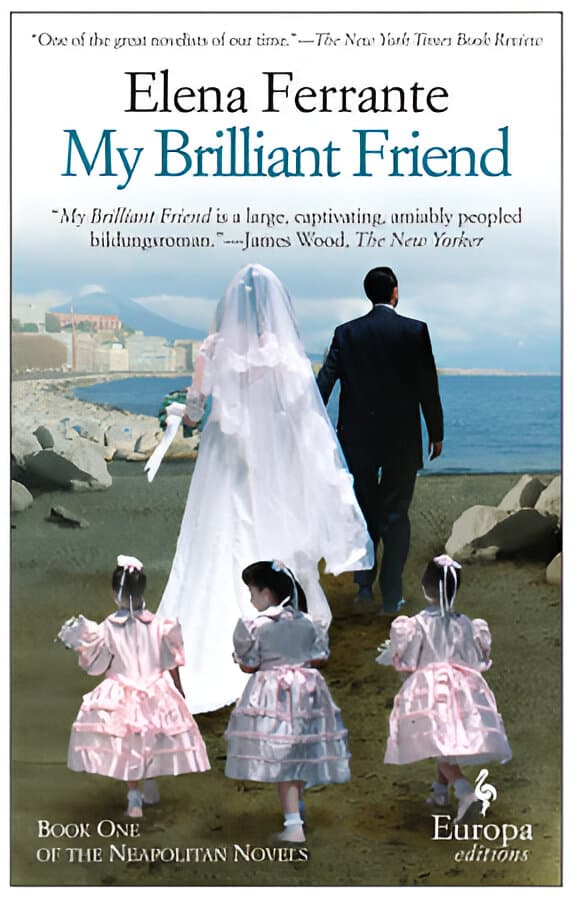
Italian fiction gained broad international literary attention through a four-book sequence examining female friendship, class mobility, and social change in post-war Naples. First introduced to readers through My Brilliant Friend, The Neapolitan Novels explore the complex, decades-long relationship between Elena Greco and Lila Cerullo. The pseudonymous writer Elena Ferrante published her debut novel in 1992 while maintaining full anonymity, operating under the principle that literary works should stand independent of their author's public identity.
Born in Naples, Elena Ferrante made her literary debut in 1991 when her first novel, Troubling Love (L'amore molesto), was accepted for publication and released in 1992. Prior to its publication, Ferrante informed her Italian publishers that she would not participate in promotional appearances or public events, asserting that written books possess their own intrinsic authority. She followed her debut with The Days of Abandonment in 2002 (English translation 2005), which detailed the sudden psychological collapse of a domestic life, and The Lost Daughter in 2006, an exploration of maternal ambivalence later adapted into an award-winning feature film directed by Maggie Gyllenhaal.
Between 2011 and 2014, Ferrante published the four volumes that comprise The Neapolitan Novels, including My Brilliant Friend, The Story of a New Name, Those Who Leave and Those Who Stay, and The Story of the Lost Child. The series brought Ferrante widespread international critical recognition and a dedicated global readership. Alongside her fiction, Ferrante has published non-fiction collections such as Frantumaglia: A Writer's Journey in 2016, detailing her correspondence and thoughts on writing, as well as the column collection Incidental Inventions in 2019 and the children's story The Beach at Night.
Ferrante's writing is characterized by psychological intimacy, unfiltered emotional honesty, and a focus on domestic and interpersonal conflicts. Her narrative prose frequently addresses themes of female identity, maternal strife, romantic betrayal, class dynamics, and the struggle for personal autonomy within restrictive social structures. Set against rich backdrops such as Naples, her books depict violence, jealousy, and social friction with raw precision.
A central element of Ferrante's literary career is her commitment to anonymity. Communicating with editors, journalists, and readers almost exclusively via written correspondence through her publishers, Sandra Ozzola Ferri and Sandro Ferri, Ferrante maintains that complete absence from the media sphere affords absolute creative freedom. This stance reinforces her focus on narrative truth over authorial celebrity, allowing the raw intensity of works like The Days of Abandonment and The Story of the Lost Child to speak for themselves.
6 books in catalog
Italian fiction gained broad international literary attention through a four-book sequence examining female friendship, class mobility, and social change in post-war Naples. First introduced to readers through My Brilliant Friend, The Neapolitan Novels explore the complex, decades-long relationship between Elena Greco and Lila Cerullo. The pseudonymous writer Elena Ferrante published her debut novel in 1992 while maintaining full anonymity, operating under the principle that literary works should stand independent of their author's public identity.
Born in Naples, Elena Ferrante made her literary debut in 1991 when her first novel, Troubling Love (L'amore molesto), was accepted for publication and released in 1992. Prior to its publication, Ferrante informed her Italian publishers that she would not participate in promotional appearances or public events, asserting that written books possess their own intrinsic authority. She followed her debut with The Days of Abandonment in 2002 (English translation 2005), which detailed the sudden psychological collapse of a domestic life, and The Lost Daughter in 2006, an exploration of maternal ambivalence later adapted into an award-winning feature film directed by Maggie Gyllenhaal.
Between 2011 and 2014, Ferrante published the four volumes that comprise The Neapolitan Novels, including My Brilliant Friend, The Story of a New Name, Those Who Leave and Those Who Stay, and The Story of the Lost Child. The series brought Ferrante widespread international critical recognition and a dedicated global readership. Alongside her fiction, Ferrante has published non-fiction collections such as Frantumaglia: A Writer's Journey in 2016, detailing her correspondence and thoughts on writing, as well as the column collection Incidental Inventions in 2019 and the children's story The Beach at Night.
Ferrante's writing is characterized by psychological intimacy, unfiltered emotional honesty, and a focus on domestic and interpersonal conflicts. Her narrative prose frequently addresses themes of female identity, maternal strife, romantic betrayal, class dynamics, and the struggle for personal autonomy within restrictive social structures. Set against rich backdrops such as Naples, her books depict violence, jealousy, and social friction with raw precision.
A central element of Ferrante's literary career is her commitment to anonymity. Communicating with editors, journalists, and readers almost exclusively via written correspondence through her publishers, Sandra Ozzola Ferri and Sandro Ferri, Ferrante maintains that complete absence from the media sphere affords absolute creative freedom. This stance reinforces her focus on narrative truth over authorial celebrity, allowing the raw intensity of works like The Days of Abandonment and The Story of the Lost Child to speak for themselves.