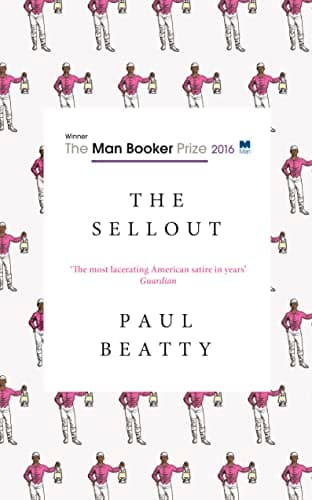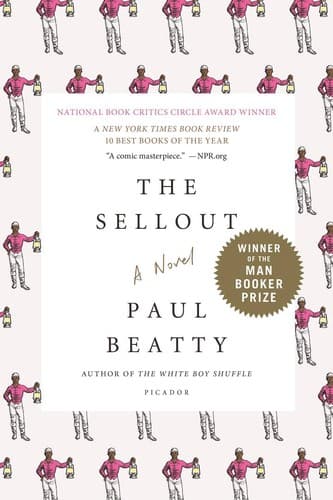
A biting satire about a young man's isolated upbringing and the race trial that sends him to the Supreme Court, Paul Beatty's The Sellout showcases a comic genius at the top of his game. It challenges the sacred tenets of the United States Constitution, urban life, the civil rights movement, the father-son relationship, and the holy grail of racial equality―the black Chinese restaurant.
Born in the "agrarian ghetto" of Dickens―on the southern outskirts of Los Angeles―the narrator of The Sellout resigns himself to the fate of lower-middle-class Californians: "I'd die in the same bedroom I'd grown up in, looking up at the cracks in the stucco ceiling that've been there since '68 quake." Raised by a single father, a controversial sociologist, he spent his childhood as the subject in racially charged psychological studies. He is led to believe that his father's pioneering work will result in a memoir that will solve his family's financial woes. But when his father is killed in a police shoot-out, he realizes there never was a memoir. All that's left is the bill for a drive-thru funeral.
Fuelled by this deceit and the general disrepair of his hometown, the narrator sets out to right another wrong: Dickens has literally been removed from the map to save California from further embarrassment. Enlisting the help of the town's most famous resident―the last surviving Little Rascal, Hominy Jenkins―he initiates the most outrageous action conceivable: reinstating slavery and segregating the local high school, which lands him in the Supreme Court.
Add to your library to track progress and write reviews
Find The Sellout Paul Beatty in PDF, EPUB, ebook, audiobook, print, or library editions.

1 books in catalog
Through sharp satirical novels and poetry exploring race, identity, and American culture, the fiction of Paul Beatty brought a distinct, uncompromising comedic voice to contemporary literature. His 2015 novel The Sellout achieved historic international recognition, making him the first American author to win the Man Booker Prize.
Born in Los Angeles, California, in 1962, Beatty earned a Master of Arts in psychology from Boston University before receiving a Master of Fine Arts in creative writing from Brooklyn College. He initially gained notice in the literary world as a poet, releasing two collections, Big Bank Take Little Bank and Joker, Joker, Deuce. His debut novel, The White Boy Shuffle, published in 1996, established his reputation as a novelist skilled in using satire and humor to critique social structures and race relations.
Beatty continued expanding his literary career by editing Hokum: An Anthology of African-American Humor, a comprehensive compilation exploring African American humor across generations. He subsequently published the novels Tuff and Slumberland, further developing his satirical approach to cultural commentary. In addition to his writing career, Beatty serves as a professor of writing at Columbia University and resides in New York City.
Beatty's writing is characterized by incisive satire, dark humor, and a deep engagement with African American identity, urban geography, and race relations in the United States. His work frequently subverts conventional narratives about race and society by blending pop culture references, absurdist comedy, and psychological depth. Drawing on his academic background in psychology and his early experience in poetry, Beatty constructs fast-paced, intellectually layered prose that challenges reader expectations while confronting difficult sociopolitical themes.