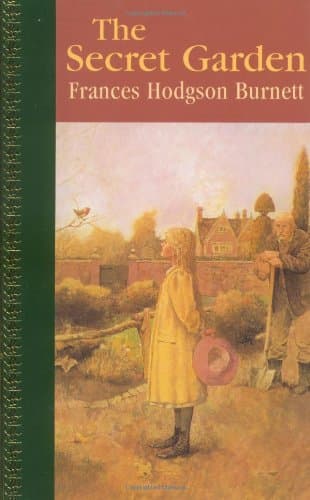
Mary Lennox, a spoiled, ill-tempered, and unhealthy child, comes to live with her reclusive uncle in Misselthwaite Manor on England’s Yorkshire moors after the death of her parents. There she meets a hearty housekeeper and her spirited brother, a dour gardener, a cheerful robin, and her wilful, hysterical, and sickly cousin, Master Colin, whose wails she hears echoing through the house at night.
With the help of the robin, Mary finds the door to a secret garden, neglected and hidden for years. When she decides to restore the garden in secret, the story becomes a charming journey into the places of the heart, where faith restores health, flowers refresh the spirit, and the magic of the garden, coming to life anew, brings health to Colin and happiness to Mary.
Add to your library to track progress and write reviews
Find The Secret Garden Frances Hodgson Burnett in PDF, EPUB, ebook, audiobook, print, or library editions.

1 books in catalog
Classic children's literature and Victorian fiction were fundamentally shaped by enduring novels of emotional transformation and secret sanctuaries such as The Secret Garden. English-American novelist and playwright Frances Hodgson Burnett established her writing career by submitting serialized stories to periodicals before publishing internationally successful books and theatrical adaptations. Her fiction frequently explores themes of unexpected inheritance, emotional healing, class contrasts, and the restorative power of nature across both British and American settings.
Born Frances Eliza Hodgson on November 24, 1849, at Cheetham Hill in Manchester, England, she was the middle child of five born to Eliza Boond and Edwin Hodgson, alongside two older brothers and two younger sisters. Her father ran a successful brass goods business catering to upper-class households, affording the family a comfortable early lifestyle with a maid, a nurse-maid, and a horse and carriage. Following her father's death from a stroke in the early 1850s, the family faced financial hardship, sold their house, and relocated. Her mother carried on the business, while her grandmother taught Frances to read, encouraging an early devotion to stories.
Around 1865, when Frances was about sixteen, the family emigrated to the United States and settled near Knoxville, Tennessee. To help support her family from age nineteen, she began selling her stories to popular magazines such as Godey's Lady's Book and Harper's Bazaar. In September 1873, she married Swan Burnett. The couple moved to Paris for two years, where she gave birth to two sons, Lionel and Vivian.
Personal loss deeply affected her later life and work. In 1892, following the death of her son Lionel from tuberculosis, Burnett suffered severe depression. In 1898, she divorced Swan Burnett and remarried two years later, though this second marriage lasted only a year. Burnett eventually settled in Long Island, New York, where she lived for the remainder of her life. She died in 1924 and rests in Roslyn Cemetery in Greenvale, New York, beside her son Vivian.
Throughout her career, Burnett combined grounded social realism with narrative themes of emotional regeneration and moral resilience. Her writing often contrasts stark economic poverty with the inner dignity and imaginative richness of young protagonists. Central themes across her body of work include the restorative influence of natural spaces, quiet self-reliance during hardship, and the transformative effect of empathy on cold or distant figures.