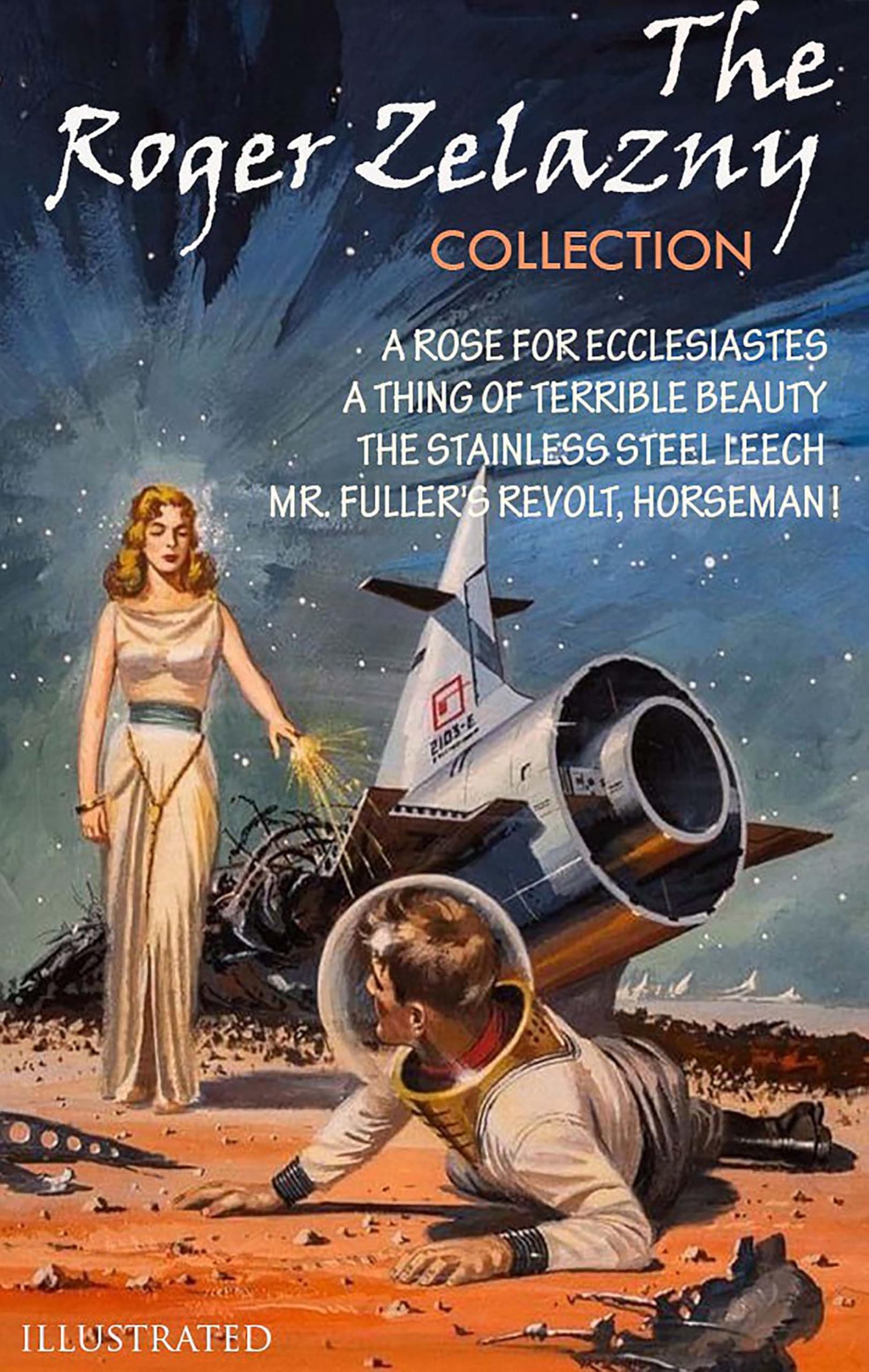
Booksmetaphysical science fiction ebooksThe Roger Zelazny Collection: Illustrated: A Rose for Ecclesiastes, A Thing of Terrible Beauty, The Stainless Steel Leech, Mr. Fuller's Revolt, Horseman!
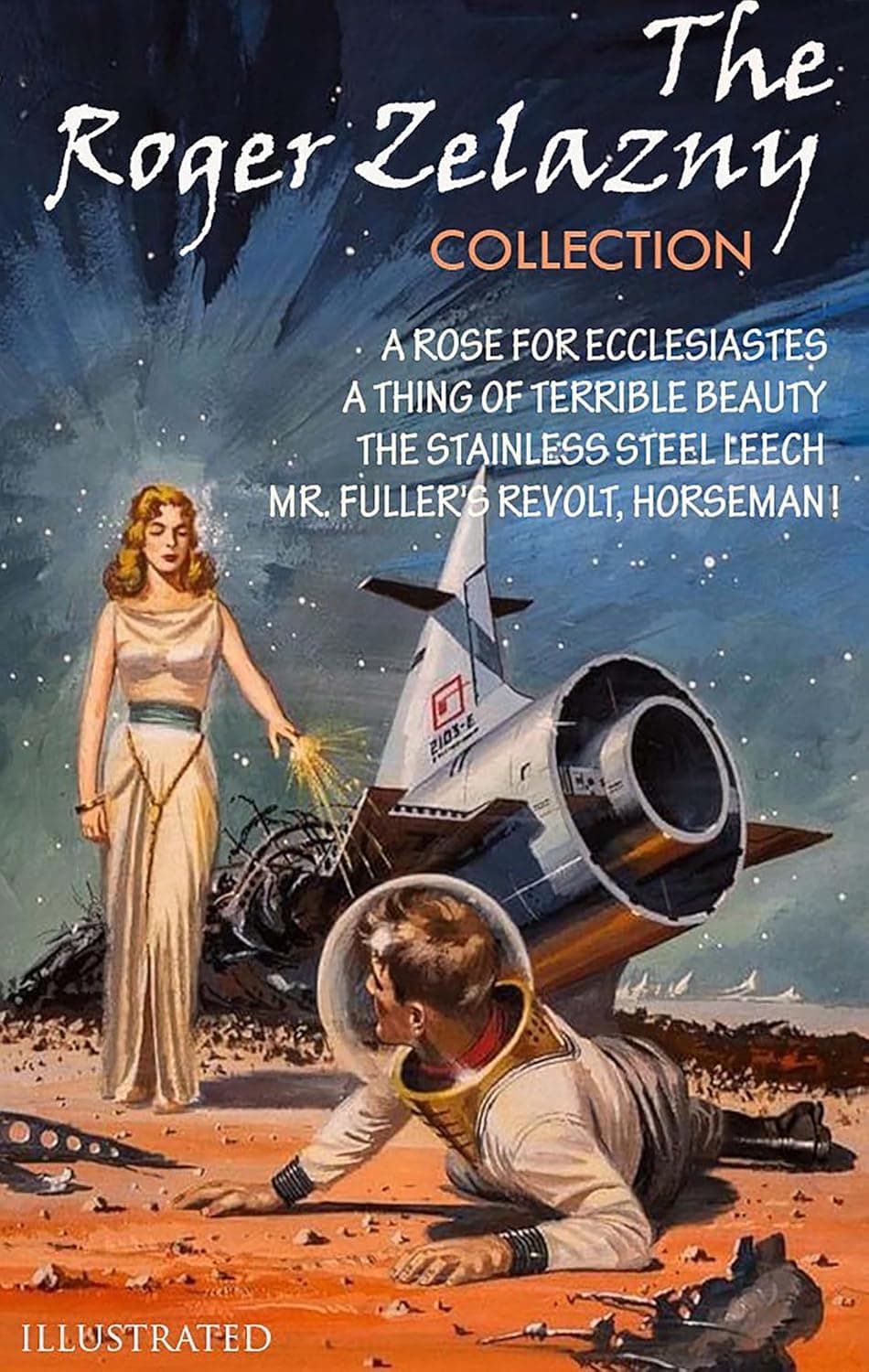
"The Roger Zelazny Collection: Illustrated" brings together four of the author’s most captivating stories, showcasing his unique blend of fantasy, science fiction, and philosophical exploration. In "A Rose for Ecclesiastes," readers are transported to a distant future where a human linguist attempts to understand the complex culture of Martians, leading to profound insights about love, language, and existence.
"A Thing of Terrible Beauty" delves into the themes of art and the human experience, as it follows a character grappling with the consequences of creating beauty in a world marred by chaos. Zelazny’s vivid imagery and deep emotional resonance make this tale unforgettable.
In "The Stainless Steel Leech," the narrative takes a darker turn, exploring the intersection of technology and humanity. A scientist’s obsession with creating a perfect life form leads to unexpected and chilling outcomes, raising questions about morality and the essence of life itself.
Finally, "Horseman!" presents a gripping tale of a young man who becomes embroiled in a battle between ancient gods and modernity, exploring themes of destiny, power, and the struggle for identity.
This illustrated collection not only highlights Zelazny's masterful storytelling but also enriches the reader's experience with stunning visuals. Each story invites reflection on the complexities of human nature and the universe, making this anthology a must-read for fans of speculative fiction and literary art alike. Contents: Horseman! A Rose for Ecclesiastes A Thing of Terrible Beauty The Stainless Steel Leech Mr. Fuller's Revolt
Add to your library to track progress and write reviews
Find The Roger Zelazny Collection: Illustrated: A Rose for Ecclesiastes, A Thing of Terrible Beauty, The Stainless Steel Leech, Mr. Fuller's Revolt, Horseman! Roger Zelazny in PDF, EPUB, ebook, audiobook, print, or library editions.

18 books in catalog
The blending of ancient mythology, modern technology, and speculative fiction reshaped mid-twentieth-century fantasy and science fiction, most prominently in epic works like Nine Princes in Amber and Lord of Light. Roger Zelazny emerged as a prominent voice in science fiction's New Wave movement during the 1960s, producing over 150 short stories and 50 books that explored the human and social implications of technological and cultural change.
Across a writing career spanning more than three decades, his fiction captured major literary honors, including three Nebula Awards and six Hugo Awards. His celebrated novels and short fiction established innovative approaches to mythic tropes and cross-genre storytelling that continue to introduce readers to expansive fantasy worlds.
Born on May 13, 1937, in Euclid, Ohio, to Joseph Frank Zelazny and Josephine Flora Sweet, he served as the editor of his high school newspaper before pursuing higher education. He earned a Bachelor of Arts degree from Western Reserve University in 1959 and a Master of Arts degree from Columbia University in 1962. Before dedicating himself entirely to creative writing in 1969, he worked as a claims representative and policy specialist for the U.S. Social Security Administration in Cleveland, Ohio, and Baltimore, Maryland.
His early publications in the 1960s coincided with the New Wave movement in science fiction, where writers moved away from technological optimism to examine psychological, philosophical, and social themes. His early serialized novel ...And Call Me Conrad, published in book form as This Immortal, won a Hugo Award for Best Novel, followed shortly by another Hugo Award for his novel Lord of Light. He continued writing full-time from Santa Fe, New Mexico, until his death on June 14, 1995.
A defining characteristic of his literary output is the integration of diverse mythologies and religious traditions into speculative settings. Novels such as Lord of Light draw directly upon Hindu and Buddhist pantheons, recasting deities as human beings utilizing advanced technology. His narratives frequently feature complex antiheroes, immortal or godlike figures, and fast-paced dialogue influenced by hard-boiled detective fiction.
In addition to long-form fiction, he made significant contributions to short fiction, publishing stories such as A Rose for Ecclesiastes and For a Breath I Tarry. His later works, including Doorways in the Sand, Jack of Shadows, and A Night in the Lonesome October, demonstrated his versatility across science fiction, urban fantasy, and horror-inflected comedy.