§Synopsis
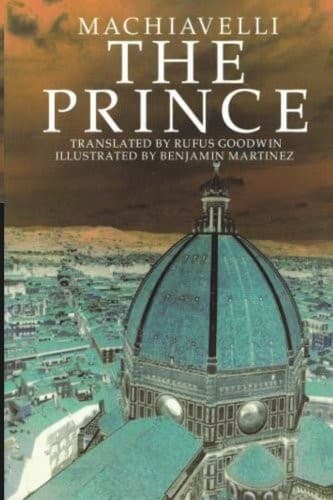
01Machiavelli, as the Father of Political Science, continues to be translated and read throughout the world. This latest edition contains many illustrations dealing with The Prince.
Machiavelli, as the Father of Political Science, continues to be translated and read throughout the world. This latest edition contains many illustrations dealing with The Prince.
Add to your library to track progress and write reviews
Find The Prince Niccolò Machiavelli in PDF, EPUB, ebook, audiobook, print, or library editions.

1 books in catalog
Political philosophy and realistic statecraft were transformed during the Italian Renaissance through analytical treatises that examined how political power is acquired, maintained, and exercised. The foundational work in this field is The Prince, a concise advice manual written around 1513 that departed from medieval traditions of moral governance. Its author, Niccolò Machiavelli, evaluated ruler conduct through pragmatic necessity and empirical observation rather than ideal ethical systems.
Born in Florence, Italy, on May 3, 1469, to Bernardo Machiavelli, an attorney, and Bartolomea Nelli, Machiavelli received a thorough classical humanist education under tutors such as Paolo da Ronciglione. His public career began in 1498 when he was appointed head of the second chancery of the Florentine Republic and secretary to the Ten of War. Over the next fourteen years, he served as a diplomat, conducting missions across Italy and Europe to negotiate treaties and study contemporary rulers. In 1502, Machiavelli married Marietta Corsini, with whom he had four sons and two daughters. When the Medici family restored autocratic rule in Florence in 1512, the republic was dissolved, and Machiavelli was dismissed from office, arrested, tortured, and exiled to his country estate outside the city. Forced out of public service, he dedicated his remaining years to historical and political writing. He died in Florence on June 21, 1527, and was buried in the church of Santa Croce. His grandson, Giovanni Ricci, was later responsible for preserving and saving many of Machiavelli's letters and manuscripts.
Machiavelli's political and philosophical writing is characterized by an empirical, unsentimental approach to power dynamics and human behavior. Rejecting traditional 'mirror for princes' literature that encouraged rulers to embody ideal moral virtues, his works examine practical statecraft, political realpolitik, and the influence of fortune (fortuna) versus individual capability (virtù). In both political treatises and historical studies, he contrasted autocratic control with republican governance, analyzing civic duty, military organization, and the institutional conditions required to maintain state security and civic liberty.