
From the #1 New York Times bestselling author of Babel and Yellowface comes an all-new, fully illustrated, collector's edition of R. F. Kuang's debut novel, The Poppy War. Considered one of Time Magazine's 100 Best Fantasy Books of All Time, the story of orphaned Rin's rise to power gets a fresh look with a full-wrap illustrated jacket and black-and-white interior art by JungShan throughout, plus embossed case, designed end papers, and sprayed edges. When Rin aced the Keju--the Empire-wide test to find the most talented youth to learn at the Academies--it was a shock to everyone: to the test officials, who couldn't believe a war orphan from Rooster Province could pass without cheating; to Rin's guardians, who believed they'd finally be able to marry her off and further their criminal enterprise; and to Rin herself, who realized she was finally free of the servitude and despair that had made up her daily existence. That she got into Sinegard--the most elite military school in Nikan--was even more surprising. But surprises aren't always good. Because being a dark-skinned peasant girl from the south is not an easy thing at Sinegard. Targeted from the outset by rival classmates for her color, poverty, and gender, Rin discovers she possesses a lethal, unearthly power--an aptitude for the nearly mythical art of shamanism. Exploring the depths of her gift with the help of a seemingly insane teacher and psychoactive substances, Rin learns that gods long thought dead are very much alive--and that mastering control over those powers could mean more than just surviving school. For while the Nikara Empire is at peace, the Federation of Mugen still lurks across a narrow sea. The militarily advanced Federation occupied Nikan for decades after the First Poppy War, and only barely lost the continent in the Second. And while most of the people are complacent to go about their lives, a few are aware that a Third Poppy War is just a spark away . . . Rin's shamanic powers may be the only way to save her people. But as she finds out more about the god that has chosen her, the vengeful Phoenix, she fears that winning the war may cost her humanity . . . and that it may already be too late.
From the #1 New York Times bestselling author of Babel and Yellowface comes an all-new, fully illustrated, collector's edition of R. F. Kuang's debut novel, The Poppy War. Considered one of Time Magazine's 100 Best Fantasy Books of All Time, the story of orphaned Rin's rise to power gets a fresh look with a full-wrap illustrated jacket and black-and-white interior art by JungShan throughout, plus embossed case, designed end papers, and sprayed edges. When Rin aced the Keju--the Empire-wide test to find the most talented youth to learn at the Academies--it was a shock to everyone: to the test officials, who couldn't believe a war orphan from Rooster Province could pass without cheating; to Rin's guardians, who believed they'd finally be able to marry her off and further their criminal enterprise; and to Rin herself, who realized she was finally free of the servitude and despair that had made up her daily existence. That she got into Sinegard--the most elite military school in Nikan--was even more surprising. But surprises aren't always good. Because being a dark-skinned peasant girl from the south is not an easy thing at Sinegard. Targeted from the outset by rival classmates for her color, poverty, and gender, Rin discovers she possesses a lethal, unearthly power--an aptitude for the nearly mythical art of shamanism. Exploring the depths of her gift with the help of a seemingly insane teacher and psychoactive substances, Rin learns that gods long thought dead are very much alive--and that mastering control over those powers could mean more than just surviving school. For while the Nikara Empire is at peace, the Federation of Mugen still lurks across a narrow sea. The militarily advanced Federation occupied Nikan for decades after the First Poppy War, and only barely lost the continent in the Second. And while most of the people are complacent to go about their lives, a few are aware that a Third Poppy War is just a spark away . . . Rin's shamanic powers may be the only way to save her people. But as she finds out more about the god that has chosen her, the vengeful Phoenix, she fears that winning the war may cost her humanity . . . and that it may already be too late.
Add to your library to track progress and write reviews
Add to your library to track progress and write reviews
The Poppy War

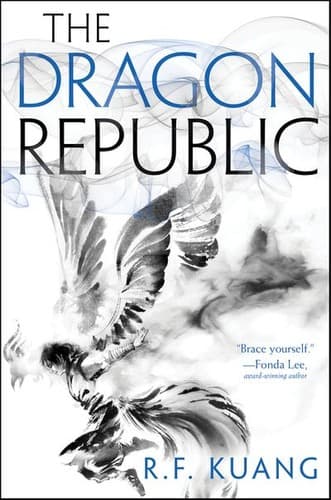
The Poppy War

17 books in catalog
Speculative fiction that blends modern East Asian history, translation theory, and academic satire has reshaped contemporary fantasy literature, exemplified by the bestselling The Poppy War trilogy. Author Rebecca F. Kuang entered the genre with this military fantasy sequence before expanding into historical fantasy and satirical fiction. Her writing has earned major recognition, including the Nebula, Locus, Crawford, and British Book Awards, along with #1 New York Times and #1 Sunday Times bestseller status.
Born in Guangzhou, China, in 1996, Kuang immigrated to the United States at age four and grew up in Dallas, Texas. She earned her undergraduate degree from Georgetown University and honed her craft at the Odyssey Writing Workshop in 2016 and the CSSF Novel Writing Workshop in 2017. As a Marshall Scholar, she completed an MPhil in Chinese Studies at Cambridge University and an MSc in Contemporary Chinese Studies at Oxford University. She went on to pursue a PhD in East Asian Languages and Literatures at Yale University, researching diaspora, contemporary Sinophone literature, and Asian American literature. Beyond her graduate studies, she has served as the inaugural Millard Distinguished Writer in Residence at the College of the Holy Cross. She was named to the 2023 Time 100 Next list and selected for the Forbes 30 Under 30 Class of 2024.
Kuang's novels examine the mechanics of imperial expansion, institutional corruption, and the politics of language and publishing. Her military fantasy incorporates meticulous historical research into twentieth-century Chinese military strategy and conflict, while her dark academia and satirical fiction probe how elite academic institutions and literary industries perpetuate systemic inequality. By combining precise historical grounding with sharp social critique, her narratives analyze how individuals navigate, resist, or assimilate into powerful power structures.
17 books in catalog
Speculative fiction that blends modern East Asian history, translation theory, and academic satire has reshaped contemporary fantasy literature, exemplified by the bestselling The Poppy War trilogy. Author Rebecca F. Kuang entered the genre with this military fantasy sequence before expanding into historical fantasy and satirical fiction. Her writing has earned major recognition, including the Nebula, Locus, Crawford, and British Book Awards, along with #1 New York Times and #1 Sunday Times bestseller status.
Born in Guangzhou, China, in 1996, Kuang immigrated to the United States at age four and grew up in Dallas, Texas. She earned her undergraduate degree from Georgetown University and honed her craft at the Odyssey Writing Workshop in 2016 and the CSSF Novel Writing Workshop in 2017. As a Marshall Scholar, she completed an MPhil in Chinese Studies at Cambridge University and an MSc in Contemporary Chinese Studies at Oxford University. She went on to pursue a PhD in East Asian Languages and Literatures at Yale University, researching diaspora, contemporary Sinophone literature, and Asian American literature. Beyond her graduate studies, she has served as the inaugural Millard Distinguished Writer in Residence at the College of the Holy Cross. She was named to the 2023 Time 100 Next list and selected for the Forbes 30 Under 30 Class of 2024.
Kuang's novels examine the mechanics of imperial expansion, institutional corruption, and the politics of language and publishing. Her military fantasy incorporates meticulous historical research into twentieth-century Chinese military strategy and conflict, while her dark academia and satirical fiction probe how elite academic institutions and literary industries perpetuate systemic inequality. By combining precise historical grounding with sharp social critique, her narratives analyze how individuals navigate, resist, or assimilate into powerful power structures.