Exploring the fundamental isolation of humanity in an indifferent universe, philosophical fiction and political essays of the twentieth century redefined how readers confront questions of meaning, morality, and mortality. French Algerian author, philosopher, and journalist Albert Camus brought these dilemmas to global literature, most famously in his 1942 novel L'Étranger (The Stranger).
Career & Background
Born in French Algeria in 1913 to a working-class family, Camus developed an early interest in philosophy and literature while studying at the University of Algiers despite an impoverished upbringing. He began his professional path as a political journalist writing for Alger Républicaine before relocating to Paris, where he worked as an editor and journalist during World War II and joined the French Resistance publication Combat. In 1949, Camus founded the Group for International Liaisons within the Revolutionary Union Movement, establishing a group opposed to certain surrealist tendencies associated with André Breton. In 1957, Camus was awarded the Nobel Prize for Literature at the age of forty-four, becoming the second-youngest recipient in history after Rudyard Kipling and the first African-born writer to receive the award. Tragically, he remains the shortest-lived literature laureate to date, dying in an automobile accident in January 1960, just over two years after receiving the prize.
Writing Style & Themes
Camus's writing focuses on absurdism, moral responsibility, individual alienation, and resistance to political violence. Although frequently cited as a key proponent of existentialism by critics and contemporary scholars, he consistently rejected this label. In an interview in 1945, Camus disavowed any formal ideological connection to the movement, remarking, "No, I am not an existentialist. Sartre and I are always surprised to see our names linked..." Rather than offering abstract theoretical systems, his philosophical essays and narrative works ground ethical questions in concrete human experiences, examining how individuals can live with integrity and freedom in an unpredictable world.
Major Works
- The Stranger — Published originally as L'Étranger, this landmark novel explores detachment, absurdism, and social conformity through Meursault, an indifferent clerk living in Algiers who commits a murder on a sunlit beach.
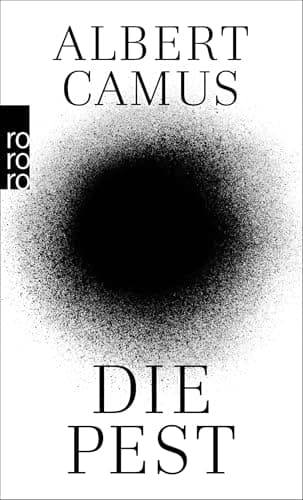
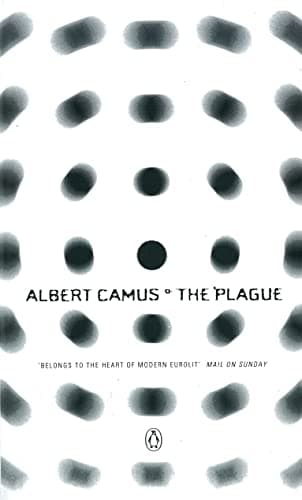
- The Plague — A narrative detailing a sudden epidemic in the Algerian city of Oran, serving as an allegory for human resistance, solidarity, and moral duty amidst widespread suffering.
- The Myth of Sisyphus — A philosophical essay examining the concept of the absurd, using the Greek myth of Sisyphus to argue that human life retains value through conscious struggle against absurdity.
- The Rebel — An ambitious essay analyzing political revolution, state violence, and the ethical boundaries of rebellion in modern history.
- Notebooks 1935-1942 — A collection of personal journals offering detailed insight into Camus's early creative process, literary observations, and philosophical development.