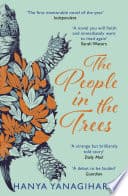
In 1950, a young doctor called Norton Perina signs on with the anthropologist Paul Tallent for an expedition to the remote Micronesian island of Ivu'ivu in search of a rumored lost tribe. They succeed, finding not only that tribe but also a group of forest dwellers they dub "The Dreamers," who turn out to be fantastically long-lived but progressively more senile. Perina suspects the source of their longevity is a hard-to-find turtle; unable to resist the possibility of eternal life, he kills one and smuggles some meat back to the States. He scientifically proves his thesis, earning worldwide fame and the Nobel Prize, but he soon discovers that its miraculous property comes at a terrible price. As things quickly spiral out of his control, his own demons take hold, with devastating personal consequences.
Add to your library to track progress and write reviews
Find The People in the Trees Hanya Yanagihara in PDF, EPUB, ebook, audiobook, print, or library editions.

2 books in catalog
Contemporary literary fiction gained one of its most widely discussed narratives with the publication of A Little Life, an expansive novel following four friends in New York as they navigate career ambitions, severe trauma, and enduring devotion. The author Hanya Yanagihara established a distinct position in modern American literature through her immersive character studies, meticulous prose, and uncompromising focus on psychological trauma and emotional vulnerability.
Born in Los Angeles, California, in 1974 to a hematologist/oncologist father from Hawaii and a Seoul-born mother, Hanya K. Yanagihara spent her childhood moving across several locations, including Hawaii and Texas. She attended Smith College, graduating in 1995, and subsequently built a prominent career in publishing, journalism, and travel writing. Yanagihara wrote her early fiction in secret while working full-time in magazine journalism, serving as a senior editor before being named the Editor-in-Chief of T: The New York Times Style Magazine. She also joined the board of directors for PEN America in 2016.
Yanagihara made her literary debut in 2013 with The People in the Trees, a novel inspired by real-world scientific controversies that was shortlisted for the PEN/Robert W. Bingham Prize. Her second novel, A Little Life, published in 2015, became an international bestseller and a major critical success. The book won the 2015 Kirkus Prize and was shortlisted for the Man Booker Prize and the Baileys Women's Prize for Fiction, as well as being named a finalist for the National Book Award.
Yanagihara's writing is defined by detailed psychological realism, intricate world-building, and an exploration of trauma, trauma recovery, and human connection. Her novels frequently center on elusive, emotionally guarded protagonists whose interior lives and painful pasts unfold gradually over extended timelines. Stylistically, she utilizes expansive narrative structures, vivid sensory detail, and intense emotional intimacy to probe topics such as abuse, chronic illness, memory, identity, and the boundaries of friendship.