SSansFiction
The libraryCollectionsJournalStatsFor authors
Sign inJoin now
Sansfiction,

A digital library for books. Made by readers, for readers.

v 2.0 · 2026
The library
  • Discover
  • Collections
  • Book tracker
  • Journal
  • Stats
For authors
  • SF Links
  • Analytics
  • How it works
  • FAQ
Elsewhere
  • X / @sansfiction
  • Privacy
  • Terms
  • Contact
© 2026 SansFiction · Digital · GlobalA quiet room for your reading life.
The libraryCollectionsJournalStatsFor authors
Sign inJoin now →
Navigation
Library
Bookshelf
Journal
Discover
Collections
Tierlists
Stats
Profile
Author Page
Link Builder
Account
Sign in
S
G
BooksfriendshipOld Man and the Sea
Cover of Old Man and the Sea by Ernest Hemingway

Old Man and the Sea,

by Ernest Hemingway

Ask AI
Rating3.7/ 5
Ratings1,469
Pages118
Reading Hours2h
Published1952
LanguageEnglish

§Synopsis

01

Told in language of great simplicity and power, The Old Man and the Sea is the story of an old Cuban fisherman, down on his luck, and his supreme ordeal -- a relentless, agonizing battle with a giant marlin far out in the Gulf Stream.

§Our take

This is a book about losing well. Santiago fights a marlin for days, and the question readers still argue over is whether what he brings home counts as triumph or tragedy. The prose is the draw: spare, fable-like, a few words carrying surprising weight, which is exactly why Goodreads readers love it and why Dwight Macdonald called it pseudo-archaic and repetitive. The acclaim has an odd shape. Early reviews raved, Time called it a masterpiece, Bernard Berenson ranked it above Moby-Dick, it won the 1953 Pulitzer and was the only work the Swedish Academy cited for Hemingway's 1954 Nobel. Then the backlash came: Delmore Schwartz, Seymour Krim and Jeffrey Meyers, who later called it Hemingway's most overrated work. Both camps have a point, and the fight is half the fun. One caution: many readers met this as forced school reading and hated it, then loved it years later. If that was you, it may be time to try again.

§Themes

Heroism in defeat
The measure of a man is how he faces overwhelming hardship, not whether he wins; destroyed but not defeated is the heart of it.
Kinship with nature
Santiago treats the fish, birds and stars as kin and admires the marlin even as he kills it.
Pride with a price
Santiago's pride pushes him far out to sea, and it may cost him the catch.
Christ figure or just an old man?
Critics have long read Christian symbolism into the story, down to Santiago's name as a nod to St James; Hemingway reportedly said the sea is just the sea.

§How it was received

The raves came first. Kirkus called it a return to form, and after Across the River and Into the Trees flopped, 'comeback' was the word in review after review. Then the tide turned: Macdonald sneered at the prose, Weeks picked at the details, and Meyers eventually crowned it Hemingway's most overrated work. Readers never stopped reading it, and it still ranks on the BBC's 2003 Big Read poll.

§Read it if

  • You want a very short classic you can finish in one sitting
  • You like spare, fable-like prose that leaves room to argue about what it means
  • You're an older reader drawn to themes of aging, struggle and dignity in defeat

§Skip it if

  • Long solitary stretches at sea bore you; some readers find the middle slow and repetitive
  • You resent the book school made you read at fourteen; plenty of people need a second try

§Before you start

Reading experience
Very short, about 26,500 words, readable in one sitting, but Common Sense Media calls it challenging and introspective: much of it is one man's thoughts during a slow struggle, so impatient readers may find it hard going.
Content notes
Graphic scenes of fish being killed, gutted and butchered, including a female marlin killed while her mate watches; Physical suffering and exhaustion throughout the ordeal at sea; Characters drink beer; very mild language, including one slur for a woman; no sexual content.

§Common questions

Is The Old Man and the Sea a novel or a novella?
Usually called a novella. It runs about 26,500 words, and Hemingway originally conceived it as part of a larger sea trilogy before publishing it alone.
Did Hemingway win the Nobel Prize for this book?
Not exactly. The Swedish Academy cited it as the only named work when he won the 1954 Nobel Prize in Literature, but the prize was for his body of work.
Is it a Christian allegory?
Many critics say yes, pointing to Santiago's name as a nod to St James among other details. Hemingway reportedly told Berenson the sea is just the sea, so read it either way.

§If you liked this

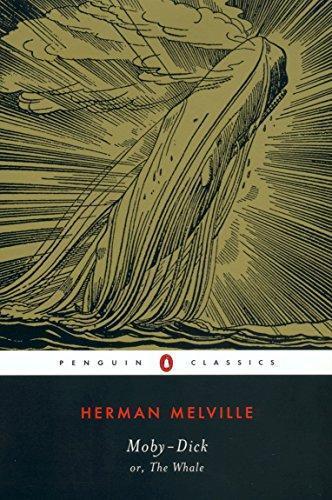
  • Moby-Dick by Herman Melville — The obvious comparison, and Berenson ranked the novella above it; readers debate how the fish and the obsession compare.
  • Across the River and Into the Trees by Ernest Hemingway — The poorly received 1950 novel that came right before, which is why every early review called this a comeback.
  • For Whom the Bell Tolls by Ernest Hemingway — Hemingway set this sea story aside to write it; a good next stop if you want more of him.
Sources
  • Wikipedia
  • Kirkus Reviews
  • Common Sense Media
  • Goodreads
  • Mental Floss, Joy Lanzendorfer, 7 May 2021
  • The Irish Times, 21 Jan 1998

Track this book

Add to your library to track progress and write reviews

§Genres
friendship1history1literature1psychology1reading (senior high)1sea stories1young adult1
§Moods
challenging1emotional1hopeful1inspiring1lighthearted1reflective1relaxing1
§Tags
#animal cruelty1#fiction1#fishing1#plot driven1

§About the Author

Ernest Hemingway
Ernest Hemingway

7 books in catalog

American fiction in the twentieth century was radically reshaped by understated narrative brevity, direct dialogue, and intense real-world observation, qualities epitomized in The Old Man and the Sea. Ernest Hemingway built a body of work that included seven novels, six short-story collections, and two non-fiction books during his lifetime, alongside several posthumous publications.

Awarded the Nobel Prize in Literature in 1954, his fiction drew directly from his personal experiences as a war correspondent, ambulance driver, and international traveler. His sparse prose and focus on physical courage under pressure established new benchmarks for modern narrative fiction.

Career & Background

Ernest Miller Hemingway was born and raised in Oak Park, Illinois. After high school he worked as a reporter for The Kansas City Star, but within months he left for the Italian front to serve as an ambulance driver in World War I. He was seriously injured and returned home within the year. He married his first wife Hadley Richardson in 1922 and moved to Paris, where he worked as a foreign correspondent. During this time Hemingway met, and was influenced by, writers and artists of the 1920s expatriate community known as the Lost Generation. In 1924 Hemingway wrote his first novel, The Sun Also Rises.

In the late 1920s, Hemingway divorced Hadley, married his second wife Pauline Pfeiffer, and moved to Key West, Florida. In 1937 Hemingway went to Spain as a war correspondent to cover the Spanish Civil War. After the war he divorced Pauline, married his third wife Martha Gellhorn, wrote For Whom the Bell Tolls, and moved to Cuba. Hemingway covered World War II in Europe and was present at Operation Overlord, later witnessing the liberation of Paris. After the war, he divorced again, married his fourth wife Mary Welsh Hemingway, and wrote Across the River and Into the Trees. Two years later, The Old Man and the Sea was published in 1952. Nine years later, after moving from Cuba to Idaho, he committed suicide in the summer of 1961.

Writing Style & Themes

Hemingway developed a distinctive writing style often characterized as the iceberg theory, in which the surface narrative remains simple and direct while driving deeper emotional themes beneath the text. His work relies on short sentences, direct declarative phrasing, and minimal stylistic decoration.

His writing frequently examines themes of physical courage, stoicism, injury, death, and the psychological burdens carried by soldiers and expatriates. Through works like A Farewell To Arms, To Have and Have Not, The Snows of Kilimanjaro, and his memoir A Moveable Feast, he captured complex human relationships with unyielding observational clarity.

Major Works

  • The Old Man and the Sea — Published in 1952, this novella about an aging Cuban fisherman battling a giant marlin won widespread critical praise prior to Hemingway receiving the Nobel Prize in 1954.
  • For Whom the Bell Tolls — Written after Hemingway covered the Spanish Civil War starting in 1937, this 1940 novel details an American political instructor fighting alongside anti-fascist guerrillas.
  • The Sun Also Rises — Written in 1924, this milestone novel portrays American and British expatriates traveling from Paris to Pamplona, Spain.
  • A Farewell To Arms — A classic story of love and war based partly on Hemingway's experiences on the Italian front as a World War I ambulance driver.
  • A Moveable Feast — A posthumously published non-fiction autobiographical work recounting Hemingway's early years in Paris during the 1920s.
  • To Have and Have Not — A Depression-era novel centered on a fishing boat captain running contraband between Key West and Cuba.
  • The Snows of Kilimanjaro — A celebrated short story collection exploring regret, creative ambition, and mortality set against the backdrop of an African safari.
§Genres
friendship1history1literature1psychology1reading (senior high)1sea stories1young adult1
§Moods
challenging1emotional1hopeful1inspiring1lighthearted1reflective1relaxing1
§Tags
#animal cruelty1#fiction1#fishing1#plot driven1

Metadata

ISBN-139780743237307
ISBN-100743237307

Editions and availability

Find Old Man and the Sea Ernest Hemingway in PDF, EPUB, ebook, audiobook, print, or library editions.

Bookshop.orgGoogle Play BooksBarnes & NobleOpen Library

Featured In Lists

Book cover from this collectionBook cover from this collectionBook cover from this collectionBook cover from this collection
Book cover from this collection

Pulitzer Prize-winning Fiction

66 books
Book cover from this collectionBook cover from this collectionBook cover from this collectionBook cover from this collection
Book cover from this collection

List 1001 Books Boxall

1000 books
Book cover from this collectionBook cover from this collectionBook cover from this collectionBook cover from this collection
Book cover from this collection

100 Greatest Books

98 books
Book cover from this collectionBook cover from this collectionBook cover from this collectionBook cover from this collection
Book cover from this collection

4lit

96 books