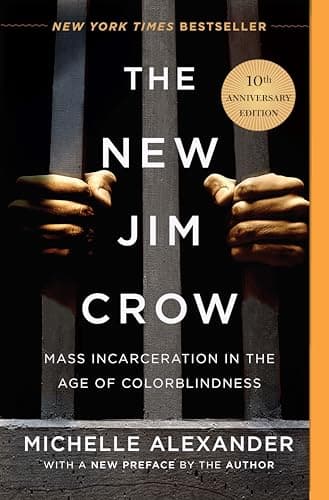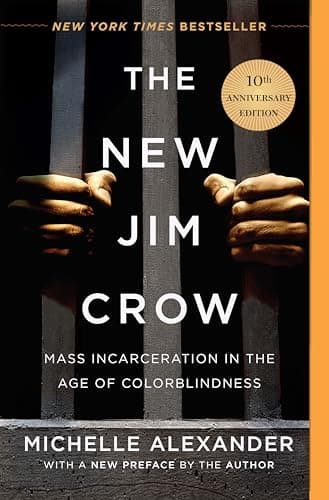
A tenth-anniversary edition of the iconic bestseller--"one of the most influential books of the past 20 years," according to the Chronicle of Higher Education--with a new preface by the author Seldom does a book have the impact of Michelle Alexander's The New Jim Crow. Since it was first published in 2010, it has been cited in judicial decisions and has been adopted in campus-wide and community-wide reads; it helped inspire the creation of the Marshall Project and the new $100 million Art for Justice Fund; it has been the winner of numerous prizes, including the prestigious NAACP Image Award; and it has spent nearly 250 weeks on the New York Times bestseller list. Most important of all, it has spawned a whole generation of criminal justice reform activists and organizations motivated by Michelle Alexander's unforgettable argument that "we have not ended racial caste in America; we have merely redesigned it." As the Birmingham News proclaimed, it is "undoubtedly the most important book published in this century about the U.S." Now, ten years after it was first published, The New Press is proud to issue a tenth-anniversary edition with a new preface by Michelle Alexander that discusses the impact the book has had and the state of the criminal justice reform movement today.
A tenth-anniversary edition of the iconic bestseller--"one of the most influential books of the past 20 years," according to the Chronicle of Higher Education--with a new preface by the author Seldom does a book have the impact of Michelle Alexander's The New Jim Crow. Since it was first published in 2010, it has been cited in judicial decisions and has been adopted in campus-wide and community-wide reads; it helped inspire the creation of the Marshall Project and the new $100 million Art for Justice Fund; it has been the winner of numerous prizes, including the prestigious NAACP Image Award; and it has spent nearly 250 weeks on the New York Times bestseller list. Most important of all, it has spawned a whole generation of criminal justice reform activists and organizations motivated by Michelle Alexander's unforgettable argument that "we have not ended racial caste in America; we have merely redesigned it." As the Birmingham News proclaimed, it is "undoubtedly the most important book published in this century about the U.S." Now, ten years after it was first published, The New Press is proud to issue a tenth-anniversary edition with a new preface by Michelle Alexander that discusses the impact the book has had and the state of the criminal justice reform movement today.
Add to your library to track progress and write reviews
Add to your library to track progress and write reviews
Find The New Jim Crow: Mass Incarceration in the Age of Colorblindness Michelle Alexander in PDF, EPUB, ebook, audiobook, print, or library editions.
Find The New Jim Crow: Mass Incarceration in the Age of Colorblindness Michelle Alexander in PDF, EPUB, ebook, audiobook, print, or library editions.
1 books in catalog
Examining how legal frameworks and law enforcement practices systematically target Black communities, the non-fiction book The New Jim Crow: Mass Incarceration in the Age of Colorblindness transformed public discussions regarding criminal justice in twenty-first-century America. Michelle Alexander, an attorney, legal scholar, and civil rights advocate, published this analysis to demonstrate how mass incarceration functions as a contemporary system of racial control in the United States.
Michelle Alexander was born on October 7, 1967, in Chicago, Illinois. She earned her Bachelor of Arts from Vanderbilt University and her Juris Doctor from Stanford Law School. Following her legal education, she served as a law clerk for Chief Judge Abner Mikva on the United States Court of Appeals for the D.C. Circuit and for Justice Harry A. Blackmun on the United States Supreme Court. She subsequently joined the law firm Saperstein, Goldstein, Demchak & Baller, specializing in plaintiff-side class action lawsuits alleging race and gender discrimination. Alexander also served as Director of the Racial Justice Project of the ACLU in Northern California and was a faculty member at Stanford Law School, where she directed the Civil Rights Clinic.
In 2005, Alexander was named a Soros Justice Fellow, supporting the legal research that informed her writing. She later held a joint academic appointment at the Moritz College of Law and the Kirwan Institute for the Study of Race and Ethnicity at Ohio State University in Columbus, Ohio. In 2018, Alexander expanded her public commentary by becoming an opinion columnist for The New York Times, writing regularly on civil rights, race, and the legal system.
Alexander's scholarship integrates legal analysis with accessible prose designed for academic audiences, advocacy groups, and general readers. Her work focuses on how formal legal colorblindness can obscure structural racial inequality within the criminal justice system. By detailing how drug enforcement policies and police practices disproportionately affect communities of color, Alexander demonstrates how criminal convictions deny individuals basic rights such as voting, housing, and employment, effectively recreating hierarchical caste structures.
1 books in catalog
Examining how legal frameworks and law enforcement practices systematically target Black communities, the non-fiction book The New Jim Crow: Mass Incarceration in the Age of Colorblindness transformed public discussions regarding criminal justice in twenty-first-century America. Michelle Alexander, an attorney, legal scholar, and civil rights advocate, published this analysis to demonstrate how mass incarceration functions as a contemporary system of racial control in the United States.
Michelle Alexander was born on October 7, 1967, in Chicago, Illinois. She earned her Bachelor of Arts from Vanderbilt University and her Juris Doctor from Stanford Law School. Following her legal education, she served as a law clerk for Chief Judge Abner Mikva on the United States Court of Appeals for the D.C. Circuit and for Justice Harry A. Blackmun on the United States Supreme Court. She subsequently joined the law firm Saperstein, Goldstein, Demchak & Baller, specializing in plaintiff-side class action lawsuits alleging race and gender discrimination. Alexander also served as Director of the Racial Justice Project of the ACLU in Northern California and was a faculty member at Stanford Law School, where she directed the Civil Rights Clinic.
In 2005, Alexander was named a Soros Justice Fellow, supporting the legal research that informed her writing. She later held a joint academic appointment at the Moritz College of Law and the Kirwan Institute for the Study of Race and Ethnicity at Ohio State University in Columbus, Ohio. In 2018, Alexander expanded her public commentary by becoming an opinion columnist for The New York Times, writing regularly on civil rights, race, and the legal system.
Alexander's scholarship integrates legal analysis with accessible prose designed for academic audiences, advocacy groups, and general readers. Her work focuses on how formal legal colorblindness can obscure structural racial inequality within the criminal justice system. By detailing how drug enforcement policies and police practices disproportionately affect communities of color, Alexander demonstrates how criminal convictions deny individuals basic rights such as voting, housing, and employment, effectively recreating hierarchical caste structures.