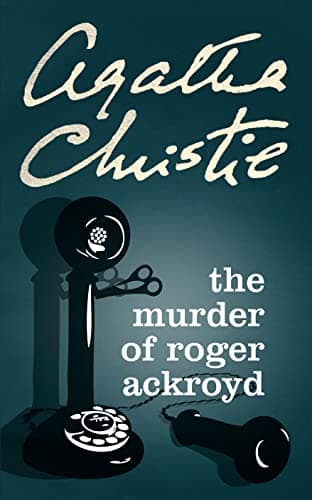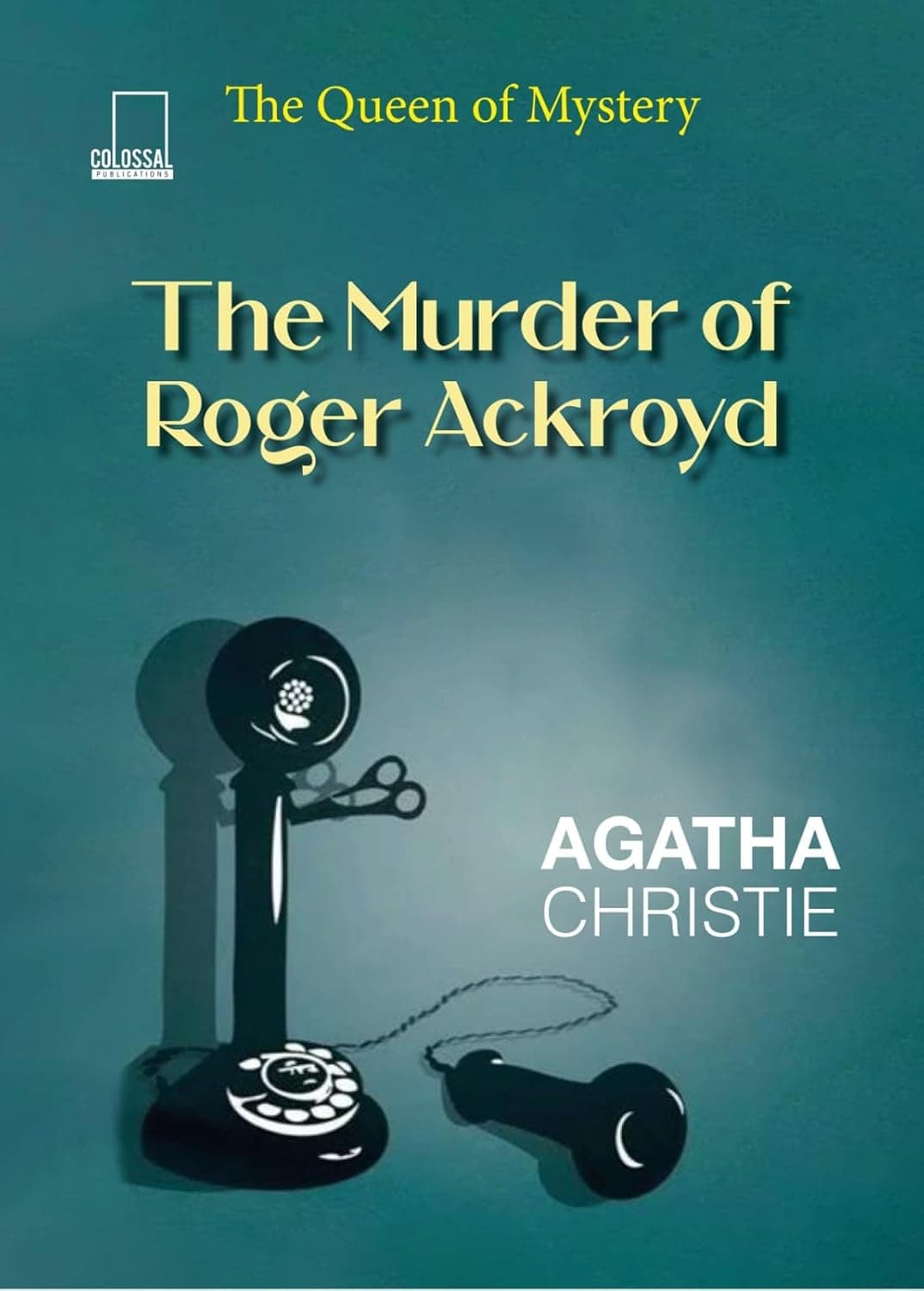
Belgian Inspector Hercule Poirot has retired to the countryside in the small English village of King's Abbot. Dr. Sheppard, observing his new neighbor, is sure that he must be a former hairdresser. But the brutal murder of a local squire reveals the truth: the peculiar little man is actually a detective par excellence. The Murder of the wealthy industrialist Roger Ackroyd begins the night before with the suicide of Mrs. Ferrars, a wealthy widow. Her death is believed to be an accident, until Roger Ackroyd is stabbed to death in his locked study. There are rumors she poisoned her first husband, rumors that she was being blackmailed, rumors that her secret lover was Roger Ackroyd, a man who knew too much, but no one is sure.
There's no shortage of suspects, all the members of the household stand to gain from his death, from Roger's neurotic sister-in-law who has accumulated personal debts, to a parlormaid with an uncertain history who resigned her post the afternoon of the murder. But the police focus on Ralph Paton, Ackroyd's stepson and heir, and the person with the most to gain from Roger's death. When sleuth Hercule Poirot, who is living quietly in King's Abbot, agrees to investigate, the case takes a completely different turn. Poirot exonerates all of the original suspects, and lays out a completely reasoned case that the clever and devious murderer is someone who had not come under suspicion at all - someone whose motive has nothing to do with money. (source)
Also contained in:
Add to your library to track progress and write reviews
Find The Murder of Roger Ackroyd Agatha Christie in PDF, EPUB, ebook, audiobook, print, or library editions.

4 books in catalog
Detective fiction during the English Golden Age was shaped by clever whodunit puzzles, meticulously placed clues, and eccentric private investigators like Hercule Poirot and Miss Marple. Agatha Christie established herself as a central figure of this literary movement through 66 detective novels and 14 short story collections that reached readers across the globe.
Born Agatha Mary Clarissa Miller in Torquay, Devon, in the United Kingdom, she was the daughter of a wealthy American stockbroker who died when she was eleven years old. Educated at home by her mother, she developed an early passion for writing before attending Mrs. Dryden's finishing school in Paris at age 16 to study singing and piano.
In 1914, she married Colonel Archibald Christie, an aviator in the Royal Flying Corps. While her husband served in World War I, she worked as a nurse and wrote her debut detective novel, The Mysterious Affair at Styles, which was published in 1920 and introduced Hercule Poirot. After her husband returned from the war, the couple had a daughter, but they divorced in 1928 following his extramarital affair. In 1930, she married Sir Max Mallowan, an archaeologist and a Catholic, subsequently accompanying him on field expeditions across Iraq and Syria. These travels inspired several Middle Eastern settings for her mystery novels, whereas most of her other stories were set in a fictionalized version of her home county of Devon. Beyond her detective fiction and the West End theatrical play The Mousetrap, she wrote six romantic novels under the pseudonym Mary Westmacott. In 1971, she was appointed Dame Commander of the Order of the British Empire.
Christie popularized the cozy mystery style during the 1920s and 1930s, prioritizing psychological observation, village settings, and narrative misdirection over graphic depiction. Her plots routinely assemble a closed circle of plausible suspects in an isolated setting, challenging readers to solve the mystery alongside her sleuths. According to the UNESCO Index Translationum, as of June 2018, her status as the world's most translated author was affirmed with 7,236 recorded translations of her work.
Hercule Poirot