SSansFiction
The libraryCollectionsJournalStatsFor authors
Sign inJoin now
Sansfiction,

A digital library for books. Made by readers, for readers.

v 2.0 · 2026
The library
  • Discover
  • Collections
  • Book tracker
  • Journal
  • Stats
For authors
  • SF Links
  • Analytics
  • How it works
  • FAQ
Elsewhere
  • X / @sansfiction
  • Privacy
  • Terms
  • Contact
© 2026 SansFiction · Digital · GlobalA quiet room for your reading life.
The libraryCollectionsJournalStatsFor authors
Sign inJoin now →
Navigation
Library
Bookshelf
Journal
Discover
Collections
Tierlists
Stats
Profile
Author Page
Link Builder
Account
Sign in
S
G
BooksadventureThe Lost Metal
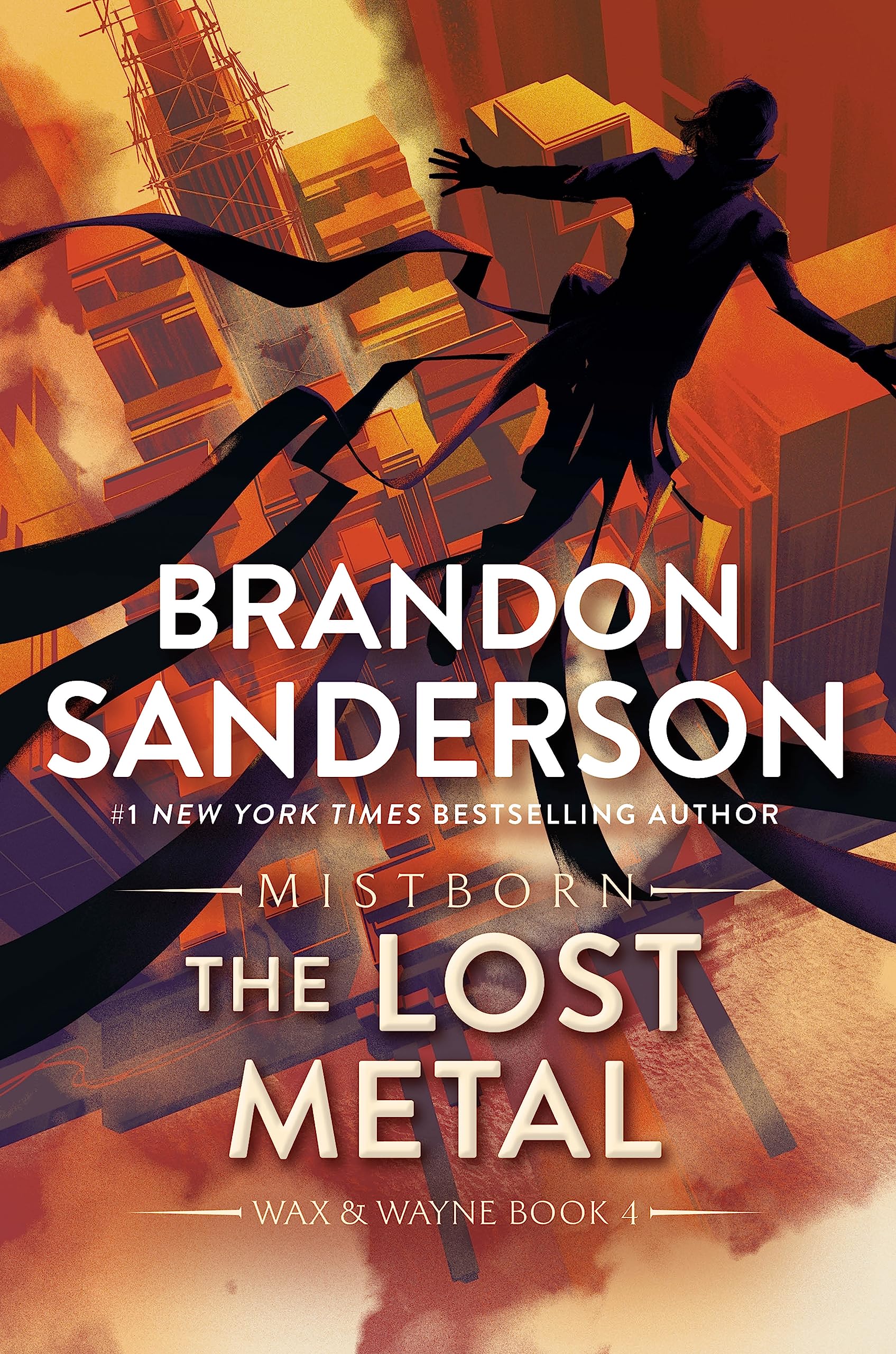
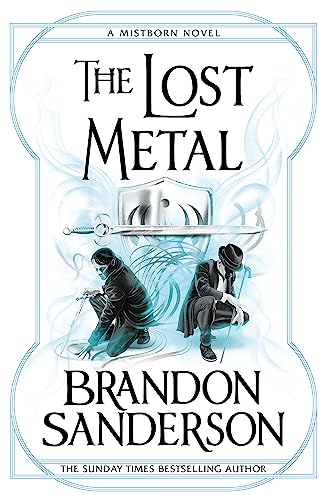
Cover of The Lost Metal by Brandon Sanderson
№ 4 · Mistborn: Wax & Wayne

The Lost Metal,

by Brandon Sanderson

Ask AI
Rating4.4/ 5
Ratings870
Pages—
Reading Hours—
Published2022
LanguageEnglish

§Synopsis

01

The industrial era of Scadrial stands at a precipice where the soot of progress meets the shadows of divine interference. For Waxillium Ladrian, the transition from a rough-and-tumble frontier lawman to a refined senator in the metropolis of Elendel has never quite extinguished the instinct to hunt. As political tensions between the capital and the rebellious Outer Cities reach a breaking point, the discovery of a revolutionary and terrifyingly powerful explosive changes the nature of the conflict. This isn't just a matter of civil unrest or organized crime; it is the manifestation of a cold war between terrestrial governments and the celestial forces that oversee them.

The narrative focuses on the fragility of a world catching up to its own myths. While Wax struggles with his role as the "Sword of Harmony"—a living weapon for a god who remains frustratingly distant—his allies uncover tendrils of a conspiracy that stretches far beyond the borders of their nation. The arrival of mysterious off-worlders and the influence of a rival deity known as Trell suggest that Scadrial is no longer an isolated sphere. The core conflict is rooted in the desperate race to understand a new form of "lost metal" before it can be used to level the very foundations of their civilization.

The Industrial Evolution of Scadrial

The setting has evolved into a bustling, turn-of-the-century society where Allomancy and Feruchemistry are no longer just tools of noble assassins but are integrated into the city’s infrastructure. Skyscrapers rise alongside electrical grids, and the magic system must adapt to the age of ballistics and chemistry. The atmosphere is one of "frontier noir" meeting high-stakes espionage, where the primary threat is not a dark lord, but the unchecked advancement of military technology fueled by shadowy organizations like the Set.

Main Characters

  • Waxillium Ladrian: A high-tongued senator and Coinshot who must reconcile his political responsibilities with his brutal efficacy as a lawman.
  • Wayne: A master of social mimicry and "Slider" who uses his ability to compress time to navigate a world that is moving too fast for his comfort.
  • Marasi Colms: A brilliant detective and Seeker whose dedication to the rule of law leads her into the path of cosmic entities.
  • Steris Harms: A strategic mastermind who uses her obsession with planning and risk assessment to protect her family and city from catastrophe.

The Weight of Legacy and Duty

The protagonist's journey centers on the friction between personal agency and divine expectation. Waxillium’s arc begins with a deep-seated resentment toward his god, Harmony, questioning why he must continue to bleed for a deity that refuses to act directly. Meanwhile, the secondary characters face their own crises of identity: Marasi struggles with the temptation of power offered by external forces, and Steris works to prove that meticulous preparation is just as heroic as supernatural prowess. The dynamic shifts from a simple pursuit of criminals to a complex negotiation of what it means to protect a planet that is outgrowing its creators.

Subverting the Buddy-Cop Trope

While the series is built on the foundation of the "buddy-cop" dynamic, this installment pivots toward a broader geopolitical and philosophical thriller. It subverts the trope of the "invincible hero" by emphasizing the logistical and psychological toll of constant conflict. Rather than relying solely on magical duels, the plot leans heavily into the mechanics of governance, the ethics of scientific discovery, and the realization that the heroes are small players in a much larger, intergalactic theater. This shift elevates the stakes from a local manhunt to an existential struggle for technological and spiritual sovereignty.

§Our take

The Lost Metal finally turns the Wax and Wayne books into industrial noir: politics, policing and supernatural powers collide in a city remade by electricity and skyscrapers, with ballistics and chemistry changing the rules. That shift makes the central mystery more interesting than another treasure hunt, though the first third takes its time settling in. Kirkus noticed the same uneven tempo, calling the book fully satisfying once the characters reach Bilming and the action accelerates.

The finale also widens the door into Cosmere. Offworld characters and outside magic systems can reward long-time readers, but some Mistborn-only readers will feel the lore arriving in lumps. That is the real trade: the case gets bigger, while the ordinary scale that made Era 2 distinctive can feel modest beside Era 1. The four leads carry the emotional weight, with Wayne, Marasi and Steris receiving their own turns rather than remaining accessories to Wax.

§Themes

Industry rewrites the rules
Allomancy and Feruchemistry now run through Scadrial's infrastructure, while ballistics and chemistry reshape how conflicts are fought.
Politics with teeth
Wax's move from frontier lawman to senator makes politics part of the fight rather than a break from it.
Distant gods, close costs
Wax must keep serving Harmony despite his resentment, while Trell and other powers enlarge the danger around him.
The case goes cosmic
Offworlders and outside magic systems turn a local conspiracy into a struggle over Scadrial's place in a larger universe.
A wider team
Wayne, Marasi and Steris take on arcs of their own, so the finale's emotional weight is not placed on Wax alone.

§How it was received

Kirkus called it a fast, fully satisfying end to Mistborn's second era, noting a slow-burn first third and sharp acceleration after Bilming. Bibliosanctum and Novel Notions were enthusiastic, while more measured reviewers found Era 2 less epic than Era 1 and the occasional Cosmere crossover scene too expository. It was a 2022 Goodreads Choice nominee for Best Fantasy, not the winner.

§Read it if

  • You want detective work, political tension and industrial technology fused into a fantasy finale
  • You have followed Mistborn and enjoy Cosmere connections across the larger universe
  • You like a team-based ending in which Wayne, Marasi and Steris carry major arcs of their own

§Skip it if

  • You need immediate momentum; the first third takes time before the pace breaks open.
  • You prefer a self-contained Mistborn adventure; the finale's Cosmere connections and lore dumps may test patience.

§Before you start

Reading experience
A leisurely first third gives way to a relentless back half built from short chapters, though the Cosmere lore adds difficulty for Mistborn-only readers.
Reading order
Mistborn Era 2 (Wax and Wayne), book 4 of 4 and the era finale: The Alloy of Law (2011), Shadows of Self (2015), The Bands of Mourning (2016), The Lost Metal (2022). It is the seventh Mistborn novel. Read the original trilogy (2006-2008) first, then Era 2 in order; Secret History (2016), a novella, is usually suggested after The Bands of Mourning.
Content notes
Large-scale violence, terrorism and war-like conflict, including fantasy gunfights and explosions; Characters die, and grief and loss are significant emotional threads.

§Common questions

Do I need to read the other Mistborn books first?
Yes. Read the original trilogy (2006-2008) first, then Era 2 in order; Secret History usually follows The Bands of Mourning.
Is The Lost Metal connected to the Stormlight Archive?
Yes. It is a major Cosmere crossover, though readers disagree on how much outside knowledge is essential.
Does the ebook table of contents contain spoilers?
Yes. Some readers report plot details there, so skip it if spoilers bother you.

§If you liked this

  • The Hero of Ages by Brandon Sanderson — The yardstick for Mistborn finales: two reviewers say The Lost Metal comes close but does not surpass it.
  • Rhythm of War by Brandon Sanderson — Sanderson's Stormlight Archive shares the wider Cosmere, and this finale ties into it more directly than any earlier Mistborn book.
  • The Emperor's Soul by Brandon Sanderson — A reviewer specifically recommends it before The Lost Metal because the crossover material draws on its world.
Sources
  • Wikipedia
  • Kirkus Reviews
  • Bibliosanctum
  • Novel Notions
  • SFF Insiders
  • Goodreads Choice Awards
  • Wikipedia

Track this book

Add to your library to track progress and write reviews

§Genres
adventure1fantasy1fiction1science fiction1science fiction & fantasy1
§Content Warnings
§Moods
adventurous2challenging1dark1emotional1funny1hopeful1mysterious1
§Tags
#a mix driven1#alcoholism1#blood1#character driven1#diverse characters1

§About the Author

Brandon Sanderson
Brandon Sanderson

37 books in catalog

The creation of the Cosmere, a vast interconnected universe where magic systems are governed by distinct physical laws, has redefined the scope of modern epic fantasy. Brandon Sanderson established this shared setting through a series of novels that began with the publication of Elantris and expanded into the multi-volume saga The Stormlight Archive.

His work is characterized by intricate world-building and a commitment to "hard magic," where the limitations of supernatural abilities are as important as the powers themselves. This approach has made his books, such as Mistborn: The Final Empire and The Way of Kings, central to contemporary discussions of genre construction and narrative consistency.

Career & Background

Born on December 19, 1975, in Lincoln, Nebraska, Brandon Winn Sanderson was the eldest of four children born to Barbara and Winn Sanderson. Although he was a reluctant reader in his early youth, his perspective changed in the eighth grade when his teacher, Mrs. Reeder, gave him a copy of Dragonsbane by Barbara Hambly. This encounter led him to explore the works of Robert Jordan, Melanie Rawn, David Eddings, Anne McCaffrey, and Orson Scott Card, eventually inspiring his own early attempts at fiction. In 1994, he enrolled at Brigham Young University (BYU) as a biochemistry major. However, a two-year hiatus from 1995 to 1997 to serve as a missionary for the Church of Jesus Christ of Latter-day Saints in Seoul, South Korea, shifted his focus. During this time, he realized he missed writing more than chemistry. Upon returning to BYU, he changed his major to English, much to the dismay of his mother, who had hoped he would become a doctor.

To support his education while maximizing his writing time, Sanderson worked as a night desk clerk at a local hotel, writing between midnight and 5:00 AM. By the time he finished his undergraduate degree, he had completed seven novels, though he faced a steady stream of rejections from publishers. He also volunteered for The Leading Edge, BYU’s science fiction and fantasy magazine, where he served as Editor in Chief during his senior year. This role allowed him to read many submissions and form lifelong friendships within the industry. He learned about the business side of writing by taking a class from David Farland, author of the Runelords series, who advised him to attend conventions like WorldCon and World Fantasy to connect with professionals. He eventually met his current agent and one of his editors at these events.

His persistence paid off in 2003 when editor Moshe Feder at Tor Books discovered the manuscript for Elantris in a slush pile. The novel was published in May 2005, marking the official start of his professional career. Shortly after, he launched the Mistborn trilogy, which includes Mistborn: The Final Empire (2006), The Well of Ascension (2007), and The Hero of Ages. In 2004, after graduating with his Master’s degree in creative writing from BYU, he was asked to teach the same genre-focused writing class he had once taken as an undergraduate. He continues to teach this section because he enjoys helping aspiring writers. In July 2006, he married Emily Bushman, a fellow English major from BYU. Emily began working as his business manager following the birth of their first child in October 2007.

A significant turning point occurred in December 2007 when Harriet McDougal Rigney selected Sanderson to complete Robert Jordan’s The Wheel of Time series following Jordan's death. This massive undertaking resulted in three volumes: The Gathering Storm (2009), Towers of Midnight (2010), and A Memory of Light (2013). During this same period, Sanderson began his own magnum opus, The Stormlight Archive, starting with The Way of Kings in 2010. He has since balanced these epic projects with middle-grade series like Alcatraz Versus the Evil Librarians (2007) and young adult science fiction such as Skyward. His novella The Emperor’s Soul won the Hugo Award in 2013, and he has been a judge for Writers of the Future since 2016. He also co-hosts the podcast Writing Excuses, which has won multiple awards for its writing advice.

Writing Style & Themes

Sanderson is widely recognized for his development of "Sanderson’s Laws of Magic," a set of guidelines for authors to create consistent and logical magic systems. His approach emphasizes that an author's ability to solve problems with magic is directly proportional to how well the reader understands said magic. This philosophy is evident in the "Allomancy" of the Mistborn series, where characters ingest and "burn" metals to gain specific abilities, and the "Surgebinding" found in The Stormlight Archive. By establishing clear costs and limitations, he ensures that magical resolutions feel earned rather than arbitrary. This dedication to internal logic has influenced a generation of fantasy writers seeking to move away from "soft" magic systems where powers are ill-defined.

His world-building often incorporates unique geological and ecological elements that directly influence the cultures and technologies of his characters. For instance, the landscape of Roshar in The Stormlight Archive features a rocky terrain and flora that retracts into the ground, a design inspired by the sandstone buttes and slot canyons of southeastern Utah. Similarly, the world of Scadrial in Mistborn is defined by falling ash and a red sun, environmental factors that shape the social hierarchy and survival strategies of its inhabitants. His background in linguistics, influenced by his time in Korea, often informs the naming conventions and structural logic of his fictional languages, adding a layer of authenticity to his diverse civilizations.

Thematic depth in his work often explores the intersection of leadership, morality, and mental health. Characters in The Stormlight Archive frequently struggle with depression, post-traumatic stress, or identity crises, reflecting a nuanced approach to heroism that acknowledges human vulnerability. The "Cosmere" framework allows for subtle cross-over elements, where characters known as "Worldhoppers" appear in different series, rewarding observant readers with a deeper layer of narrative connectivity. This interconnectedness is further explored in his "Secret Projects," such as Tress of the Emerald Sea and The Sunlit Man, which expand the boundaries of his shared universe into new genres and planetary systems, including the transition into a space age as seen in Wind and Truth.

Major Works

  • The Stormlight Archive — A projected ten-volume epic fantasy series set on the world of Roshar, beginning with The Way of Kings (2010) and continuing through Words of Radiance (2014), Oathbringer, Rhythm of War, and the upcoming Wind and Truth.
  • Mistborn — An initial trilogy consisting of Mistborn: The Final Empire, The Well of Ascension, and The Hero of Ages, followed by the "Wax and Wayne" era starting with The Alloy of Law (2011) and continuing through Shadows of Self, The Bands of Mourning (2016), and The Lost Metal.
  • The Wheel of Time — The final three volumes of Robert Jordan's legendary series, completed by Sanderson: The Gathering Storm (2009), Towers of Midnight (2010), and A Memory of Light (2013).
  • Elantris — Sanderson's 2005 debut novel, which introduced the first iteration of the Cosmere and explored a city of fallen, god-like beings.
  • Warbreaker — A standalone novel featuring a color-based magic system known as Awakening, which has significant ties to the broader Cosmere.
  • Skyward — A young adult science fiction series following a girl named Spensa who dreams of being a pilot in a world under constant alien siege, continuing through Starsight, Cytonic, and Defiant.
  • Secret Projects — A series of novels originally funded via a record-breaking Kickstarter campaign, including Tress of the Emerald Sea, The Frugal Wizard's Handbook for Surviving Medieval England, Yumi and the Nightmare Painter, and The Sunlit Man.
  • Alcatraz Versus the Evil Librarians — A middle-grade series beginning in 2007 that follows a boy who discovers his family's legacy of fighting a secret society of librarians.

§Featured Series

Mistborn: Wax & Wayne

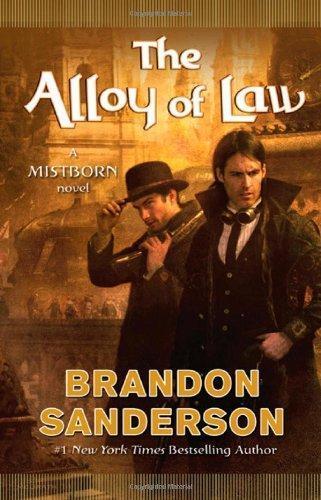
Cover of The Alloy of Law by Brandon Sanderson

The Alloy of Law

Brandon Sanderson, 2011
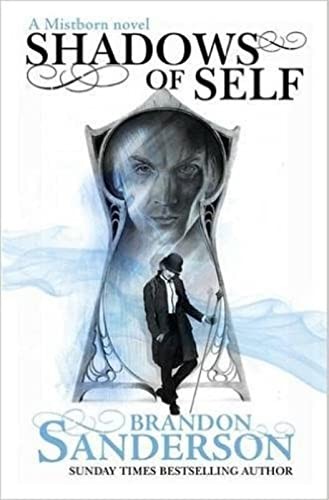
Cover of Shadows of Self by Brandon Sanderson

Shadows of Self

Brandon Sanderson, 2015
Cover of The Bands of Mourning by Brandon Sanderson

The Bands of Mourning

Brandon Sanderson, 2016
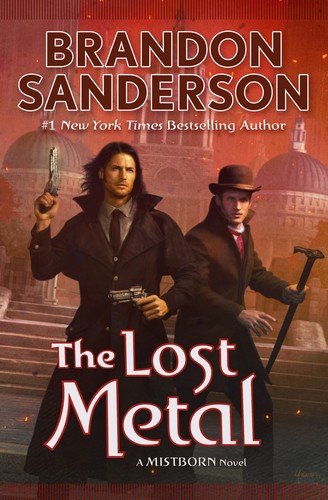
Cover of The Lost Metal by Brandon Sanderson

The Lost Metal

Brandon Sanderson, 2022

§Also part of

The Mistborn SagaThe Cosmere

§Other Editions

Showing 2 of 21 editions
Cover of The Lost Metal

The Lost Metal

engHardcover
Tor Books20229780765391193
Amazon
Cover of The Lost Metal

The Lost Metal

engKindle
Tor Books20229780765391209
Amazon
§Genres
adventure1fantasy1fiction1science fiction1science fiction & fantasy1
§Content Warnings
§Moods
adventurous2challenging1dark1emotional1funny1hopeful1mysterious1
§Tags
#a mix driven1#alcoholism1#blood1#character driven1#diverse characters1

Metadata

ISBN-139781473215276
ISBN-101473215277
ASIN1473215277

Editions and availability

Find The Lost Metal Brandon Sanderson in PDF, EPUB, ebook, audiobook, print, or library editions.

View on Amazon
Bookshop.orgGoogle Play BooksBarnes & NobleOpen Library