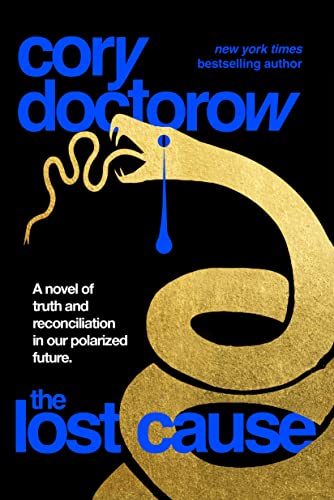
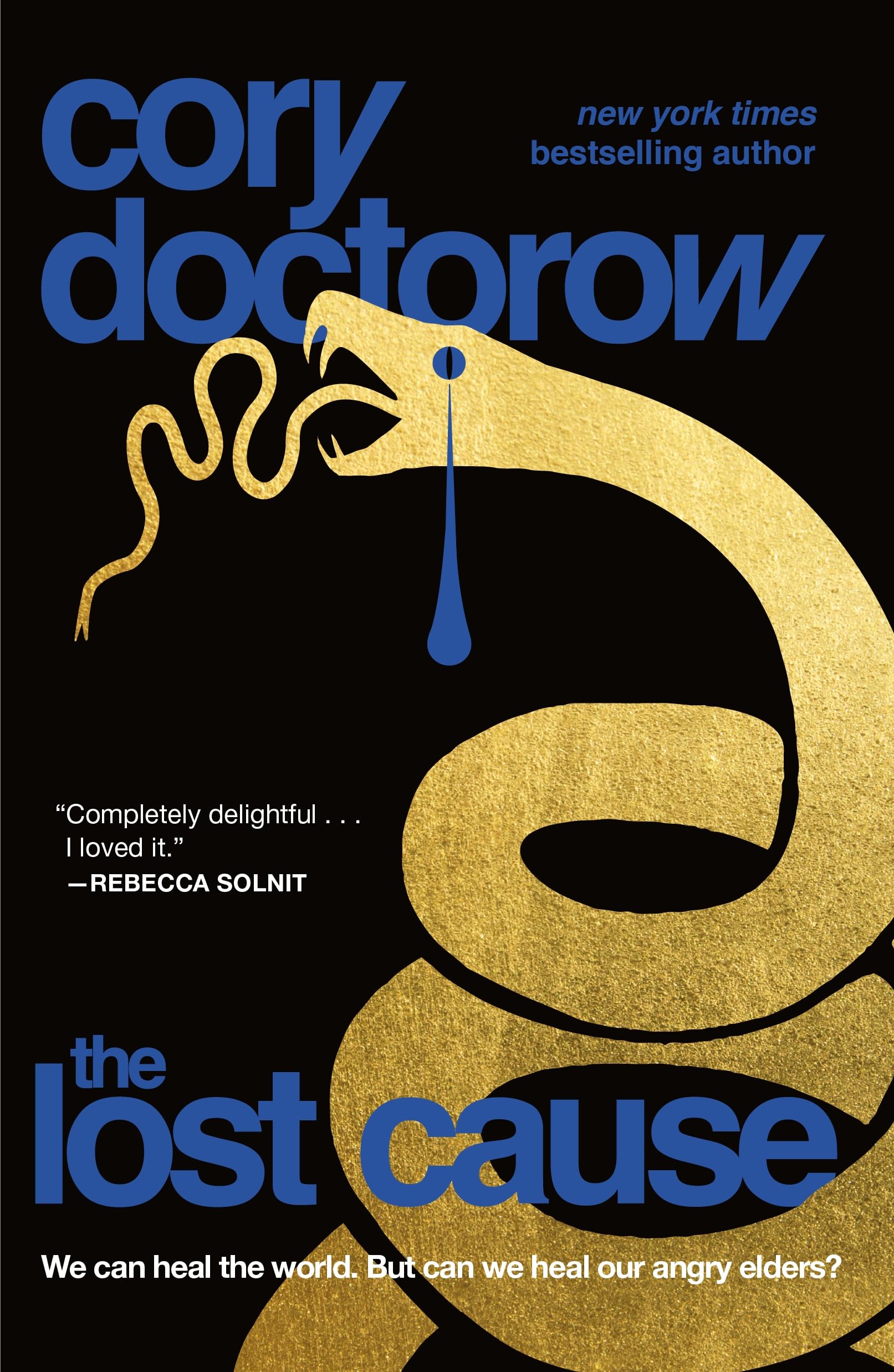
It’s thirty years from now. We’re making progress, mitigating climate change, slowly but surely. But what about all the angry old people who can’t let go?
For young Americans a generation from now, climate change isn't controversial. It's just an overwhelming fact of life. And so are the great efforts to contain and mitigate it. Entire cities are being moved inland from the rising seas. Vast clean-energy projects are springing up everywhere. Disaster relief, the mitigation of floods and superstorms, has become a skill for which tens of millions of people are trained every year. The effort is global. It employs everyone who wants to work. Even when national politics oscillates back to right-wing leaders, the momentum is too great; these vast programs cannot be stopped in their tracks.
But there are still those Americans, mostly elderly, who cling to their red baseball caps, their grievances, their huge vehicles, their anger. To their "alternative" news sources that reassure them that their resentment is right and pure and that "climate change" is just a giant scam.
And they're your grandfather, your uncle, your great-aunt. And they're not going anywhere. And they’re armed to the teeth.
The Lost Cause asks: What do we do about people who cling to the belief that their own children are the enemy? When, in fact, they're often the elders that we love?
It’s thirty years from now. We’re making progress, mitigating climate change, slowly but surely. But what about all the angry old people who can’t let go?
For young Americans a generation from now, climate change isn't controversial. It's just an overwhelming fact of life. And so are the great efforts to contain and mitigate it. Entire cities are being moved inland from the rising seas. Vast clean-energy projects are springing up everywhere. Disaster relief, the mitigation of floods and superstorms, has become a skill for which tens of millions of people are trained every year. The effort is global. It employs everyone who wants to work. Even when national politics oscillates back to right-wing leaders, the momentum is too great; these vast programs cannot be stopped in their tracks.
But there are still those Americans, mostly elderly, who cling to their red baseball caps, their grievances, their huge vehicles, their anger. To their "alternative" news sources that reassure them that their resentment is right and pure and that "climate change" is just a giant scam.
And they're your grandfather, your uncle, your great-aunt. And they're not going anywhere. And they’re armed to the teeth.
The Lost Cause asks: What do we do about people who cling to the belief that their own children are the enemy? When, in fact, they're often the elders that we love?
Add to your library to track progress and write reviews
Find The Lost Cause Cory Doctorow in PDF, EPUB, ebook, audiobook, print, or library editions.
6 books in catalog
Speculative fiction and digital rights advocacy intersect in a prolific body of work that examines surveillance, internet policy, copyright, and post-scarcity economics. Cory Doctorow established himself as a prominent voice in modern science fiction and tech journalism through novels that address how technology shapes human freedom and social systems, including his best-selling young adult novel Little Brother.
Born in Toronto, Ontario, Canada, on July 17, 1971, Doctorow attended alternative schools and worked at Bakka Bookstore before dropping out of high school at age seventeen. That same year, he sold his first story, '2,000 Year Check-up,' to the Canadian speculative fiction magazine On Spec. After briefly living in Mexico and attending four universities in two years, he attended the Clarion Writers' Workshop in 1992. His first professional sale, 'Craphound,' appeared in Science Fiction Age in 1998 and was nominated for the Aurora and Sturgeon Awards.
Beyond his fiction writing, Doctorow has built an extensive career as an activist, blogger, and journalist. He served as the European director of the Electronic Frontier Foundation, co-founded the Open Rights Group in the UK, and spent years as a co-editor of the popular blog Boing Boing. Having lived in Toronto, London, and other cities, he continues to publish technology critique and fiction while advocating for Creative Commons licensing and open access standards.
Doctorow's writing frequently focuses on the political and legal tensions inherent in digital technology, with recurring themes such as digital rights management, file sharing, copyright liberalization, anti-monopoly economics, and open-source computation. His speculative worlds often feature technologist protagonists who use technical knowledge, civil disobedience, and collaborative problem-solving to counter corporate overreach and government surveillance.
Whether writing solarpunk speculative fiction about climate hope or techno-thrillers about financial mechanisms, his narrative approach balances detailed technical realism with accessible explanations of economic and social concepts. He frequently releases his literary works under Creative Commons licenses, reflecting his personal commitment to accessible information and user autonomy.
6 books in catalog
Speculative fiction and digital rights advocacy intersect in a prolific body of work that examines surveillance, internet policy, copyright, and post-scarcity economics. Cory Doctorow established himself as a prominent voice in modern science fiction and tech journalism through novels that address how technology shapes human freedom and social systems, including his best-selling young adult novel Little Brother.
Born in Toronto, Ontario, Canada, on July 17, 1971, Doctorow attended alternative schools and worked at Bakka Bookstore before dropping out of high school at age seventeen. That same year, he sold his first story, '2,000 Year Check-up,' to the Canadian speculative fiction magazine On Spec. After briefly living in Mexico and attending four universities in two years, he attended the Clarion Writers' Workshop in 1992. His first professional sale, 'Craphound,' appeared in Science Fiction Age in 1998 and was nominated for the Aurora and Sturgeon Awards.
Beyond his fiction writing, Doctorow has built an extensive career as an activist, blogger, and journalist. He served as the European director of the Electronic Frontier Foundation, co-founded the Open Rights Group in the UK, and spent years as a co-editor of the popular blog Boing Boing. Having lived in Toronto, London, and other cities, he continues to publish technology critique and fiction while advocating for Creative Commons licensing and open access standards.
Doctorow's writing frequently focuses on the political and legal tensions inherent in digital technology, with recurring themes such as digital rights management, file sharing, copyright liberalization, anti-monopoly economics, and open-source computation. His speculative worlds often feature technologist protagonists who use technical knowledge, civil disobedience, and collaborative problem-solving to counter corporate overreach and government surveillance.
Whether writing solarpunk speculative fiction about climate hope or techno-thrillers about financial mechanisms, his narrative approach balances detailed technical realism with accessible explanations of economic and social concepts. He frequently releases his literary works under Creative Commons licenses, reflecting his personal commitment to accessible information and user autonomy.