"The #1 book of 2009...Several sleepless nights are guaranteed."—Stephen King, Entertainment Weekly
One postwar summer in his home of rural Warwickshire, Dr. Faraday, the son of a maid who has built a life of quiet respectability as a country physician, is called to a patient at lonely Hundreds Hall. Home to the Ayres family for over two centuries, the Georgian house, once impressive and handsome, is now in decline, its masonry crumbling, its gardens choked with weeds, the clock in its stable yard permanently fixed at twenty to nine. Its owners—mother, son, and daughter—are struggling to keep pace with a changing society, as well as with conflicts of their own. But are the Ayreses haunted by something more sinister than a dying way of life? Little does Dr. Faraday know how closely, and how terrifyingly, their story is about to become intimately entwined with his.
"The #1 book of 2009...Several sleepless nights are guaranteed."—Stephen King, Entertainment Weekly
One postwar summer in his home of rural Warwickshire, Dr. Faraday, the son of a maid who has built a life of quiet respectability as a country physician, is called to a patient at lonely Hundreds Hall. Home to the Ayres family for over two centuries, the Georgian house, once impressive and handsome, is now in decline, its masonry crumbling, its gardens choked with weeds, the clock in its stable yard permanently fixed at twenty to nine. Its owners—mother, son, and daughter—are struggling to keep pace with a changing society, as well as with conflicts of their own. But are the Ayreses haunted by something more sinister than a dying way of life? Little does Dr. Faraday know how closely, and how terrifyingly, their story is about to become intimately entwined with his.
Add to your library to track progress and write reviews
Find The Little Stranger Sarah Waters in PDF, EPUB, ebook, audiobook, print, or library editions.

3 books in catalog
Historical fiction featuring intricate period settings and subverted classic tropes gained widespread recognition through atmospheric narratives set in Victorian England and mid-twentieth-century Britain. Sarah Waters, born in 1966, established her literary reputation with acclaimed historical novels such as Tipping the Velvet and Fingersmith, blending meticulous research with psychological suspense. Her narratives frequently explore Victorian society, social class, and concealed personal identities, introducing queer perspectives into rich historical frameworks.
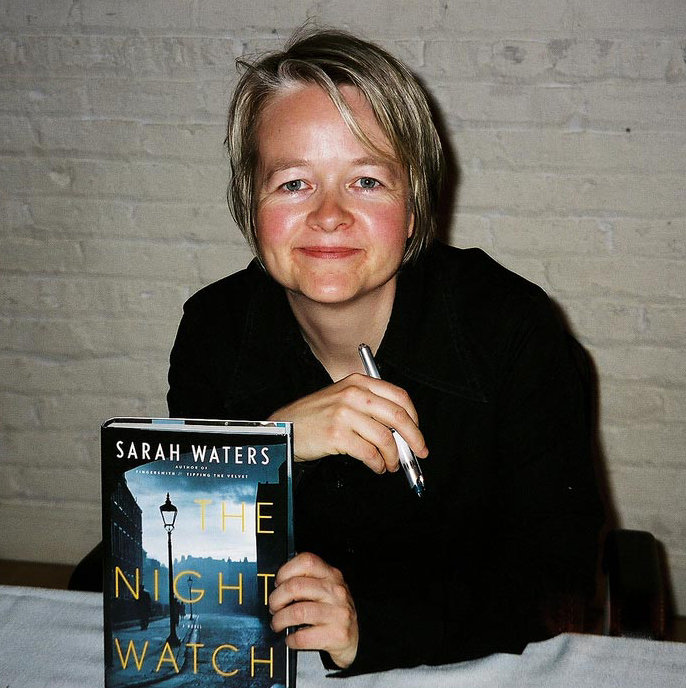
Sarah Ann Waters was born on 21 July 1966 in Neyland, Pembrokeshire, Wales. She pursued higher education at the University of Kent, Lancaster University, and Queen Mary University of London, earning degrees in English literature. Her debut novel, Tipping the Velvet, was published in 1998 and won the Betty Trask Award. She followed this success with Affinity in 1999, winning the Somerset Maugham Award and the Sunday Times Young Writer of the Year Award. Her third novel, Fingersmith (2002), was shortlisted for the Man Booker Prize and the Orange Prize, winning the South Bank Show Award for Literature and the CWA Historical Dagger. Waters subsequently published The Night Watch (2006), The Little Stranger (2009), and The Paying Guests (2014). She has been shortlisted for the Booker Prize three times, named Author of the Year by the British Book Awards and Waterstone's, and was appointed an OBE in 2019. Screen adaptations of her work include television miniseries for the BBC and the 2016 South Korean film The Handmaiden.
Waters's writing combines Gothic atmosphere, historical precision, and layered plotting. Her stories often examine the restrictions of social class, institutional spaces, and the hidden domestic lives of women in nineteenth- and twentieth-century Britain. By placing lesbian relationships at the structural center of her fiction, she reinterprets conventional Victorian and post-war literary conventions while maintaining narrative tension and psychological realism.

3 books in catalog
Historical fiction featuring intricate period settings and subverted classic tropes gained widespread recognition through atmospheric narratives set in Victorian England and mid-twentieth-century Britain. Sarah Waters, born in 1966, established her literary reputation with acclaimed historical novels such as Tipping the Velvet and Fingersmith, blending meticulous research with psychological suspense. Her narratives frequently explore Victorian society, social class, and concealed personal identities, introducing queer perspectives into rich historical frameworks.
Sarah Ann Waters was born on 21 July 1966 in Neyland, Pembrokeshire, Wales. She pursued higher education at the University of Kent, Lancaster University, and Queen Mary University of London, earning degrees in English literature. Her debut novel, Tipping the Velvet, was published in 1998 and won the Betty Trask Award. She followed this success with Affinity in 1999, winning the Somerset Maugham Award and the Sunday Times Young Writer of the Year Award. Her third novel, Fingersmith (2002), was shortlisted for the Man Booker Prize and the Orange Prize, winning the South Bank Show Award for Literature and the CWA Historical Dagger. Waters subsequently published The Night Watch (2006), The Little Stranger (2009), and The Paying Guests (2014). She has been shortlisted for the Booker Prize three times, named Author of the Year by the British Book Awards and Waterstone's, and was appointed an OBE in 2019. Screen adaptations of her work include television miniseries for the BBC and the 2016 South Korean film The Handmaiden.
Waters's writing combines Gothic atmosphere, historical precision, and layered plotting. Her stories often examine the restrictions of social class, institutional spaces, and the hidden domestic lives of women in nineteenth- and twentieth-century Britain. By placing lesbian relationships at the structural center of her fiction, she reinterprets conventional Victorian and post-war literary conventions while maintaining narrative tension and psychological realism.