SSansFiction
The libraryCollectionsJournalStatsFor authors
Sign inJoin now
Sansfiction,

A digital library for books. Made by readers, for readers.

v 2.0 · 2026
The library
  • Discover
  • Collections
  • Book tracker
  • Journal
  • Stats
For authors
  • SF Links
  • Analytics
  • How it works
  • FAQ
Elsewhere
  • X / @sansfiction
  • Privacy
  • Terms
  • Contact
© 2026 SansFiction · Digital · GlobalA quiet room for your reading life.
The libraryCollectionsJournalStatsFor authors
Sign inJoin now →
Navigation
Library
Bookshelf
Journal
Discover
Collections
Tierlists
Stats
Profile
Author Page
Link Builder
Account
Sign in
S
G
BooksadventureThe Left Hand of Darkness
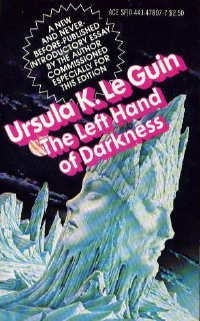
Cover of The Left Hand of Darkness by Ursula K. Le Guin
№ 4 · Hainish Cycle

The Left Hand of Darkness,

by Ursula K. Le Guin

Ask AI
Rating4.1/ 5
Ratings963
Pages267
Reading Hours6h
Published2017
LanguageEnglish

§Synopsis

01

A lone human ambassador is sent to the icebound planet of Winter, a world without sexual prejudice, where the inhabitants’ gender is fluid. His goal is to facilitate Winter’s inclusion in a growing intergalactic civilization. But to do so he must bridge the gulf between his own views and those of the strange, intriguing culture he encounters...

Embracing the aspects of psychology, society, and human emotion on an alien world, The Left Hand of Darkness stands as a landmark achievement in the annals of intellectual science fiction.

§Our take

Le Guin called betrayal and fidelity, not gender, the real subject of her novel, then admitted that insistence had been defensive. An envoy tests his assumptions against a culture whose bodies and social roles change, and an eighty-day crossing slowly turns suspicion into trust. It is a thought experiment, not a proposal to redesign humanity. Estraven is why it still has a pulse.

The book's famous blind spot is the generic 'he' used for every Gethenian. Le Guin later called it a male-centered convention and suggested restoring singular 'they,' while still disliking invented pronouns. Read the book with that friction visible. It is demanding at the start, alive once the ice crossing gathers momentum, and still arguing with itself.

§Themes

Gender as thought experiment
Gethenians are neutral for most of a monthly cycle and take on male or female traits during kemmer, making the permanently male Ai the anomaly.
Trust on the ice
The long trek across the Gobrin ice slowly turns Ai's suspicion and diplomatic caution into something closer to trust.
Power without gender
Even without rape or a gendered social order, Gethen keeps hierarchy and the face-saving rivalry of shifgrethor.
The biased envoy
Ai judges Gethenians through binary human assumptions, and the reader watches those assumptions fray.
Betrayal and fidelity
Le Guin named these as the book's real subject, and the bond between Ai and Estraven puts them under pressure.

§How it was received

The novel won both the Nebula and Hugo for Best Novel, a rare double, in a competitive field that included Slaughterhouse-Five. Early reviewers were broadly favorable but not unanimous. Feminist and later queer critics have welcomed the experiment while arguing that the generic 'he,' Estraven's male-coded role and the book's heterosexual default limit how far it reaches.

§Read it if

  • You like science fiction that tests an idea inside a richly observed society
  • You enjoy a slow-burn relationship between two difficult characters, with trust earned over an eighty-day crossing
  • You want a classic that can also be read as the author arguing with its own premises

§Skip it if

  • You need a quick, accessible opening. Names, institutions and invented terms arrive thickly.
  • Clinical descriptions of sex and gender, or the generic 'he' for every Gethenian, are likely to grate.

§Before you start

Reading experience
The opening is dense, name-heavy and slow, but the pace tightens during the eighty-day ice crossing, where the character drama lands.
Reading order
Part of the loosely connected Hainish Cycle and the fourth of Le Guin's Hainish novels in publication order. She rejected a strict cycle order and suggested reading Rocannon's World, Planet of Exile and City of Illusions first, then The Word for World Is Forest, The Left Hand of Darkness and The Dispossessed in any order. It is also a fine entry point on its own.
Content notes
Detailed descriptions of Gethenian bodies changing during kemmer and of sexual situations; Imprisonment in a labor camp; Life-threatening cold and harsh weather; Death and grief.

§Common questions

Do I need to read the other Hainish books first?
No. The cycle is loosely connected, Le Guin rejected a strict sequence, and this book also works as an entry point.
Why is every Gethenian called 'he'?
Le Guin defended the generic 'he' in 1976. In 1987 she called it a male-centered convention and suggested singular 'they,' though she continued to dislike invented pronouns.
Is The Left Hand of Darkness a queer book?
Not neatly. The Ai-Estraven bond has been read through a queer lens, but the novel excludes same-sex relationships; Le Guin later regretted that choice.

§If you liked this

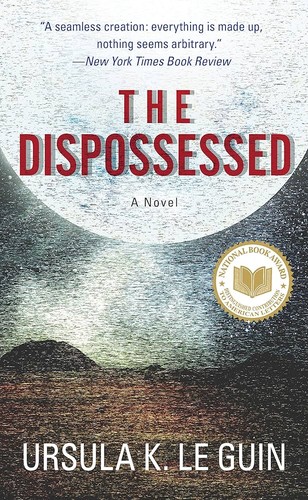
  • The Dispossessed by Ursula K. Le Guin — The sibling thought experiment in the same loosely connected universe, swapping Gethen's gender questions for anarchism and utopia.
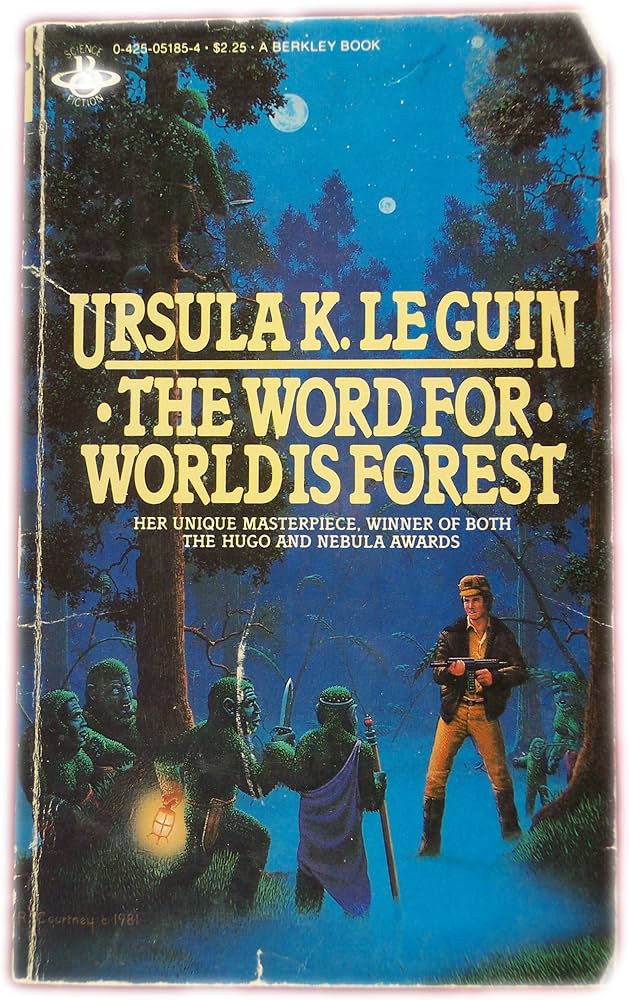
  • The Word for World Is Forest by Ursula K. Le Guin — A shorter, more overtly political Hainish novel; Le Guin's loose reading order makes it a natural companion.
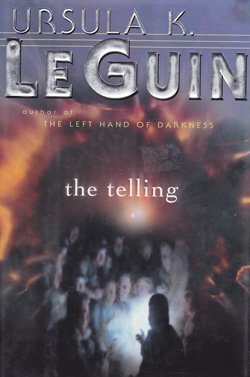
  • The Telling by Ursula K. Le Guin — A later Hainish novel about cultural survival, with a similarly anthropological interest in how societies live.
Sources
  • Wikipedia
  • The Anarchist Library (reprint of Le Guin's essay)
  • Los Angeles Review of Books
  • LitCharts
  • SFWA Nebula Awards
  • The Hugo Awards (official)
  • Wikipedia
  • Wikipedia
  • Goodreads
  • Reactor (Tor.com)
  • The Book Smugglers
  • Worlds Without End (reader review by 'ParallelWorlds', 2013)
  • PBS American Masters

Track this book

Add to your library to track progress and write reviews

§Genres
adventure1aliens1classics1fantasy1fiction1first contact1lgbtq1
§Content Warnings
§Moods
adventurous1challenging1dark1emotional1hopeful1inspiring1mysterious1
§Tags
#confinement1#diverse characters1#gender1#loveable characters1#not diverse characters1

§About the Author

Ursula K. Le Guin
Ursula K. Le Guin

17 books in catalog

Speculative fiction gained profound depth through thoughtful worldbuilding that examined social structures, gender dynamics, and political philosophy across fantasy and science fiction settings such as the archipelago of Earthsea and the planetary systems of the Hainish Cycle. Ursula K. Le Guin was an American author who wrote more than 20 novels and 100 short stories, alongside poetry, children's books, essays, and translations during a literary career spanning nearly six decades.

Her extensive body of work includes 23 novels, 12 volumes of short stories, 11 volumes of poetry, 13 children's books, five essay collections, and four works of translation. Celebrated for her genre-bending speculative fiction, Le Guin earned six Nebula Awards, seven Hugo Awards, the SFWA Grand Master title, and the 2014 National Book Foundation Medal for Distinguished Contribution to American Letters.

Career & Background

Born Ursula Kroeber in 1929 in Berkeley, California, she was the daughter of anthropologist Alfred Louis Kroeber and writer Theodora Kroeber. Raised in an intellectual environment steeped in cultural anthropology, she developed a keen sensitivity to social structures and language that directly informed her detailed depictions of fictional societies. Le Guin published her first poem in 1959 and her first short story in 1961 before achieving widespread critical success.

Her early works, A Wizard of Earthsea (1968), The Left Hand of Darkness (1969), and The Dispossessed (1974), established her as a major figure in science fiction and fantasy. Over her long career, she expanded both the Earthsea series and her Hainish universe novels, receiving accolades such as the PEN/Malamud Award and being published in her lifetime by the Library of America in 2016 before her death in 2018.

Writing Style & Themes

At a time when American science fiction was largely centered on physical technology and hard-science tropes, Le Guin shifted focus toward anthropology, sociology, linguistics, and psychology. Her Hainish Cycle novels—which include Rocannon's World, Planet of Exile, City of Illusions, The Left Hand of Darkness, The Word for World Is Forest, The Dispossessed, and The Telling—explore alternative political systems such as anarchism, non-violent communication, anti-colonialism, and non-binary concepts of gender.

In her fantasy fiction, particularly the Earthsea cycle featuring A Wizard of Earthsea, The Tombs of Atuan, and Tehanu, Le Guin rejected conventional high-fantasy battle narratives in favor of themes concerning balance, ethical responsibility, self-discovery, and domestic authority. She was also an essayist on feminist issues and literary craft, publishing influential collections such as The Language of the Night and Dancing at the Edge of the World.

Major Works

  • A Wizard of Earthsea (1968)* — The opening novel of the Earthsea cycle, detailing the training and coming-of-age of the wizard Ged as he confronts his own shadow.
  • The Left Hand of Darkness (1969)* — A groundbreaking Hainish universe novel set on the winter planet Gethen, exploring human sexuality, social structures, and diplomacy in an ambisexual society.
  • The Dispossessed (1974)* — A Hugo and Nebula Award-winning novel contrasting an anarchist society on the moon Anarres with a capitalist state on the planet Urras.
  • The Tombs of Atuan — The second Earthsea novel, focusing on a young priestess trapped in an ancient labyrinth and her encounter with Ged.
  • The Lathe of Heaven — A speculative science fiction novel set in Portland about a man whose dreams alter reality and a psychiatrist who attempts to control them.
  • The Word for World Is Forest — A Hainish Cycle novella addressing military imperialism, environmental degradation, and indigenous resistance.
  • Tehanu — The fourth Earthsea novel, shifting focus toward everyday life, aging, and female empowerment within a fantasy world.
  • The Day Before the Revolution — An award-winning short story set in the Hainish universe that portrays the final day of Odo, the visionary philosopher behind the anarchist movement in The Dispossessed.
  • The Telling — A late Hainish Cycle novel following an observer sent to a planet where ancient cultural and oral traditions are suppressed by a technocratic regime.

§Featured Series

Hainish Cycle

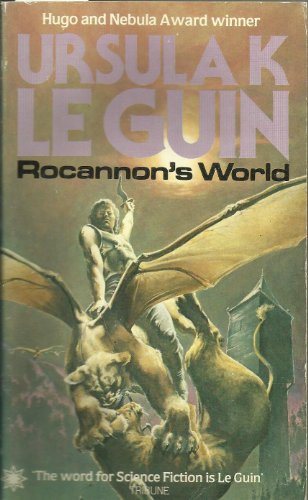
Cover of Rocannon's World by Ursula K. Le Guin

Rocannon's World

Ursula K. Le Guin, 1966
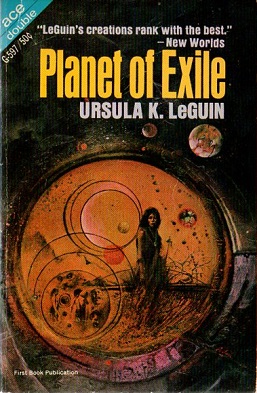
Cover of Planet of Exile by Ursula K. Le Guin

Planet of Exile

Ursula K. Le Guin, 1966
Cover of City of Illusions by Ursula K. Le Guin

City of Illusions

Ursula K. Le Guin, 1967
Cover of The Left Hand of Darkness by Ursula K. Le Guin

The Left Hand of Darkness

Ursula K. Le Guin, 1969
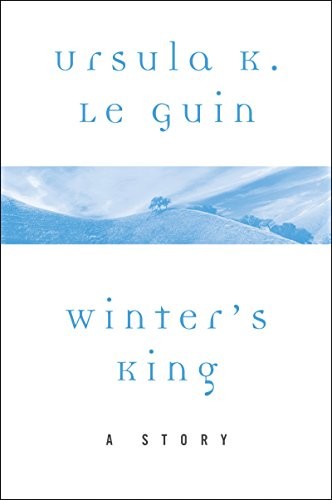
Cover of Winter's King by Ursula K. Le Guin

Winter's King

Ursula K. Le Guin, 2017
Cover of The Word for World Is Forest by Ursula K. Le Guin

The Word for World Is Forest

Ursula K. Le Guin, 1972
Cover of The Dispossessed by Ursula K. Le Guin

The Dispossessed

Ursula K. Le Guin, 1974
Cover of The Day Before the Revolution by Ursula K. Le Guin

The Day Before the Revolution

Ursula K. Le Guin, 1974
Cover of The Telling by Ursula K. Le Guin

The Telling

Ursula K. Le Guin, 2000
Cover of Five Ways to Forgiveness by Ursula K. Le Guin

Five Ways to Forgiveness

Ursula K. Le Guin, 2017

§Other Editions

Showing 2 of 88 editions
Cover of The Left Hand of Darkness

The Left Hand of Darkness

engKindle
Penguin20009781101665398
Amazon
Cover of The Left Hand of Darkness

The Left Hand of Darkness

engAudible.comUnabridged Audiobook
Recorded Books20249798891785106
Amazon
§Genres
adventure1aliens1classics1fantasy1fiction1first contact1lgbtq1
§Content Warnings
§Moods
adventurous1challenging1dark1emotional1hopeful1inspiring1mysterious1
§Tags
#confinement1#diverse characters1#gender1#loveable characters1#not diverse characters1

Metadata

ISBN-139781473221628
ISBN-101473221625
ASINB00YBA7PGW

Editions and availability

Find The Left Hand of Darkness Ursula K. Le Guin in PDF, EPUB, ebook, audiobook, print, or library editions.

View on Amazon
Bookshop.orgGoogle Play BooksBarnes & NobleOpen Library

Featured In Lists

Book cover from this collectionBook cover from this collectionBook cover from this collectionBook cover from this collection
Book cover from this collection

NPRs Top 100 Science-Fiction and Fantasy Books of All Time

100 books
Book cover from this collectionBook cover from this collectionBook cover from this collectionBook cover from this collection
Book cover from this collection

The Esquire 75 Best Sci-Fi Books of All Time

74 books
Book cover from this collectionBook cover from this collectionBook cover from this collectionBook cover from this collection
Book cover from this collection

Hugo Award for Best Novel (1953 to 2025)

75 books
Book cover from this collectionBook cover from this collectionBook cover from this collectionBook cover from this collection
Book cover from this collection

Hugo Award Best Novel Nominees and Winners ( 1953 - present )

348 books
Book cover from this collectionBook cover from this collectionBook cover from this collectionBook cover from this collection
Book cover from this collection

Sword And Laser

134 books
Book cover from this collectionBook cover from this collectionBook cover from this collectionBook cover from this collection
Book cover from this collection

Nebula Award for Best Novel (1965 to 2024)

61 books
Book cover from this collectionBook cover from this collectionBook cover from this collectionBook cover from this collection
Book cover from this collection

On Deck

16 books
Book cover from this collectionBook cover from this collectionBook cover from this collectionBook cover from this collection
Book cover from this collection

After The Odyssey: Voyages, Monsters & the Long Way Home

25 books•@sansfictionbot
Book cover from this collectionBook cover from this collectionBook cover from this collectionBook cover from this collection
Book cover from this collection

NPR Top 100 Science Fiction Fantasy

68 books