BooksThe Joke
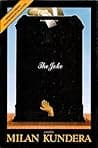
All too often, this brilliant novel of thwarted love and revenge miscarried has been read for its political implications. Now, a quarter century after The Joke was first published and several years after the collapse of the Soviet-imposed Czechoslovak regime, it becomes easier to put such implications into perspective in favor of valuing the book (and all Kundera 's work) as what it truly is: great, stirring literature that sheds new light on the eternal themes of human existence. The present edition provides English-language readers an important further means toward revaluation of The Joke. For reasons he describes in his Author's Note, Milan Kundera devoted much time to creating (with the assistance of his American publisher-editor) a completely revised translation that reflects his original as closely as any translation possibly can: reflects it in its fidelity not only to the words and syntax but also to the characteristic dictions and tonalities of the novel's narrators. The result is nothing less than the restoration of a classic.
Add to your library to track progress and write reviews
Find The Joke Milan Kundera in PDF, EPUB, ebook, audiobook, print, or library editions.

4 books in catalog
Philosophical fiction exploring political oppression, exile, and existential irony achieved widespread attention through novels such as The Unbearable Lightness of Being. Czech and French novelist Milan Kundera examined the complexities of human existence, blending narrative storytelling with essayistic philosophy and satirical commentary.
Born on April 1, 1929, in Brno, Czechoslovakia, Kundera grew up in an intellectual family where his father, Ludvík Kundera, was a pianist and musicologist. Kundera studied music, enrolled at Charles University in Prague, and completed studies in film at the Prague Academy of Music and Dramatic Arts in 1956. He published his debut novel, The Joke, in 1967, offering a critical look at political dogmatism. Following his outspoken opposition to the 1968 Soviet invasion of Czechoslovakia, his books were banned in his homeland.
In 1975, Kundera went into exile in France, where he resided for the remainder of his life. His Czechoslovak citizenship was revoked in 1979, and he became a naturalized French citizen in 1981, later receiving Czech citizenship in 2019. In France, he published major novels including The Book of Laughter and Forgetting in 1979 and The Unbearable Lightness of Being in 1984. Although his early works were written in Czech, Kundera began writing fiction directly in French in 1993, requesting that his literature be cataloged as French writing. He was shortlisted for the Man Booker International Prize in 2005 and died in Paris on July 11, 2023, at the age of 94.
Kundera's fiction is recognized for polyphonic structures, essayistic digressions, and philosophical inquiries into light versus heavy existential conditions. He frequently structured his compositions around musical principles, drawing on his formal music education. His narratives systematically examine political totalitarianism, personal memory, state-enforced forgetting, and the absurdity of bureaucratic control.
In works such as Ignorance and his short fiction collection Laughable Loves, Kundera analyzed nostalgia, romance, and identity. A reclusive writer who avoided media publicity and interviews, Kundera insisted that readers focus strictly on his written text rather than biographical commentary.